live U.S. resumes Iran port blockade, threatens strikes on energy targets
U.S. President Donald Trump announced the reimposition of a U.S. naval blockade on all Iranian ports and warned that power plants and bridges could be...
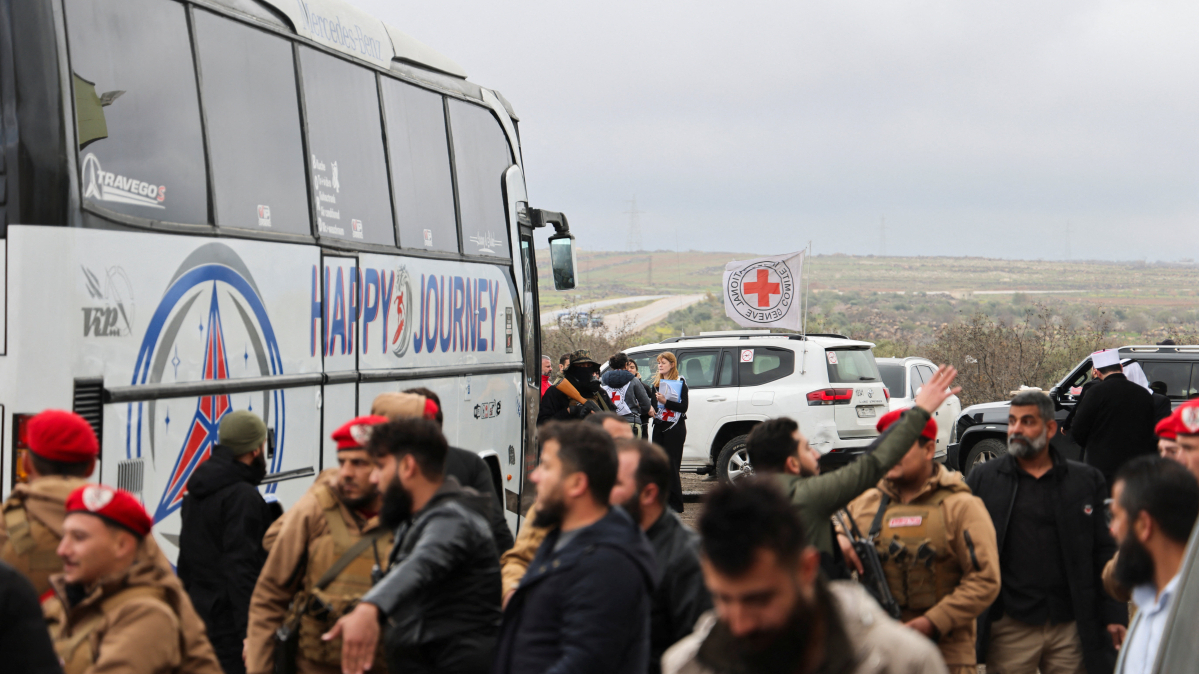
A United Nations official has warned that efforts to stabilise southern Syria remain stalled nearly a year after deadly sectarian violence in Sweida province, with tensions between Druze factions, Bedouin communities and state authorities still unresolved.
A UN investigation earlier found more than 1,700 people were killed in the July 2025 violence in the Druze-majority province, with government forces, tribal fighters and Druze armed groups all potentially responsible for war crimes.
UN Deputy Special Envoy for Syria Claudio Cordone told the UN Security Council that there has been “no progress” on a September 2025 roadmap aimed at restoring stability and rebuilding trust in Sweida.
The plan was designed to support confidence-building measures and reintegration efforts following the unrest, but Cordone said key issues remain unresolved, with ongoing kidnappings and factional rivalries continuing to undermine security.
The UN also said around 13,500 students in Sweida were unable to sit national examinations this month after mediation efforts failed to resolve disputes over security and exam locations. Many students have now missed exams for two consecutive years.
Cordone warned that the situation reflects deeper governance challenges in Syria’s transitional phase, including delays in forming a transitional parliament and ongoing disputes over political representation.
Syria’s transitional authorities, led by President Ahmed al-Sharaa, have yet to fully implement post-election arrangements, including appointing a third of the transitional parliament.
Cordone told the council the delay is “generating anxiety” as competing local actors continue to challenge state authority in Sweida.
Syrian officials maintain they are committed to restoring services and stability, while Druze leaders accuse Damascus of failing to rebuild trust following last year’s violence.
The United States carried out a third consecutive night of airstrikes against Iran, targeting military capabilities around the Strait of Hormuz as Donald Trump announced the reinstatement of a blockade on Iranian shipping and proposed a 20% fee on cargo passing through the strategic waterway.
U.S. President Donald Trump announced the reimposition of a U.S. naval blockade on all Iranian ports and warned that power plants and bridges could be targeted next week unless Tehran returns to negotiations.
The United States and Iran have significantly escalated their conflict, exchanging heavy missile and drone strikes across the Gulf region. Iran claims it has once again closed the Strait of Hormuz, a vital global shipping route.
The death toll from the fire at a live music pub in Bangkok has climbed to 32 after two more victims died from their injuries, according to Thailand's Police Hospital.
Ukraine and Russia exchanged fresh attacks on Tuesday, with Kyiv targeting shipping and energy infrastructure inside Russia while Moscow launched another large-scale missile and drone assault on Ukrainian cities.
The Iranian Army's Ground Force promised a crushing response to the U.S. after an air raid on its barracks in the southern city of Bampur on Wednesday (15 July) killed seven servicemen and wounded 13 others.
Pakistan's benchmark stock index recorded its steepest one-day fall in months on Tuesday as renewed fighting between the U.S. and Iran unsettled global markets and heightened fears of disruptions to oil supplies through the Strait of Hormuz. The benchmark KSE-100 Index closed down 3.56%.
A British inquiry has heard fresh allegations that UK special forces killed three Afghan farmers and abused detainees during operations in Afghanistan. The claims were published this week as part of an investigation into alleged unlawful killings and a possible cover-up.
Kyrgyzstan and Tajikistan have begun installing the first border markers along their shared frontier, marking the start of the physical demarcation of a boundary that was disputed for decades before being formally settled under a landmark agreement signed earlier this year.
The condition of cultural heritage sites in Azerbaijan's Garabagh region remains a major point of debate after decades of conflict. Despite Azerbaijan’s calls for a UNESCO assessment and post-2020 negotiations, disagreements over access, scope and the mission’s framework have prevented a review.
You can download the AnewZ application from Play Store and the App Store.
What is your opinion on this topic?
Leave the first comment