Iran will issue authorisations to merchant vessels passing through the Strait of Hormuz for the next 60 days, requiring ships to obtain permission from Iranian authorities under a new agreement with the U.S.
Tehran stressed that reopening the strategic waterway is exclusively Iran’s responsibility, as agreed with the United States in a Memorandum of Understanding (MoU) signed on Thursday.
Ships required to seek approval
“In implementation of Article 5 of the Islamabad MoU, commercial ships requesting passage through the Strait of Hormuz must submit their application to the Persian Gulf Strait Authority,” Iran’s Supreme National Security Council (SNSC) said in a statement on Thursday.
The top security body also said no fees would be charged for passage through the strait during the 60-day period. According to the defence news website Defa Press, the costs will instead be covered by the Iranian government.
The Iranian and U.S. presidents signed the Memorandum of Understanding on Thursday in a deal mediated by Pakistan. The agreement extends the ceasefire for two months to allow time for negotiations on a final peace settlement.
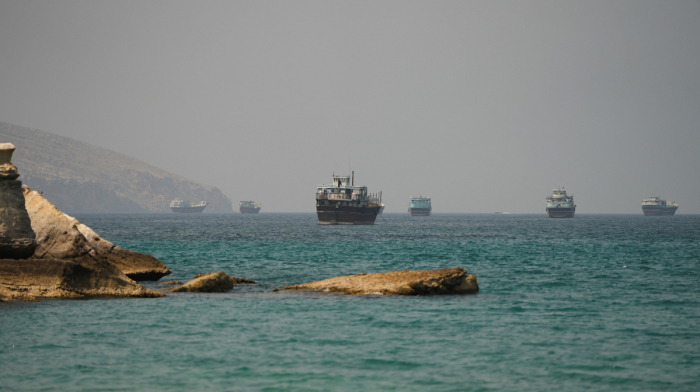
Shipping traffic through the Strait of Hormuz has already resumed to some extent. Live vessel-tracking services have shown clusters of tankers queuing to pass through the waterway after weeks of near standstill.
Iran rejects foreign involvement
Meanwhile, Foreign Ministry spokesman Esmaeil Baghaei reiterated that reopening the Strait of Hormuz is exclusively Iran’s responsibility, saying that “any intervention will only complicate the situation”.
“There is absolutely no need for any foreign intervention,” he added.
Local media quoted Baghaei as saying that Iran would maintain direct consultations with Oman on the management of the strait.
The developments come after Iran’s Supreme Leader, Mojtaba Khamenei, signalled his approval of the Iran–U.S. agreement. His statement was welcomed by President Masoud Pezeshkian, chief negotiator Mohammad-Bagher Ghalibaf and Foreign Minister Abbas Araghchi.
In separate messages on Thursday, they said the leader’s endorsement would guide Iranian negotiators during upcoming talks aimed at securing a final peace agreement.
Talks face first setback
While the 60-day countdown to reach a final settlement has begun, the first setback in negotiations has already emerged, with technical-level talks scheduled for Friday in Switzerland being postponed.
Iranian media attributed the delay to Israel’s ongoing military operation in Lebanon, arguing that it breaches the first clause of the Iran–U.S. agreement.
The state news agency IRNA, which published the full text of the 14-point document, said the first provision was “the immediate and permanent termination of military operations on all fronts, including in Lebanon.”
Iran’s security authorities have also warned against any U.S. breach of the memorandum, saying Tehran will continue negotiations while remaining highly sceptical that Washington will honour its commitments.
“With complete distrust of the renegade and treaty-breaking enemy and with close monitoring of the negotiation process and implementation of plans, if any violation or violation occurs on the part of the American side, countermeasures will be taken according to the predetermined plan,” the Supreme National Security Council said in a statement on Friday.















What is your opinion on this topic?
Leave the first comment