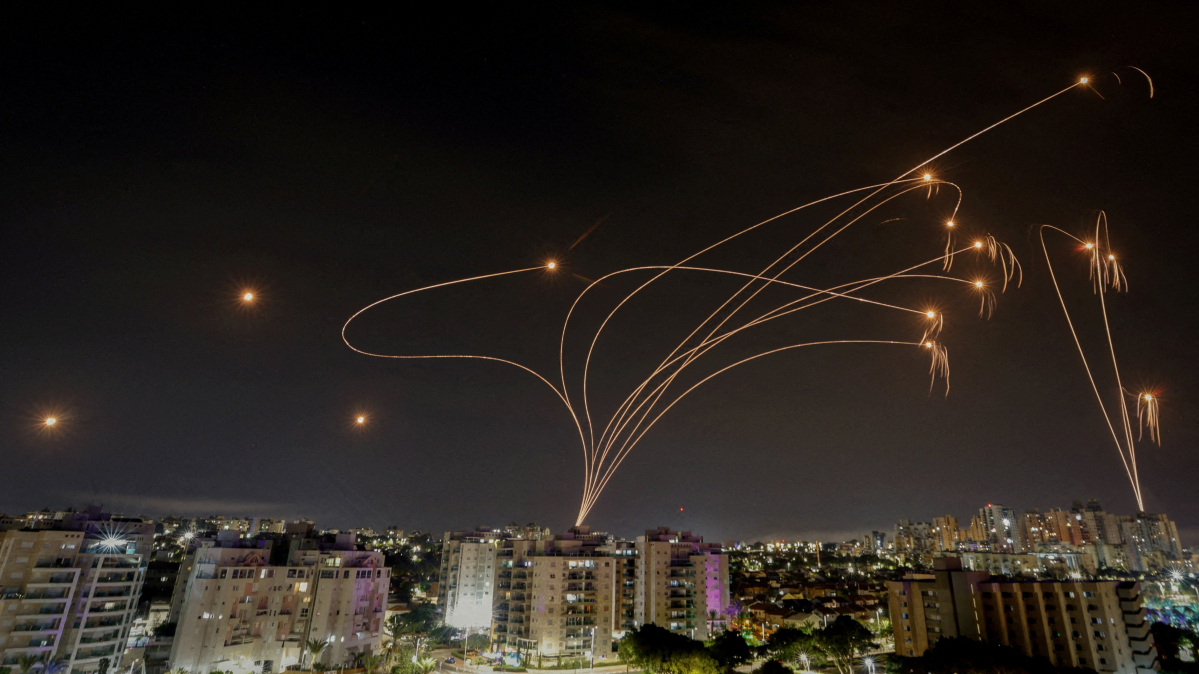
The Iron Dome has long symbolised Israeli security, reshaping modern warfare with its reported “90% success rate”. But as regional tensions surge in April 2026, questions are growing over whether the world’s most battle-tested air defence system can remain sustainable.
Recent research from the Royal United Services Institute (RUSI) suggests that while the “shield” remains technologically superior, it is increasingly exposed to the asymmetric economics of 21st-century conflict.
Evolving threats challenge original design
Originally developed to intercept short-range rockets, the Iron Dome now faces a far more complex battlefield. Israel is confronting a multi-front threat environment, where high-end ballistic missiles from Iran are launched alongside low-cost “suicide” drones.
According to the International Institute for Strategic Studies (IISS), this “saturation tactic” is designed to achieve overmatch - flooding the sky with targets to overwhelm the system or deplete its interceptor supply.
How does the Iron Dome work?
The system functions through a three-part operational loop:
- Detection Radar: Identifies the launch and projectile type.
- Battle Management: Predicts the trajectory to to determine risk to populated areas.
- Tamir Interceptor: Launched only if the threat is confirmed.
While highly efficient, this process is increasingly challenged by autonomous drone swarms capable of altering course mid-flight, complicating interception calculations.
The Drone Problem: Why do some projectiles get through?
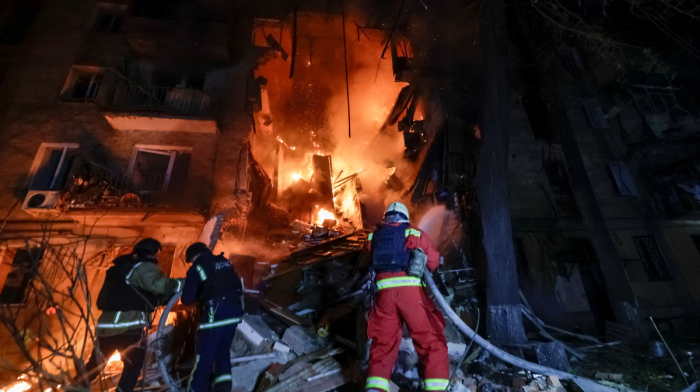
In recent months, some projectiles have penetrated the system. Military expert Adalat Verdiyev, speaking to AnewZ, attributes this in part to deliberate technical exhaustion.
“Interceptors can often cost many times more than the targets they hit,” Verdiyev explains. “This disparity allows adversaries to use cheaper UAVs to ‘soak up’ expensive interceptors, creating windows of opportunity for lethal strikes to slip through.”
Rising costs and sustainability concerns
Sustainability has emerged as the central concern for defence planners in 2026. A single Tamir interceptor costs roughly $80,000, while some enemy drones cost as little as $5,000, creating a heavily skewed “cost-to-kill” ratio.
RUSI’s Command of the Reload report warns that the volume of munitions required to counter large-scale swarm attacks could exhaust even substantial stockpiles within days, placing significant strain on U.S.–Israeli supply chains.
Analysis: No clear replacement
Despite mounting pressure, analysts argue the system remains indispensable.
“Looking at the medium-term perspective, Israel's existing missile defence systems will remain highly relevant,” Verdiyev told AnewZ. He adds that although modernisation is essential, both Iron Dome and Patriot systems remain the most effective options currently available. “At this stage, it is perhaps impossible to find or integrate any better alternatives anywhere else in the world.”
The future: Lasers and space-based defence
To address the sustainability challenge, Israel is advancing the “Iron Beam”, a high-energy laser system. The Institute for National Security Studies (INSS) notes that laser-based defence offers a near-zero cost per shot, potentially resolving the economic imbalance.
However, as adversaries develop hypersonic capabilities, the long-term viability of the Iron Dome may depend on its evolution into a fully networked defence architecture, incorporating space-based detection and next-generation interception technologies.



















What is your opinion on this topic?
Leave the first comment