U.S. and Iran exchange threats - Tuesday, 10 March
Tensions in the region remained high on Tuesday (10 March), as the United States and Iran exchanged increasingly sharp warnings, including thr...
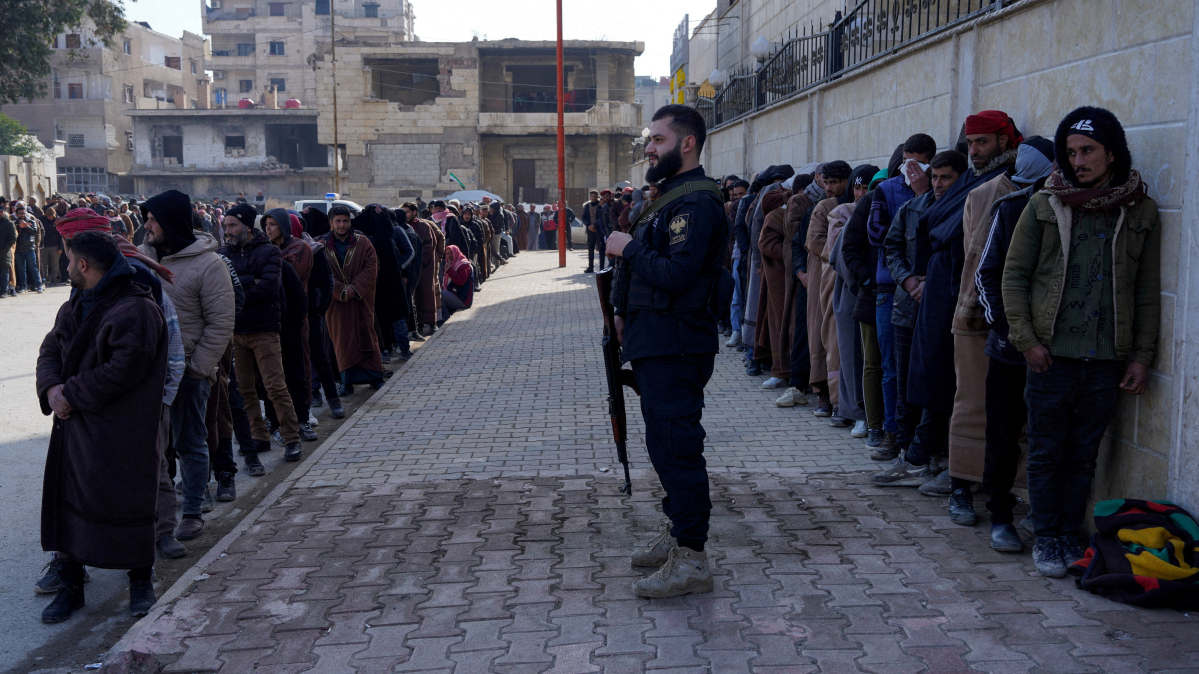
Four members of Syria’s Internal Security Forces were killed and two others injured on Monday (23 February) in an attack by the ISIS (Daesh) terrorist group targeting a checkpoint west of Raqqa in northeastern Syria, the Interior Ministry said.
It's reported to be the group's deadliest attack on government forces since the ouster of President Bashar al-Assad 8 December 2024.
In a statement, the ministry confirmed that an Internal Security Forces checkpoint in Raqqa was subjected to what it described as a terrorist assault.
Security forces said in a statement it managed to neutralise one suspected Daesh attacker, adding that operations to comb the area were continuing.
The ministry noted that this was the second assault on security forces in the area within two days. The same checkpoint was reportedly targeted on Sunday, when an attacker was killed.
The Syrian state news agency said forces foiled Monday's attack and killed one of the militants. It quoted a security source as saying Islamic State carried out the attack.
Separately, one soldier was killed after unknown gunmen attacked the army headquarters in the city of Mayadin in Deir al-Zor in eastern Syria, the Syrian state news agency reported on the early hours of Tuesday.
There was no immediate claim of responsibility for the attack, which occurred in the same city where the Islamic State carried out an attack days earlier.
Previously, the ISIS group had seized control of Raqqa in 2014, declaring it the capital of its so-called caliphate, before being driven out in 2017 by a U.S.-led international coalition.
The region subsequently fell under the control of the YPG/SDF, which Türkiye considers a terrorist organisation. The Syrian Army has recently regained control of the area.
Meanwhile, U.S. forces on Monday began withdrawing from their largest military base in the northeast, according to three Syrian military and security sources. This is part of a broader pullout of U.S. troops who were deployed to Syria a decade ago to fight Islamic State.
The Syrian government joined the U.S.-led coalition to combat Islamic State last year. In January, government forces seized control of Raqqa from the Kurdish-led Syrian Democratic Forces (SDF) along with much of the surrounding territory in northern and eastern Syria.

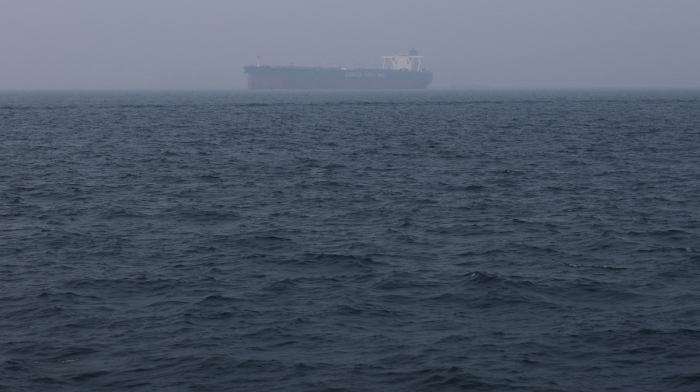
Tensions in the region remained high on Tuesday (10 March), as the United States and Iran exchanged increasingly sharp warnings, including threats over the strategic Strait of Hormuz, a critical artery for global oil supplies.
Global oil prices surpassed $119 a barrel on Monday (9 March, 2026), an almost four year high, as the Middle East conflict rumbled on.
China has urged Afghanistan and Pakistan to resolve their dispute through dialogue after Chinese envoy Yue Xiaoyong met Afghan Foreign Minister Amir Khan Muttaqi, as fighting between the two neighbours entered its eleventh day.
Entry and exit across the state border between Azerbaijan and Iran for all types of cargo vehicles, including those in transit, will resume on 9 March, according to a statement by the Cabinet of Ministers of Azerbaijan.
Iran named Mojtaba Khamenei to succeed his father Ali Khamenei as supreme leader on Monday (9 March), signaling that hardliners remain firmly in charge, as the week-old U.S.-Israeli war with Iran pushed oil above $100 a barrel.
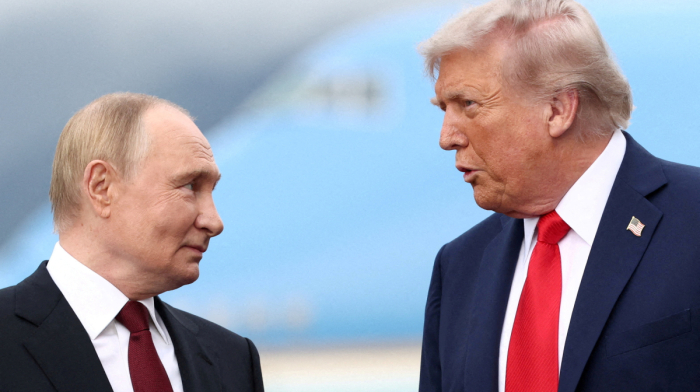
Iran and the U.S. exchanged threats on Tuesday, as U.S. Defense Secretary Pete Hegseth warned Tehran to expect the “most intense day" of attacks so far. Meanwhile, Iranian President Masoud Pezeshkian said “anyone who entertains the illusion of destroying Iran knows nothing of history."
The Strait of Hormuz has become a focal point of global concern as tensions rise following the conflict involving Iran, the United States and Israel. Tehran has threatened to block the strategic waterway, raising fears of disruption to global oil shipments and energy markets.
Reports of so-called “acid clouds” moving from Iran towards Central Asia are not supported by scientific data, national hydrometeorological services in Kazakhstan, Uzbekistan and Kyrgyzstan say, adding there is no threat to the region.
A senior delegation from the OSCE Parliamentary Assembly has been holding meetings with Georgian government officials, opposition leaders and security authorities this week, as international observers attempt to gauge the country’s political climate following last year’s contentious elections.
Turkish President Recep Tayyip Erdoğan has told Masoud Pezeshkian, his Iranian counterpart, that violations of Turkish airspace by Iran could not be justified “for any reason whatsoever.”
You can download the AnewZ application from Play Store and the App Store.
What is your opinion on this topic?
Leave the first comment