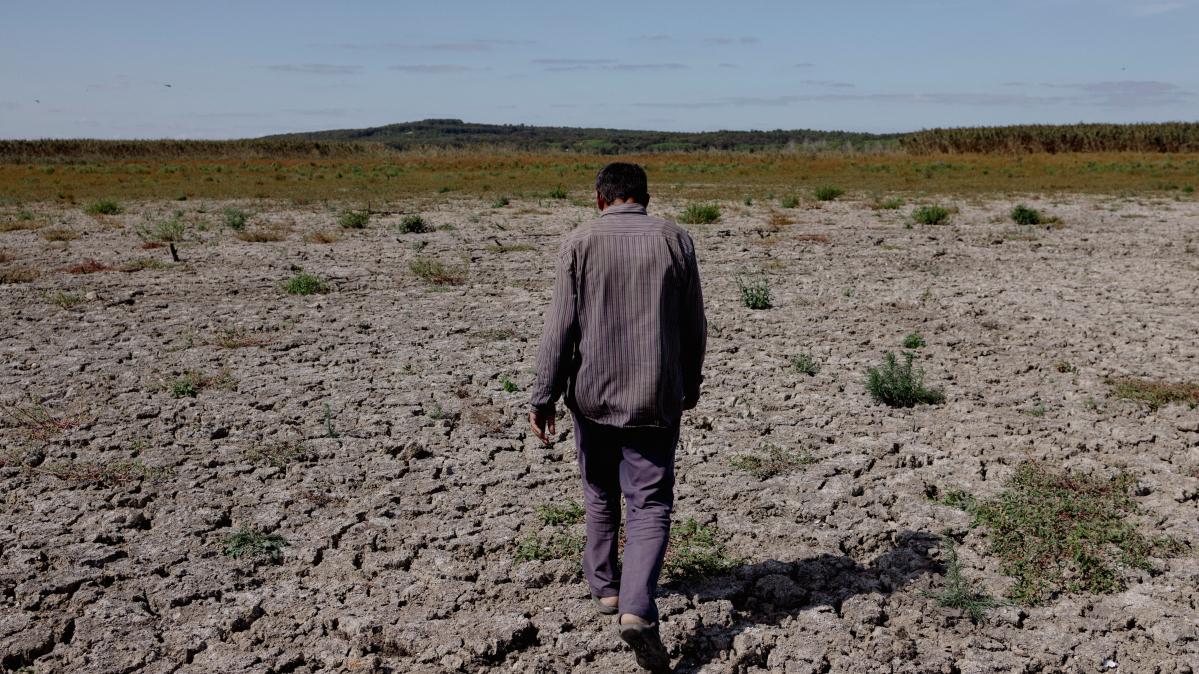
Türkiye experienced one of its most severe droughts in the past half century in 2025, with conditions now showing signs of becoming long-term and structural, climate expert Mikdat Kadioglu told Anadolu.
Data from the Turkish State Meteorological Service’s Standard Precipitation Index maps show the 12- and 24-month indicators at alarming levels, with readings of minus two or lower signalling severe drought across much of the country.
Kadioglu, from İstanbul Technical University’s department of climate science and meteorological engineering, said a persistent water deficit is now carrying over from year to year, describing it as a “new normal” linked to climate change.
He said consecutive years of low rainfall have reduced soil moisture, pushed groundwater levels below critical thresholds and increased the risk of sinkhole formation. While short-term three-month maps reflect immediate weather conditions, he stressed that longer-term data is more significant as it directly affects reservoirs, agriculture and the wider economy.
By August 2025, around 70% of Türkiye’s territory had fallen into severe or worse drought categories on the 12-month index, forming a sustained drought belt across the country.
In İstanbul, rainfall in June 2025 dropped to just 0.5 millimetres, about a 99% decline from long-term averages. Reservoir levels at times hovered near 30% and later fell further as water stress intensified.
Ankara and much of the Central Anatolia region recorded their lowest rainfall in more than six decades, with the capital experiencing its driest period in 47 years, severely affecting farming and water supplies.
The expert also pointed to major agricultural losses in Thrace, where sunflower yields declined by as much as 90% and oil content fell due to prolonged heat.
Kadioglu warned Anadolu that Türkiye’s water balance now shows a chronic deficit that cannot be addressed through traditional measures alone, calling for urgent conservation efforts, adaptation in agriculture and long-term climate policy decisions at national and basin level.

















What is your opinion on this topic?
Leave the first comment