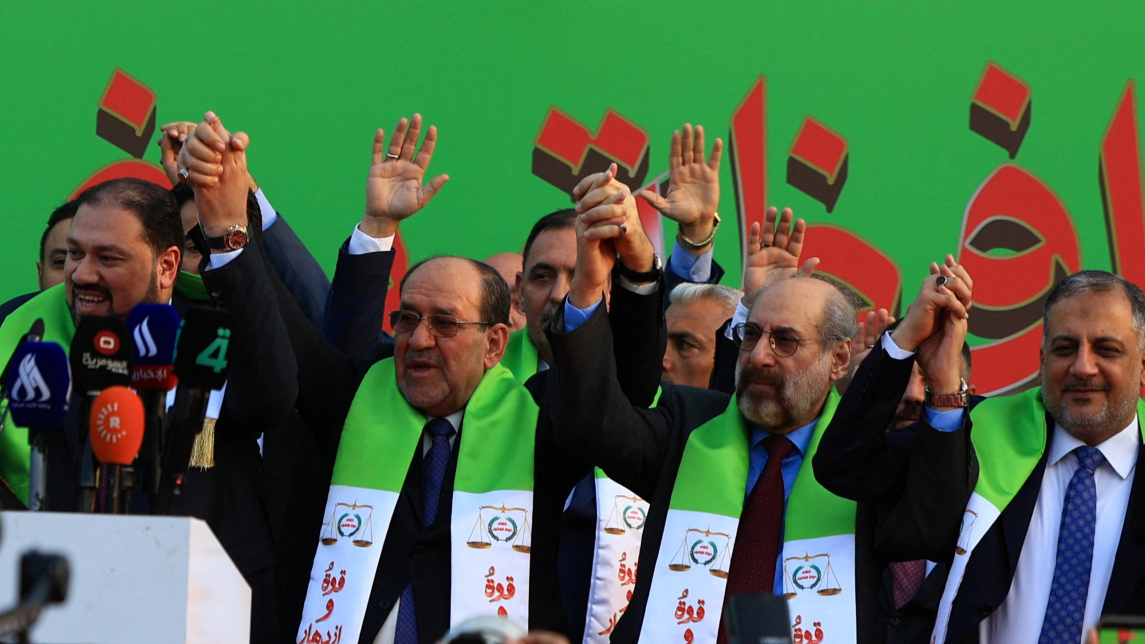
Iraq's former Prime Minister Nouri Al-Maliki said on Wednesday that he rejects U.S. interference in Iraq's internal affairs, after U.S. President Donald Trump threatened to cut off support to the country if Maliki was picked as prime minister.
"I will continue working until we reach the end, in a manner that serves the supreme interests of the Iraqi people," he said in a post on X.
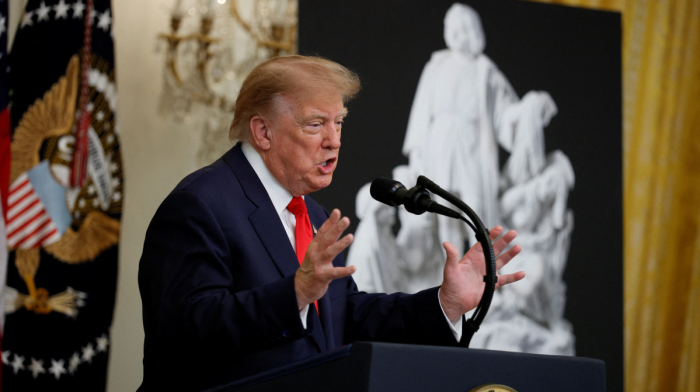
His remarks came as U.S. President Donald Trump issued a sharp warning to Iraq, saying Washington would withdraw support if Maliki were chosen as prime minister again.
Trump said Iraq had “descended into poverty and total chaos” during Maliki’s previous tenure and blamed what he called Maliki’s “insane policies and ideologies.”
Iraq's main alliance of Shi'ite political blocs, which holds a majority in parliament, picked Maliki -- Iraq's first elected prime minister after a U.S.-led invasion toppled Saddam Hussein in 2003 -- as its nominee for the post following an election.
That came as a surprise for many Iraqis who have accused Maliki of pursuing sectarian policies favouring majority Shi'ites, and of driving Sunnis into the arms of ultra-violent Islamic State militants who seized a third of Iraq as security forces crumbled.
The comments marked Trump’s most direct intervention yet in Iraqi politics and reflected his broader effort to curb the influence of Iran-backed groups in the country.
Iraq has long sought to balance ties between its two key partners, the United States and Iran.
Trump’s warning followed a decision by Iraq’s main Shi’ite political alliance, which holds a parliamentary majority, to nominate Maliki for the premiership after elections.
Rebuilding influence
Maliki, a senior figure in the Shi’ite Islamist Dawa Party, served two terms as prime minister from 2006 to 2014. His time in office was marked by sectarian violence, power struggles with Sunni and Kurdish rivals, deteriorating public services, corruption, and worsening relations with the United States.
In 2014, Maliki was forced to step down under pressure from an unusually broad coalition of critics, including the U.S., Iran, Sunni leaders and Iraq’s top Shi’ite cleric, after Islamic State made rapid territorial gains.
A year later, an Iraqi parliamentary panel called for Maliki and dozens of senior officials to face trial over the fall of Mosul to Islamic State. Despite this, Maliki remained a powerful political figure, leading the State of Law coalition and maintaining close ties with influential Iran-backed factions.
Exile and return
Born in 1950 in the southern village of Janaja, Maliki came from a politically active family. His grandfather wrote poetry against British colonial rule, while his father was a committed Arab nationalist.
Maliki was briefly arrested in 1979 before fleeing Iraq, narrowly escaping Saddam Hussein’s security forces. His family’s land was seized and dozens of relatives were killed over the following decade. He did not return to his home village until after the U.S.-led invasion in 2003.
Sentenced to death under Saddam for his role in the banned Dawa Party, Maliki spent nearly 25 years in exile, mostly in Syria and Iran, working against the regime. Like many exiles, he returned after Saddam’s fall, which ended decades of Sunni-dominated rule over Shi’ites and Kurds.
Relatively unknown in Iraq at the time, Maliki emerged in 2006 as a compromise choice to lead a fragile coalition government.
Months into his premiership, he signed Saddam Hussein’s execution order, overseeing the former leader’s hanging.
Sectarian splits
Initially seen as a figure capable of reducing sectarian tensions, Maliki’s commitment to inclusivity was questioned in a leaked U.S. government memo.
“Despite Maliki’s reassuring words, repeated reports from our commanders on the ground contributed to our concerns about Maliki’s government,” U.S. National Security Adviser Stephen Hadley wrote to President George W. Bush.
He cited failures to deliver services to Sunni areas and the removal of effective commanders on sectarian grounds.
Sunni leaders accused Maliki of failing to curb Shi’ite militias while focusing security operations on Sunni provinces such as Anbar.
Tensions escalated sharply in 2011, shortly after U.S. troops withdrew, when Maliki’s government sought the arrest of a Sunni vice president. Critics said the move cast doubt on his democratic credentials.
Maliki rejected accusations of sectarianism.
“I am not fighting in Anbar because they are Sunnis, as I have also fought Shi’ite militias,” he told Reuters in 2014. “Al Qaeda and militias are one — they both kill people and blow them up.”












What is your opinion on this topic?
Leave the first comment