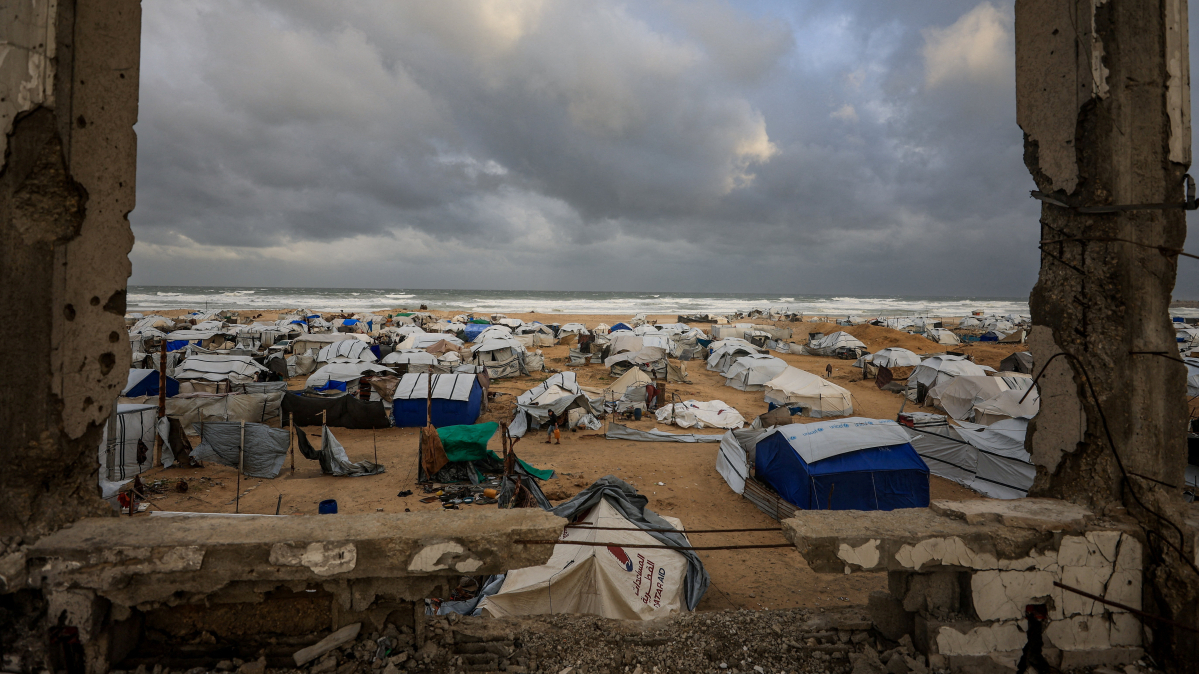
Six Palestinian children have died from hypothermia in Gaza this winter, United Nations Children's Fund (UNICEF) said on Tuesday (13 January). The agency warned that more than 100 children have been killed since a ceasefire took effect in early October, 2025.
UNICEF spokesperson James Elder said the deaths from cold exposure had occurred in recent days amid harsh winter conditions and ongoing humanitarian restrictions, speaking to reporters in Geneva via video link from Gaza.
The spokesperson added that “life in Gaza remains suffocating” and that “survival remains conditional”.
“That’s roughly a girl or a boy killed here every day during a ceasefire,” he added.
He said the confirmed victims included around 60 boys and approximately 40 girls.
Nearly all of the recorded child deaths since October were caused by military action, including air strikes, drone strikes (including quadcopters) tank shelling and gunfire according to officials. A smaller number of children were killed by unexploded remnants of war, UNICEF said.
Spokesperson Elder stressed that the figures are likely an underestimate, as they only reflect cases where sufficient details were available to verify the deaths.
“While the bombings and the shootings have slowed during the ceasefire, they have not stopped,” he said, warning that what is being described as “calm” would constitute a crisis in most other contexts.
However, UNICEF said the ceasefire has allowed limited but tangible humanitarian gains, including the expansion of primary healthcare and immunisation services, the reopening and addition of nutrition facilities to treat and prevent malnutrition, and urgent repairs to damaged water, sanitation and sewerage systems across Gaza.
According to the agency, these efforts have included restoring water pipelines and pumping stations, increasing waste removal, and distributing winter supplies such as thermal blankets and clothing, helping to avert famine and disease outbreaks.
Severe restrictions remain on essential supplies, including medical items, fuel, cooking gas and equipment needed for water and sanitation infrastructure, leaving conditions for children “unimaginably hard” after more than two years of war.
The current Gaza conflict stems from a broader war that began in October 2023 following a large‑scale attack by Hamas on Israel, triggering an extensive Israeli military offensive in the Strip.
After more than two years of intense hostilities and devastation, a U.S.‑brokered ceasefire agreement took effect on 10 October 2025 between Israel and Hamas, aiming to pause fighting and allow humanitarian access.












What is your opinion on this topic?
Leave the first comment