Iranian Foreign Minister Abbas Araghchi wrapped up visits to Belarus and Russia during which he held high-level talks on closer bilateral relations and major regional developments.
He arrived in capital Tehran on Wednesday evening concluding a three-day trip which saw him visit Minsk and Moscow where he signed cooperation agreements with Belarusian and Russian counterparts.
While in Minsk, Araghchi met with the President Aleksandr Lukashenko and the Secretary of the State Security Council of Belarus, Alexander Volfovich.
At the conclusion of the visit to he told reporters that invitation of Iran’s secretary of National Supreme Security Council Ali Larijani has been submitted to his Belarusian counterpart.
“It was a very useful visit. The meeting with the president was a very constructive, and there was a frank and direct discussion about the projects to be cooperated. The talks between the two foreign ministers were very positive too.” he said.
Araghchi mentioned that plans were in the works for the Belarusian minister of transportation to visit Tehran in the near future to discuss international transit cooperation.
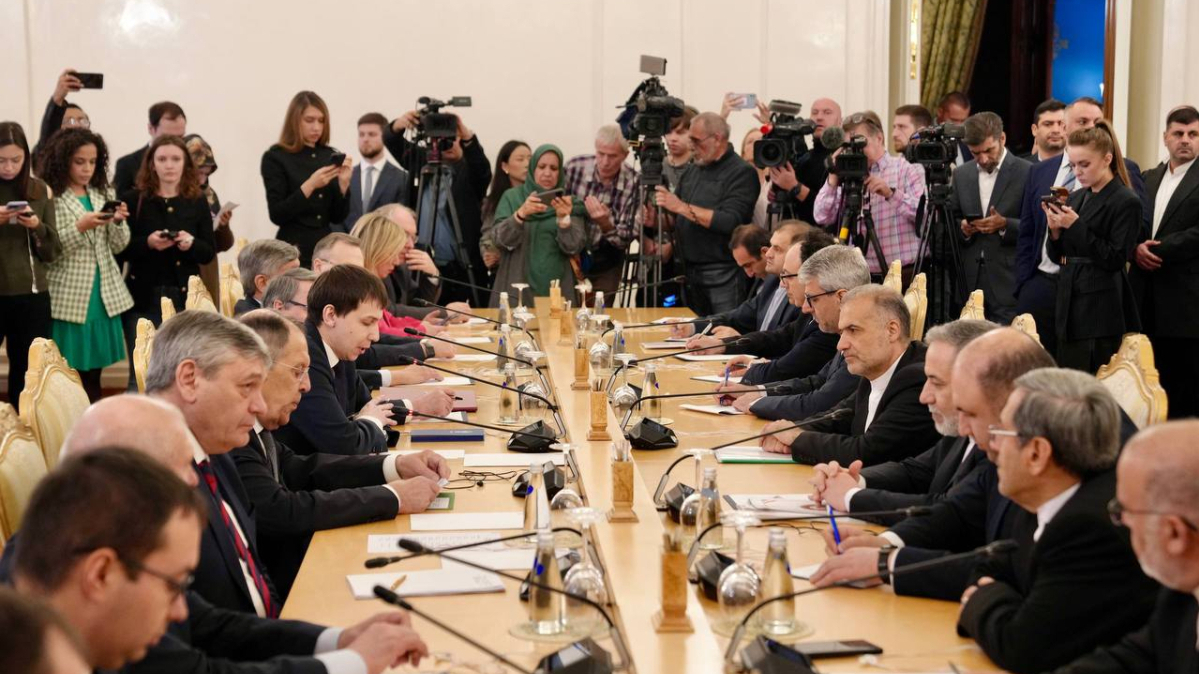
During the second leg of his visit, Araghchi met with his Russian counterpart Sergei Lavrov, lawmakers of the State Duma as well as scholars and thinkers in Moscow.
Araghchi and Lavrov signed a cooperation document based on the Iran-Russia Comprehensive Strategic Partnership Treaty specifying the program of consultations between the foreign ministries of the two countries for the years 2026-2028.
The Iran-Russia strategic treaty which entered into force in October 2025 is valid for 25 years.
According to a Russian MFA statement issued before the visit, the two foreign ministers were due to discuss bilateral issues in the wake of the Comprehensive Strategic Partnership Treaty, international developments, Iran's civilian nuclear program, and exchange views on regional developments of mutual interest.
In a joint press conference with Russian foreign minister before departing for Tehran, Araghchi said Iran has not sent any message on resumption of nuclear negotiations with the United States.
“We did not leave the diplomatic table. Rather, it was the Americans who betrayed diplomacy by militarily attacking Iran in the middle of the negotiations,” he added.
Iranian and U.S. negotiators had held five rounds of nuclear negotiations mediated by Oman in Muscat and Rome since April 2025.
They were scheduled to convene their sixth round of talks in the Omani capital to exchange draft proposals which was interrupted by Israel’s military invasion in June.
Later, U.S. joined Israel and carried air strikes on three major Iranian nuclear sites which were under verification of the International Atomic Energy Agency (IAEA) the UN’s nuclear watchdog.
Washington has been demanding “zero enrichment” for resumption of the talks which Tehran has categorically rejected as its red line.
In return, Iran has demanded guarantees from the U.S. government that it will not be attacked in the middle of the talks.
Iran also suspended its cooperation with IAEA and banned inspection of the bombed facilities for its failure to condemn the attacks and for reports which Iran said served as an excuse for the U.S.-Israel 12-day war.
Iranian President Masoud Pezeshkian said on Wednesday that he will not accept America’s conditions for renewed talks as long as Washington is laying down demands which he termed “bullying and humiliating”.
“Iran is not seeking to build the (atomic) bomb and is ready for any verification, but the U.S. wants to destroy all components of Iran’s defensive power and weaken it in favor of Israel,” he said in a meeting with political figures.












What is your opinion on this topic?
Leave the first comment