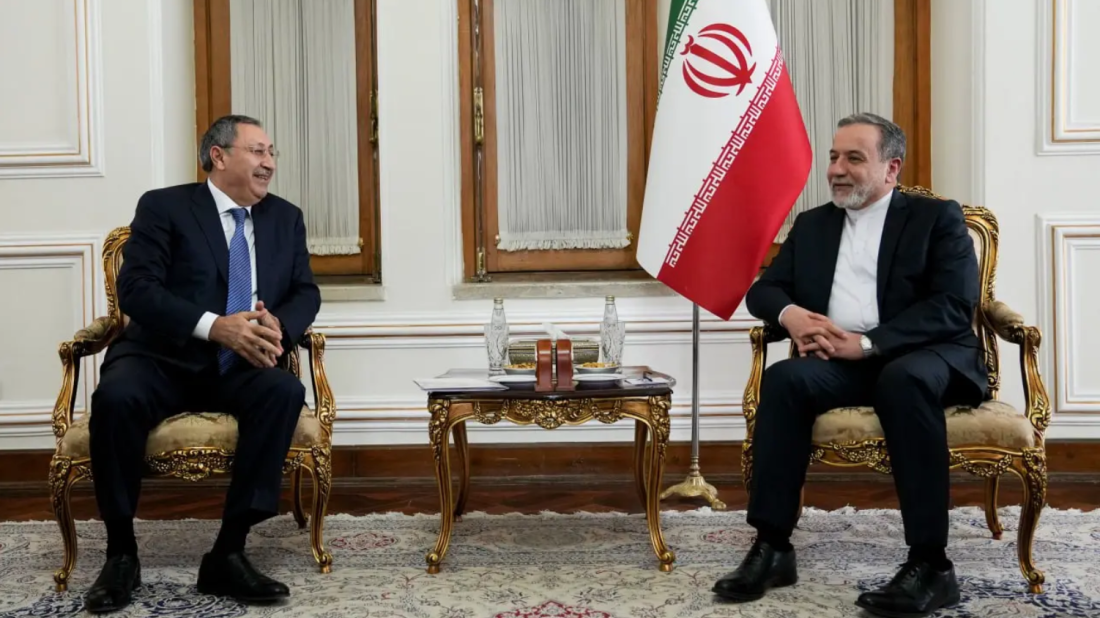
Tehran and Baku have pledged to increase cooperation between the two countries across all fields, after an all-important meeting on Monday in Iran's capital city.
Representative of the Azerbaijani President on Special Assignment Khalaf Khalafov met with the Iranian Foreign Minister Abbas Araghchi and his deputy Kazem Gharibabadi in Tehran.
In a statement released by the Foreign Ministry of Iran, Araghchi said that strengthening of relations between the two neighbouring countries is significant and that Iran wants any obstacles in this process to be removed.
“Referring to the strategic importance of peace and stability in the South Caucasus for Iran and the wider region, the Iranian foreign minister reiterated Iran’s principled position on the necessity of respecting the territorial integrity and national sovereignty of countries, preventing geopolitical changes, and relying on diplomacy to resolve disputes.”
He also expressed hope that with the signing of a peace agreement between the Republic of Armenia and the Republic of Azerbaijan, peace and security in the region would be strengthened.
According to the statement, Khalafov termed his meetings and negotiations with Iranian officials as “positive and constructive”.
“He pointed to the successful visit of Iranian President Masoud Pezeshkian to Baku and underlined his country’s serious determination to further expand and deepen relations with Iran across various fields.”
The Iranian deputy foreign minister said in a post on X after meeting Khalafov that Tehran and Baku believe there is a high potential for developing their relations in various fields.
“In this meeting, a wide range of issues were discussed and exchanged, including bilateral relations, cooperation in the Caspian Sea region, the importance of peace and stability in the South Caucasus region, cooperation within the framework of the Conference on Interaction and Confidence-Building Measures in Asia (CICA).”
Gharibababdi said of the meeting, that Tehran and Baku “also believe that the best way to address the differences of opinion and misunderstandings that naturally arise in relations between governments, especially neighbouring governments, is through dialogue in good faith with the aim of removing obstacles to the development of comprehensive relations”.
The Iranian and Azerbaijani leaders have reaffirmed that they are determined to improve mutual relations and good neighbourly ties despite their differing approaches to regional developments.
“There is no obstacle in the path of developing of cooperation between the two countries,” President Pezeshkian told the visiting Azerbaijani Deputy Prime Minister Shahin Mustafayev last month.
In addition to bilateral relations, Iran and Azerbaijan are working together in the International North–South Transport Corridor as well as the multilateral Caspian Sea initiatives.
Their representatives met last week in Baku together with Russia to discuss cross border cooperation to finalize a joint roadmap for transit of goods.














What is your opinion on this topic?
Leave the first comment