live U.S., Iran reach preliminary peace deal, Friday signing expected
U.S. and Iranian officials said they had agreed on a framework to end their war, halt the U.S. blockade of Iran and reopen the Strait of Hormuz, a pre...
Kyrgyzstan’s Prime Minister Adylbek Kasymaliev and EU Special Representative for Central Asia Eduards Stiprais discussed expanding energy projects and deepening bilateral and regional cooperation in the region.
Kyrgyzstan and the European Union held a constructive meeting to strengthen cooperation in energy and regional development. Adylbek Kasymaliev, Chairman of the Cabinet of Ministers of Kyrgyzstan and Head of the Presidential Administration, met with Eduards Stiprais, the EU’s Special Representative for Central Asia.
The discussion covered a broad spectrum of issues focused on enhancing collaboration between Kyrgyzstan and the EU at both bilateral and regional levels. Kasymaliev emphasized that the EU remains a trusted and vital partner supporting a range of socio-economic initiatives in Kyrgyzstan.
The two sides highlighted the importance of the recent Central Asia - European Union summit held in Samarkand, Uzbekistan, which reaffirmed a mutual commitment to deepening cooperation in trade, infrastructure, investment, and digital transformation.
Energy development was a key topic, with Kasymaliev outlining plans to construct around 100 small and medium-sized hydropower plants, alongside efforts to boost solar and wind energy technologies. This reflects Kyrgyzstan’s ambition to expand its renewable energy potential.
Stiprais congratulated Kasymaliev on the historic border agreements with Tajikistan and Uzbekistan, calling these significant steps toward regional stability and stronger neighborly relations.
He also expressed the EU’s readiness to support Kyrgyzstan’s initiatives in water and energy resource conservation, climate change adaptation, societal preparedness for environmental challenges, and the expanded use of renewable energy sources.
This meeting underscores the growing partnership between Kyrgyzstan and the EU, centered on sustainable energy development and regional cooperation.

Details of a reported draft memorandum of understanding between the United States and Iran offer the clearest picture yet of how both sides plan to end months of conflict and move towards a longer-term settlement.
The U.S. and Iran say they have reached a deal to end their conflict, with an immediate ceasefire and reopening of the Strait of Hormuz after the lifting of the U.S. naval blockade. Talks will continue over the next 60 days to finalise the agreement
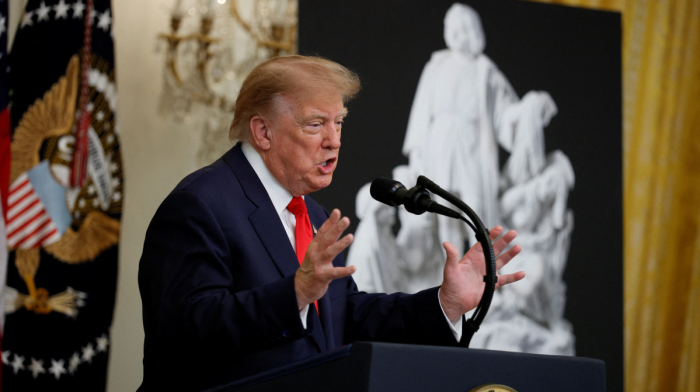
U.S. President Donald Trump has said a peace agreement with Iran is scheduled to be signed on Sunday in a post on social media, despite Tehran's Foreign Ministry spokesperson Esmaeil Baghaei saying no deal would be approved this weekend.
U.S. and Iranian officials said they had agreed on a framework to end their war, halt the U.S. blockade of Iran and reopen the Strait of Hormuz, a preliminary pact that sent oil prices falling but leaves the fate of Iran's nuclear program to further negotiations.
Switzerland on Sunday rejected a referendum proposal to cap its population at 10 million, a projection showed, as voters prioritised economic stability and the country's ties with the European Union over immigration concerns.
An armed unmanned aerial vehicle crashed on a Black Sea beach in northern Türkiye on Sunday, prompting a security operation and the controlled detonation of its munitions.
Fighting in southern Lebanon eased on Monday after a U.S.-Iran agreement aimed at ending months of regional conflict was announced, although uncertainty remained over how the deal would be implemented on the ground.
United Nations High Commissioner for Human Rights Volker Türk on Monday welcomed the newly announced peace agreement between the U.S. and Iran, urging all parties to exercise restraint and work towards a lasting settlement.
Trade routes through Afghanistan took centre stage in Almaty as the European Union, Central Asian states and the United Nations discussed the country's role in shaping regional security and economic connectivity.
Israeli Prime Minister Benjamin Netanyahu has told U.S. President Donald Trump that Israel does not consider itself bound by a Lebanon-related provision in an emerging agreement with Iran, according to Israeli officials.
You can download the AnewZ application from Play Store and the App Store.
What is your opinion on this topic?
Leave the first comment