Central Asia’s fintech ambitions are in the spotlight as a major forum in Tashkent draws to a close, shifting attention from the region’s potential to the investment, infrastructure and global reach needed to turn that vision into growth.
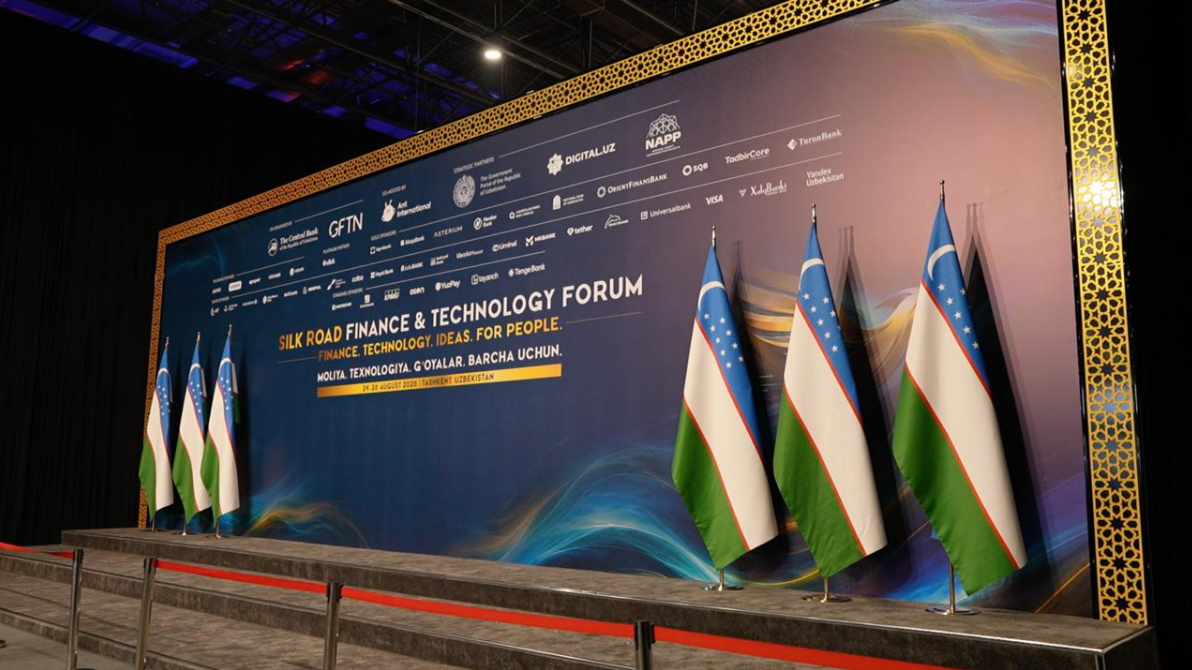
The Silk Road Finance & Technology Forum has brought together more than 6,000 participants from 74 countries in Tashkent, including policymakers, regulators, investors and technology leaders. Convened by the Central Bank of Uzbekistan and Singapore-headquartered GFTN and co-hosted by Ant International, the forum has focused on accelerating investment, financial innovation and regional connectivity.
The three-day programme has featured almost 200 speakers and more than 25 investors representing $4 billion in assets under management, with discussions ranging from digital finance and cross-border payments to Islamic finance and entrepreneurship.
The final day moved to the Islamic Civilisation Centre for The Azimuth, a dedicated programme focused on Islamic finance and entrepreneurship.
As the forum draws to a close, attention is shifting from what Central Asia could become to what needs to happen next - and what it will take to turn the region’s fintech ambitions into tangible growth.
From local success to global scale
Speaking to AnewZ, Pieter Franken, Representative Director of GFTN Japan and Group Chief Technology Officer, said one of the challenges is ensuring that successful local fintech companies can scale beyond their home markets.
Franken pointed to Japan, where the country has developed major fintech companies, but many have remained focused on the domestic market. Central Asian companies could face a similar challenge, he said: a product may be highly successful within the region without necessarily being relevant beyond it.
For start-ups seeking to expand internationally, Franken argued that the strongest products tend to address simple, universal needs rather than highly specific local ones.
Building a regional market
For Central Asia, building a successful domestic fintech sector may therefore be only the first step. Companies will also need to develop products capable of crossing borders and competing in international markets.
Doing so will require investment, talent and stronger financial connectivity across the region, including more interoperable payment systems and infrastructure.
Turning ambition into results
Uzbekistan is already linking its fintech ambitions to a broader investment strategy. The country says it has attracted $160 billion in foreign investment over the past decade, while its economy has grown by more than two and a half times.
The Silk Road Finance & Technology Forum is expected to become an annual platform. With the inaugural gathering coming to an end, the focus now turns to delivery: how much of Central Asia’s fintech vision can become reality before the region gathers again?
Read more:





















What is your opinion on this topic?
Leave the first comment