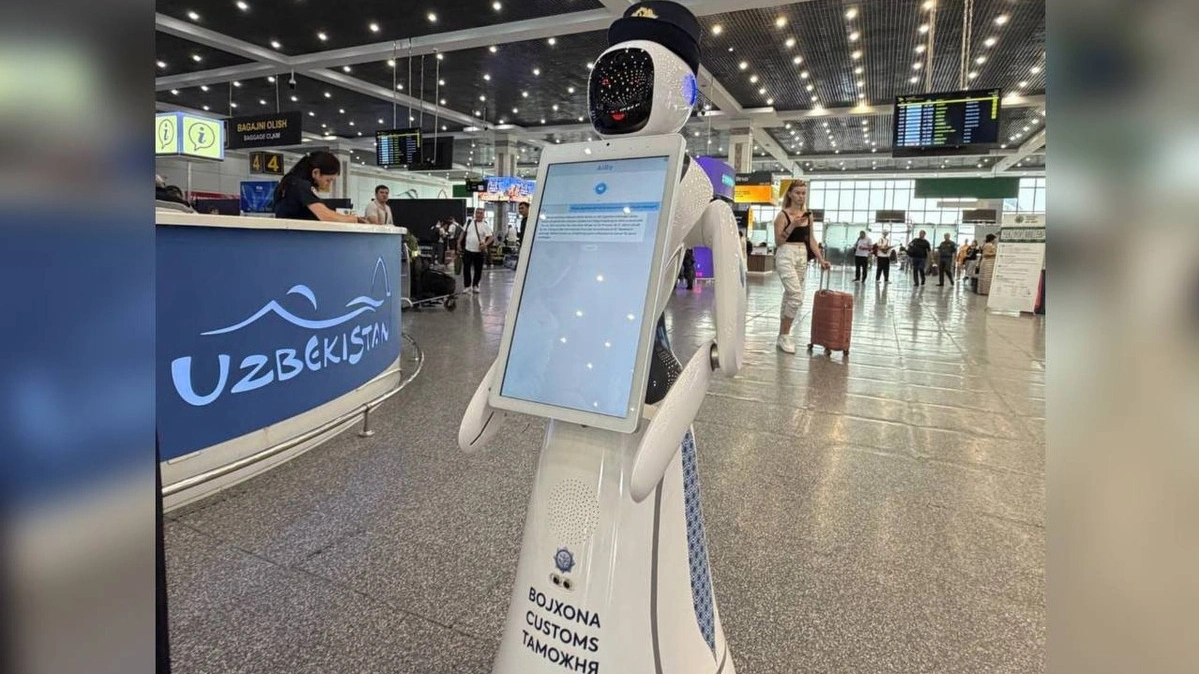
Passengers travelling through Tashkent International Airport can now receive customs guidance from an AI-powered robot, as Uzbekistan continues to expand the digitalisation of its border services.
The State Customs Committee has unveiled the interactive robot, named AiRo. Installed in the airport's international terminal, the AI assistant was developed using software created in cooperation with specialists from the Customs Committee.
According to officials, many customs violations detected at airports result from passengers' limited knowledge of import and export regulations. Travellers are often reluctant to ask customs officers about procedures for carrying items such as mobile phones, foreign currency, jewellery and medicines, leading to unintentional breaches of the rules.
AI assistant to guide passengers
The AiRo robot has been introduced to provide passengers with quick and accessible information before they pass through customs.
Using artificial intelligence, the system explains regulations covering the transportation of foreign currency, jewellery, medicines, mobile phones and prohibited goods. It also provides guidance on the use of Uzbekistan's green and red customs channels, as well as the country's customs declaration requirements.
The Customs Committee stressed that the robot is intended to complement, rather than replace, customs officers. Its primary role is to improve access to information, simplify procedures for travellers and help prevent violations before they occur.
Customs digitalisation expands
The launch of AiRo forms part of Uzbekistan's wider efforts to modernise customs services through digital technologies.
Islom Umarov, Head of the Customs Committee's IT and Cybersecurity Department, highlighted the rapid expansion of digital systems across the agency.
The number of information systems used by customs authorities has increased from nine in 2021 to 37 today. Over the same period, the number of electronic customs services has grown from 26 to 41, while the number of mobile applications has risen from one to 11.
Officials also said the customs authority's digital platforms are now integrated with 33 government agencies and 45 airlines. In addition, data exchange has been established with 10 international organisations and foreign customs administrations.
The Customs Committee said these initiatives are designed to make border procedures faster, more transparent and more convenient for both passengers and businesses, while improving compliance with customs regulations.
Read more:
















What is your opinion on this topic?
Leave the first comment