AnewZ Morning Brief - 11st of November, 2025
Start your day informed with AnewZ Morning Brief: here are the top news stories for the 11st of November, covering the latest developments you need to...
Kyrgyzstan has launched a national stablecoin and central bank digital currency in collaboration with cryptocurrency exchange Binance, announced President Sadyr Japarov on Saturday.
A mountainous former Soviet republic with a population of around 7 million, Kyrgyzstan has increasingly positioned itself as a cryptocurrency leader in Central Asia, despite its traditional reliance on labor migrants in Russia.
The A5A7 stablecoin, backed by the Russian rouble and based in Kyrgyzstan, has been sanctioned by Western governments, which claim it facilitates the circumvention of sanctions on Russia over the war in Ukraine.
Changpeng Zhao, founder of Binance, was appointed as an adviser on digital assets to Kyrgyzstan's president in May. On Saturday, Zhao revealed on X that the Kyrgyz national stablecoin had been launched on the BNB Chain, and that the digital version of the Kyrgyz som was ready for use in government transactions. He also mentioned that a national cryptocurrency reserve, including Binance's BNB token, had been established.
On Friday, U.S. President Donald Trump pardoned Zhao, who had previously been convicted of money laundering-related offenses.
While Kyrgyzstan was once the most democratic among the five former Soviet Central Asian republics, Japarov has since tightened control over dissent following his rise to power after the 2020 street protests. The country is set to hold a snap parliamentary election on November 30, with Japarov's allies aiming to strengthen their hold on the legislature.

Billionaire Jeff Bezos’s Blue Origin has launched NASA’s twin ESCAPADE satellites to Mars on Sunday, marking the second flight of its New Glenn rocket, a mission seen as a crucial test of the company’s reusability ambitions and a fresh challenge to Elon Musk’s SpaceX.
Elon Musk’s bold vision for the future of technology doesn’t stop at reshaping space exploration or electric cars. The Neuralink brain-chip technology he introduced in 2020 could mark the end of smartphones as we know them, and his recent statements amplify this futuristic idea.
Two trains crashed in Slovakia on Sunday evening after one ran into the back of the other, injuring dozens of passengers, police and the country's interior minister said.
China has announced exemptions to its export controls on Nexperia chips intended for civilian use, the commerce ministry said on Sunday, a move aimed at easing supply shortages affecting carmakers and automotive suppliers.
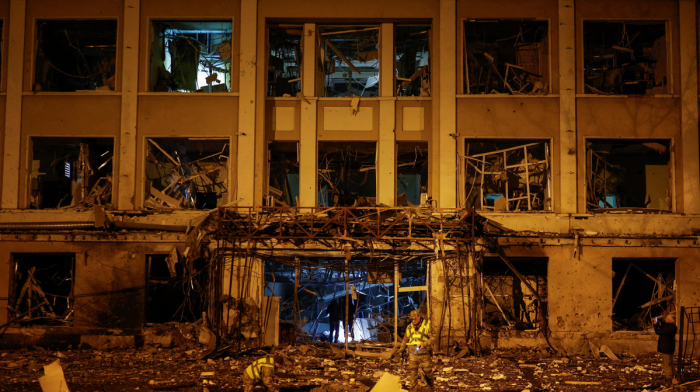
Russia said its forces have captured the village of Rybne in Ukraine’s southeastern Zaporizhzhia region, though Kyiv has not confirmed the claim. Ukraine’s military says it repelled multiple Russian assaults nearby amid ongoing heavy fighting.
Iraqis began casting ballots on Tuesday in parliamentary elections to choose a new 329-member legislature, state television said, with nationwide polling set to close at 6:00 p.m. (1500 GMT).
Iranian President Masoud Pezeshkian has urged the public to drastically reduce water consumption in the aftermath of an unprecedented drought across the country.
Uzbekistan is increasing its involvement in global space research with the signing of a new memorandum of understanding between the Ministry of Digital Development and U.S. aerospace firm, Vast Space.
Kazakhstan’s President Kassym-Jomart Tokayev is preparing for a state visit to Moscow on 12 November, highlighting the continued engagement between the two countries.
The Vatican has launched an investigation into Spanish Bishop Rafael Zornoza over an allegation of sexual abuse of a teenage boy in the 1990s, a charge the cleric firmly denies.
You can download the AnewZ application from Play Store and the App Store.
What is your opinion on this topic?
Leave the first comment