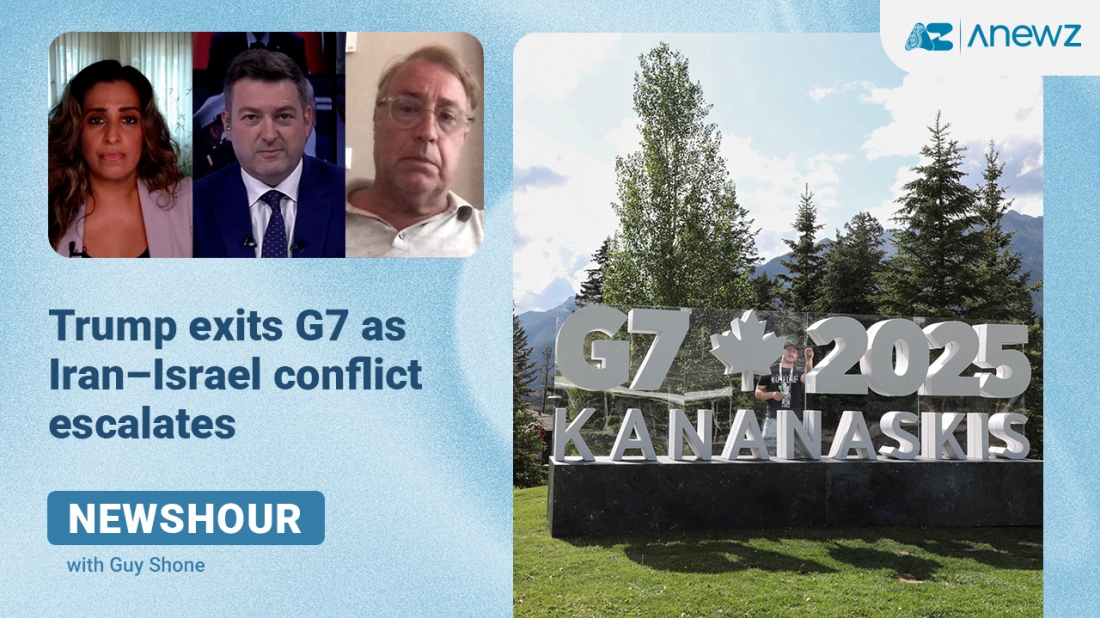
Our NewsHour presenter Guy Shone examined the geopolitical ripple effects of the escalating conflict between Israel and Iran during the G7 summit, where U.S. President Donald Trump’s early exit drew worldwide attention.
The program highlighted reports that Iran, via Gulf intermediaries, may be willing to return to nuclear talks on the condition that Washington persuades Israel to agree to a ceasefire. However, President Trump has rejected these overtures, refusing to sign the G7 joint statement backing Israel’s right to self-defence. Instead, he is demanding Iran commit to strict conditions regarding its nuclear programme.
Guy Shone also discussed how Trump’s early departure disrupted key diplomatic meetings with Ukrainian President Volodymyr Zelenskyy and Australian Prime Minister Anthony Albanese.
With Trump now returning to Washington to convene his National Security Council, the segment explored how the deepening Israel-Iran confrontation is reshaping global diplomacy and putting additional strain on Western unity.
The third stage of the Tour de France will be closed to spectators on Monday (6 July) after a fast-moving wildfire in southwestern France prompted exc...
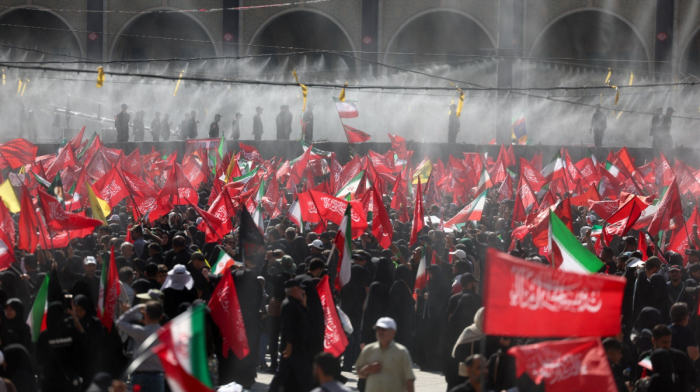
Thousands of mourners gathered in Tehran on Sunday as Iran held funeral prayers for Ayatollah Ali Khamenei and four members of his family on the secon...
Ferrari's Charles Leclerc claimed victory in a dramatic British Grand Prix after a late Safety Car and mechanical problems for rivals reshaped the rac...
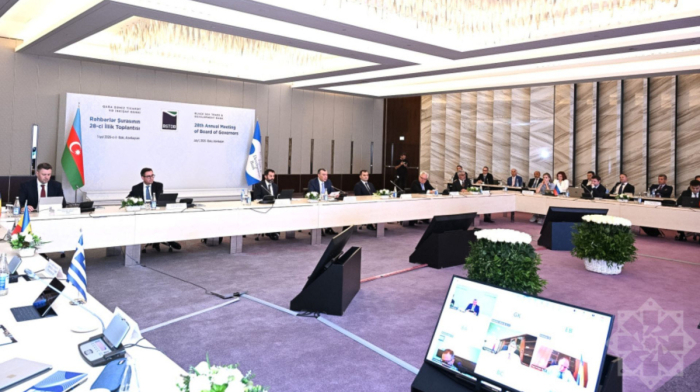
Regional economic cooperation took centre stage in Baku as the 28th Annual Meeting of the Board of Governors of the Black Sea Trade and Development Ba...
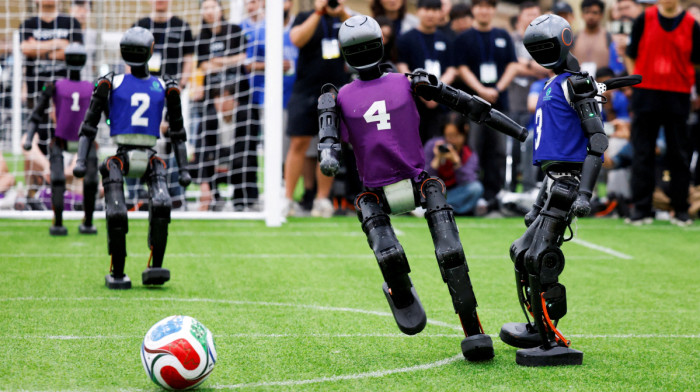
Humanoid robots stumbled, collided and recovered as they battled for the RoboCup 2026 football title on Sunday (5 July), showcasing the latest advance...
The third stage of the Tour de France will be closed to spectators on Monday (6 July) after a fast-moving wildfire in southwestern France prompted exceptional safety measures, organisers and local authorities announced.
Ferrari's Charles Leclerc claimed victory in a dramatic British Grand Prix after a late Safety Car and mechanical problems for rivals reshaped the race at Silverstone Circuit.
Regional economic cooperation took centre stage in Baku as the 28th Annual Meeting of the Board of Governors of the Black Sea Trade and Development Bank was held alongside a Business Forum. The event brought together government officials, business leaders and experts from across the region.
Humanoid robots stumbled, collided and recovered as they battled for the RoboCup 2026 football title on Sunday (5 July), showcasing the latest advances in robotics and artificial intelligence at the world's largest competition of its kind.
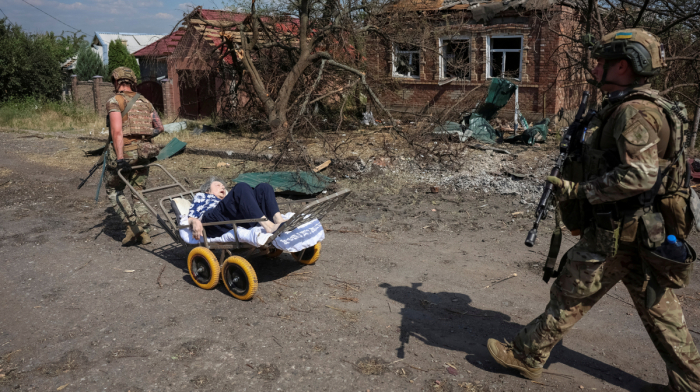
Russia's Defence Ministry has said its forces are clearing the town of Lyman in Donetsk of Ukrainian forces, Moscow's state news agency Tass reported. Meanwhile, Russian attacks killed at least six people across three Ukrainian regions on Friday, regional officials said.
President Donald Trump said Iran is keen to reach a deal with the United States, claiming Washington had paused engagement to allow funeral ceremonies for late Iranian Supreme Leader Ali Khamenei.
Governments are tightening restrictions on teenagers’ use of social media amid growing concerns over mental health, online safety and platform design, but questions remain over enforcement and whether bans can meaningfully change behaviour.
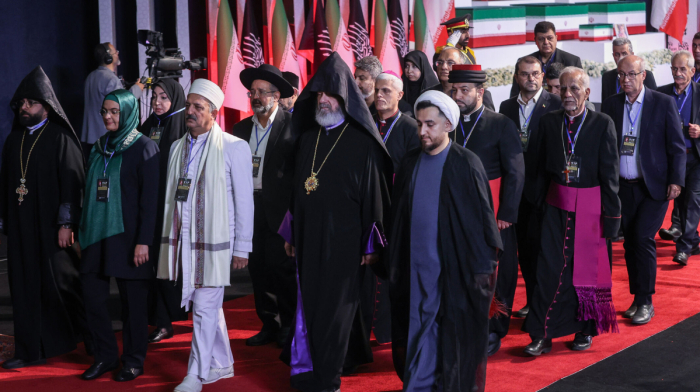
Thousands of mourners gathered in Tehran on Sunday as Iran held funeral prayers for Ayatollah Ali Khamenei and four members of his family on the second day of mass processions. Three of Khamenei's sons attended the ceremony, while his successor, Mojtaba Khamenei, made no public appearance.
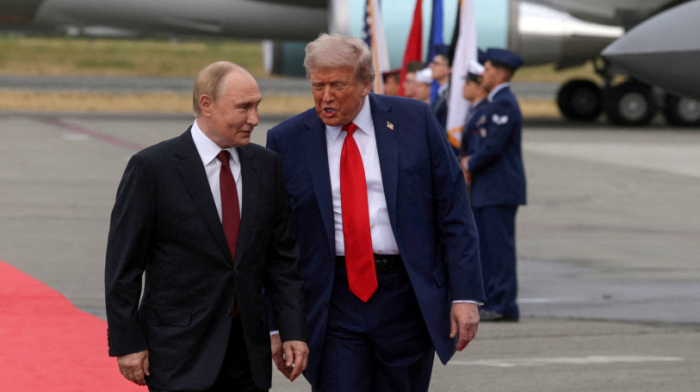
Russian President Vladimir Putin has congratulated U.S. President Donald Trump on the 250th anniversary of American independence, saying Russia and the United States share a special responsibility for maintaining global security as the world's two largest nuclear powers.
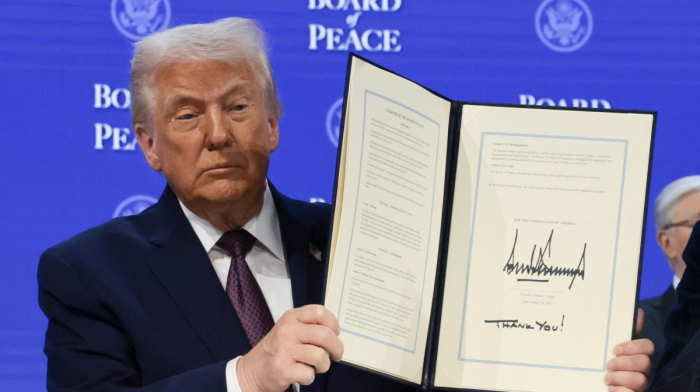
In a special edition of Context, Orkhan Amashov reports from Washington on the inaugural meeting of the Board of Peace, examining plans for Gaza’s reconstruction, a proposed stabilisation force, and the wider diplomatic impact of the U.S.-led initiative.
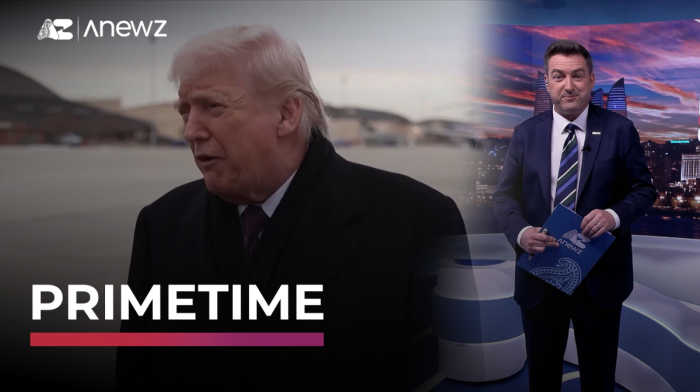
In today’s Prime Time, we covered the following conversations: Azerbaijan has shipped petroleum products to Armenia by rail for the first time in decades, marking a significant step toward economic cooperation and regional integration in the South Caucasus.













What is your opinion on this topic?
Leave the first comment