The AnewZ Opinion section provides a platform for independent voices to share expert perspectives on global and regional issues. The views expressed are solely those of the authors and do not represent the official position of AnewZ
Fears of the end of the West, to paraphrase Mark Twain, may be premature. But they might not be premature for long.
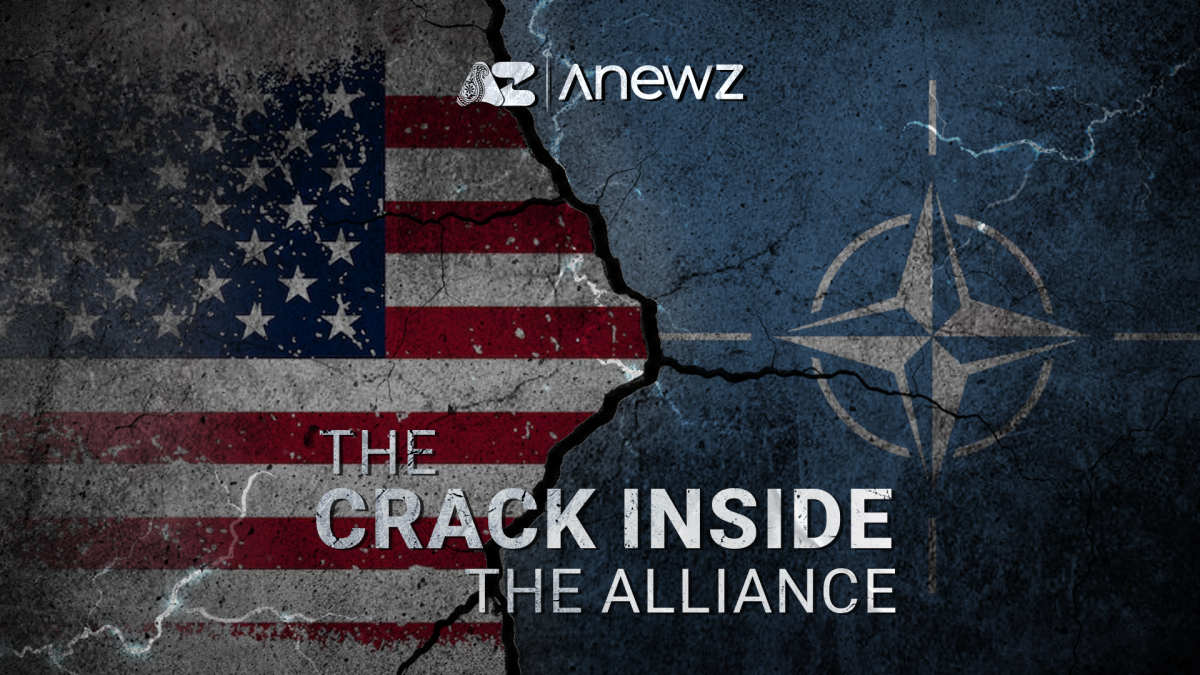
The Western economic, political, and historical centre is linked to both sides of the Atlantic, with the United States as the hegemon and anchored by a partnership or alliance defined by NATO and the EU. And yet the partnership seems over, and the alliance might well follow. Just read the new U.S. National Security Strategy carefully, or pay attention to Venezuela or Greenland. This is no longer the ‘liberator’ U.S. (if it ever was), we now have the ‘sphere of influence’ or ‘Donroe doctrine’ U.S.
The divisions within the West are part of a changing global geopolitical context that is more multipolar and unstable than the future seemed to hold after the fall of the Berlin Wall. With hindsight, it seems that the most pessimistic voices at the time were also the most perceptive, as 9/11 and the ensuing ‘war on terror’ paved the way for the intensification of the ‘clash of civilisations’, rather than the victory of Western values heralded by optimists such as Fukuyama's “end of history".
But 2026 is not 2002, and we may be on the cusp of a new era that could represent a different adaptation of Huntington's predictions. In addition to the clash of civilisations, this article seeks to answer whether a new historical phase has begun, marked by a new ‘clash’, this time within the West.
Last year, just a month after Donald Trump returned to the White House, the Munich Security Conference adopted “multipolarisation” as its central theme. This concept was defined as one or both of the following elements. First, as a multipolar world order, with different world powers effectively challenging the global hegemony that the United States may have enjoyed after the Cold War. Second, as a world order plagued by multiple political fractures, particularly within the West.
These two dimensions of multipolarization are intertwined. This connection was made especially clear in Vice President JD Vance’s recent speech, which included an unusually direct critique of European politics and Western principles. A series of recent geopolitical developments has exposed both the growing fragmentation of the West and its limited ability to respond to mounting global challenges in an increasingly multipolar world.
All these events are shaped in some way by the emergence of two major global trends, which have developed differently since the beginning of the century and, in a broader sense, explain how we got to where we are today. These global trends were highlighted by the crises of the first decade of the 21st century, which shook our global security and economic and financial systems. But they also reflect deeper structural divisions within the West and its place in the international system of the 21st century.
The first global trend concerns the deep normative divisions within the West, which cut across countries and make domestic and foreign policy more contested and unstable. This division lies between what is currently referred to as the “populist” and even “nationalist” wave in the West, and the defenders of the liberal democratic model (some would say “globalists”), which is based on universal values, particularly human rights, and is generally associated with an open-border capitalist system.
The major political events of the past five years—the ongoing refugee crisis, the rise of anti-immigration parties across Europe, Brexit, and the elections of Donald Trump, Jair Bolsonaro, and, more recently, Javier Milei—all point to the growing strength of populist and nationalist movements across the West. At the very least, even in a post-Trump era, the question of what it means to be Western will remain deeply contested—both within and between nations.
Despite divisions within the EU, the most troubling signs of the normative dimension of the “absence of the West” have come from the United States, shaped by the changes it has undergone since the end of the Cold War. As a result, the role of the U.S. as a beacon for promoting human rights and democracy globally has been significantly undermined. First, by the post-9/11 ‘war on terror,’ with events in Guantanamo and abuses in the Middle East, and more recently seems to have disappeared further in Washington with the ‘America first’ approach.
The second global trend worth mentioning is the decline in the importance of the West relative to other world powers, leading to a shift in the global balance of power, with ‘emerging powers’ carrying more weight in the international system. This changing global dynamic is only facilitated by the fact that the West itself is deeply divided. It still cannot agree on a unified approach to China's long-awaited rise, either between the United States and Europe or even among EU countries.
There are two main paths forward on this issue: either follow the more ‘aggressive’ strategy of the United States or the more cautious approach of the EU, which is experiencing internal disagreements on this issue. It is unclear which of the two will be pursued.
For several decades, China has pursued a strategy of divide and rule in Western countries, namely France, Europe, and Latin America, and increasingly in Africa, supported by massive investment and the general framework of the ‘New Belt, New Road’. Many European countries have prioritised the economic gains of closer relations with China, which has often led to the pursuit of closer ties based on growing trade and economic dependence at the expense of addressing human rights issues.
Even before the Russian annexation of Crimea escalated into open warfare in Ukraine in February 2022, unease over the unilateralism of “America First” and President Trump’s dismissive stance on NATO had already prompted French and German leaders—since the twin shocks of 2016—to call for a more autonomous European defense strategy. There has been much rhetoric around “strategic autonomy,” a “European army,” and the idea that Europe must “take its destiny into its own hands.” But as always in politics, the real test lies in whether EU member states are willing to move beyond declarations and commit to increased defense spending.
Unfortunately, this remains a choice that many EU countries, starting with Germany, have seemed reluctant to make for years. Now the challenge is within Europe, particularly Germany as its central power, but also in looking outward, to find a role in a world that is increasingly less Eurocentric.
Germany’s new Chancellor, Friedrich Merz, has begun steering the country’s foreign policy in a bold, unprecedented direction. Shortly after his election, he declared that “the American government is largely indifferent to the fate of Europe.” By March, the outlines of his coalition agreement with the SPD included plans to revise budgetary rules to allow for massive investment in defense capabilities.
Perhaps a new Franco-German axis will take over from the EU and make ‘strategic autonomy’ a reality? Even if this is possible, Europe still lacks the truly global reach of the United States' military bases and alliances. Furthermore, the EU’s relative fragmentation and comparatively limited military capabilities prevent it from projecting its power.
In the context of the new international order, can the EU remain a relevant power and a subject in global affairs? Can the EU, with the right Eurasian or Latin American partners, find a way out?
One possible answer lies beyond Europe’s traditional transatlantic and Eurocentric horizons. In a fragmented, multipolar order, the EU’s capacity to remain an important actor will increasingly depend on forging pragmatic, interest-based partnerships across Eurasia.
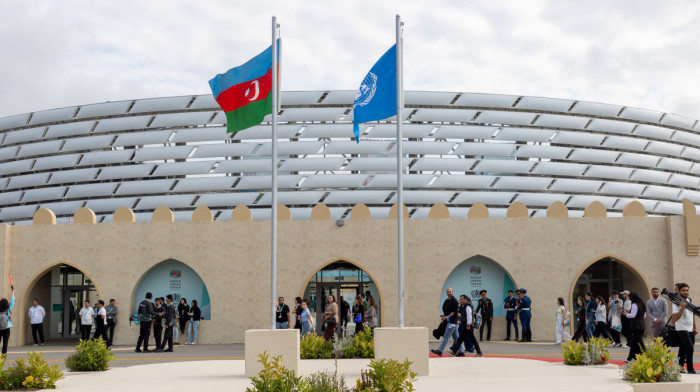
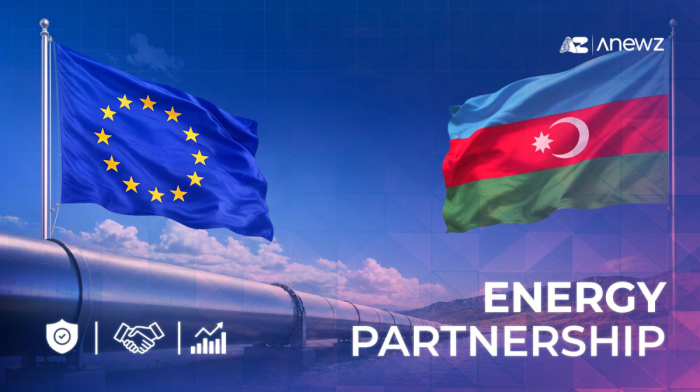
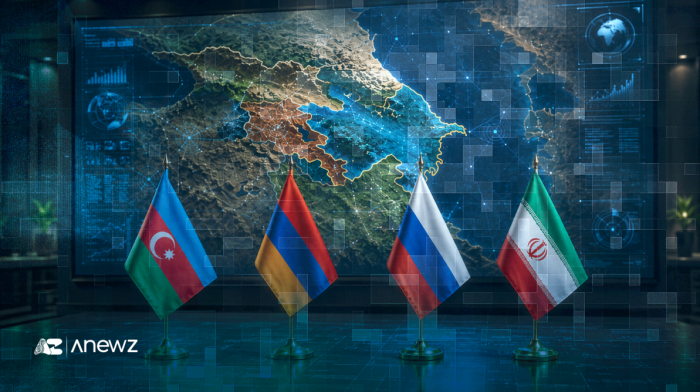
The development of the Middle Corridor, connecting Europe to Central Asia and China via the South Caucasus, illustrates how connectivity, energy security, and geopolitical relevance now intersect. Azerbaijan, positioned at the crossroads of Europe and Asia, is not merely a transit country but a strategic pivot linking the EU to Central Asian resources, alternative trade routes, and emerging regional powers.
For the EU, which seems finally serious about greater strategic autonomy amid transatlantic uncertainty, engagement with Central Asia through partners like Azerbaijan offers more than diversification. It provides a concrete pathway for the EU to reassert itself as a global actor, embedded in the realities of a changing international order rather than nostalgically anchored to an Atlantic world that may no longer exist in its previous form. Mark Twain might be disappointed, but Europe must find its own voice.










What is your opinion on this topic?
Leave the first comment