European leaders meet in Dublin for security talks as Aliyev holds key bilateral meetings
European leaders gathered in Dublin on Thursday, 12 November, for the ninth European Political Community (EPC) summit, with security, defence and e...
Vietnam has officially abolished its long-standing two-child policy in a bid to counter declining birth rates and a shrinking workforce.
On Tuesday, Vietnamese lawmakers approved amendments to the Population Law, granting families the freedom to decide how many children to have.
Originally introduced in 2009 to curb overpopulation, the policy limited families to one or two children. Although enforcement was lenient for the general public, it remained strictly applied to government employees and members of the ruling Communist Party.
According to the Ministry of Health, Vietnam’s population currently stands at just over 100 million, with a median age of 33.4 and around 70% of citizens in the working-age group (15–64). However, the national fertility rate fell to 1.91 children per woman in 2024 — the lowest in the country’s modern history and below the replacement threshold.
From 1999 to 2022, Vietnam’s fertility rate remained stable around the replacement level of 2.1 children per woman. However, in the past two years, it has dropped sharply, from 1.96 in 2023 to 1.91 in 2024 - the lowest level in the country’s history.
UN Secretary-General António Guterres delivered a stark warning at this year's COP31 summit, saying the climate crisis iss advancing faster than governments' efforts to contain it.
European leaders gathered in Dublin on Thursday, 12 November, for the ninth European Political Community (EPC) summit, with security, defence and energy high on the agenda. Azerbaijani President Ilham Aliyev held talks focused on peace, trade and regional cooperation.
Here's your AnewZ Daily Brief for 11 November. Today, we cover Russia-Ukraine peace talks, political tensions in Washington, strikes in Spain, espionage allegations involving Nvidia's CEO, and climate negotiations at COP31 in Türkiye.
Iran will not let a single particle of its enriched nuclear material leave the country, and any new U.S. attack would be met with strikes on distant American bases, Iranian security chief Mohsen Rezaei has said.
Four million workers across Spain joined a general strike on Wednesday over the country’s deepening housing crisis, unions said, bringing disruption to factories, ports, shops and public transport just weeks before a snap general election.
Here's your AnewZ Daily Brief for the 5th of November, as health emergencies, humanitarian crises, political shifts, and cybersecurity threats put governments and essential services under pressure across the globe. Here are five stories worth your attention.
Kazakhstan plans to manufacture 494 types of medicines through eight major investment projects worth a combined $862 million, Health Minister Akmaral Alnazarova announced on 3 November, local media reported.
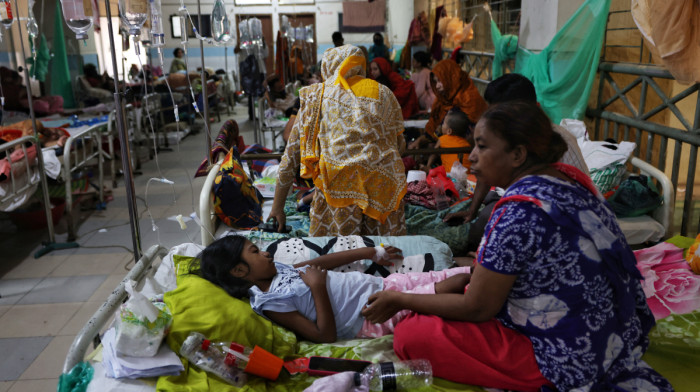
Dengue fever has killed more people in Bangladesh this year than in the whole of 2025, with October the deadliest month so far, data from Bangladesh's Health Ministry shows.
Visitors to Armenia could face temperature screening after a lab worker died from suspected Pneumonic plague in Russia, Yerevan’s Health Minister Anahit Avanesyan told lawmakers on Wednesday, Armenian state news agency Armenpress reported.
Health advice now reaches people through social media, fitness apps, wearable technology and AI. From detoxes and protein-focused diets to skincare and fitness trends, online wellness content is shaping everyday health choices while raising concerns about misinformation and potential risks.
You can download the AnewZ application from Play Store and the App Store.
What is your opinion on this topic?
Leave the first comment