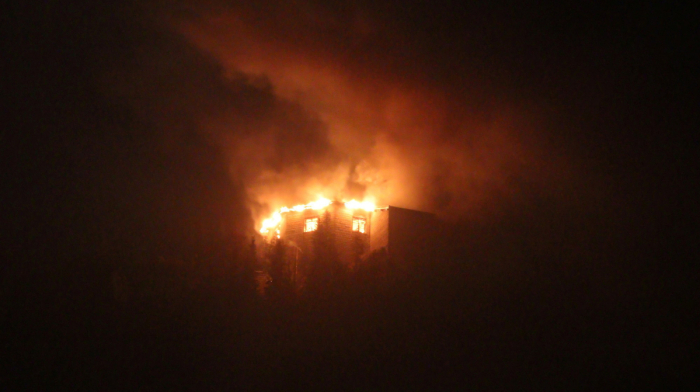
Zelenskyy: Russian strikes on nuclear sites ‘a danger for Ukraine and Europe’
Russia launched a large-scale overnight attack on Ukraine’s energy system early on Saturday (7 January), hitting power generation and distribution f...
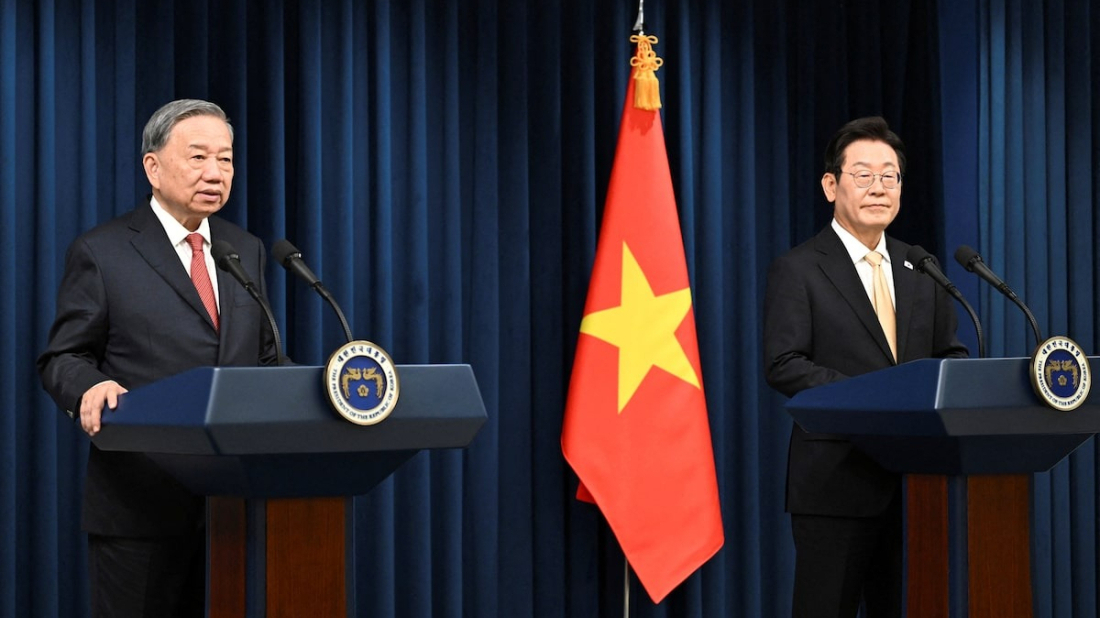
South Korea and Vietnam have pledged to boost annual trade to $150 billion by 2030, signing 10 cooperation deals as new U.S. tariffs disrupt global supply chains.
South Korean President Lee Jae Myung hosted Vietnamese Communist Party general secretary To Lam in Seoul on Monday, marking his first state guest since taking office in June. The two leaders avoided public mention of U.S. President Donald Trump’s new levies — 15% on South Korean exports to the U.S. and 20% on Vietnamese goods — but emphasised the need to safeguard bilateral trade and investment.
Vietnam’s trade with South Korea was worth about $86.8 billion in 2024, official figures show. Lam said he welcomed further South Korean investment, noting that some 10,000 Korean companies are already operating in Vietnam. Lee said those firms “contribute to Vietnam’s economic development and mutually beneficial cooperation between the two countries.”
The governments signed 10 memoranda of understanding covering nuclear and renewable energy, finance, science and technology, and infrastructure such as high-speed rail. Lam, addressing Yonsei University in Seoul, urged South Korean firms to expand their presence in Vietnam and warned of the risks from fragmenting supply chains.
He called for joint development of semiconductors and new materials, and for South Korea to help train Vietnamese workers in sectors including artificial intelligence, biotechnology and shipbuilding.
Major South Korean companies, including Samsung Electronics, have long used Vietnam as a manufacturing and export hub, benefiting from lower labour costs, tax incentives and Hanoi’s network of free trade agreements. Potential areas for future investment include nuclear energy, LNG power plants and high-speed rail projects, Vietnamese officials said.

Winter weather has brought air travel in the German capital to a complete halt, stranding thousands of passengers as severe icing conditions make runways and aircraft unsafe for operation and force authorities to shut down one of Europe’s key transport hubs.
Storm Leonardo hit Spain and Portugal on Tuesday, forcing more than 11,000 people from their homes, as a man in Portugal died after his car was swept away by floodwaters and a second body was found in Malaga.
An attacker opened fire at the gates of a Shiite Muslim mosque in Islamabad on Friday before detonating a suicide bomb that killed at least 31 people in the deadliest assault of its kind in the capital in more than a decade.
Iran and the United States opened nuclear talks in Oman on Friday, with Tehran calling the meeting a good start and both sides agreeing to continue discussions after returning to their capitals for consultations.
Start your day informed with AnewZ Morning Brief: here are the top news stories for the 6th of February, covering the latest developments you need to know.
Türkiye’s national energy company, TPAO, has struck a new cooperation deal with U.S. energy giant Chevron, signing a memorandum of understanding to explore joint oil and gas exploration and production opportunities, the Turkish Energy and Natural Resources Ministry announced on Thursday.
Wall Street ended sharply lower on Tuesday as investors worried about artificial intelligence (AI) creating more competition for software makers, keeping them on edge ahead of quarterly reports from Alphabet and Amazon later this week.
U.S. stock markets finished mixed on Wednesday (28 January) as investors reacted calmly after the Federal Reserve left interest rates unchanged, a decision that had been widely expected and largely priced in.
The S&P 500 edged to a record closing high on Tuesday, marking its fifth consecutive day of gains, as strong advances in technology stocks offset a sharp selloff in healthcare shares and a mixed batch of corporate earnings.
Chevron is in talks with Iraq’s oil ministry over potential changes to the commercial framework governing the West Qurna 2 oilfield, one of the world’s largest producing assets, after Baghdad nationalised the field earlier this month following U.S. sanctions imposed on Russia’s Lukoil.
You can download the AnewZ application from Play Store and the App Store.
What is your opinion on this topic?
Leave the first comment