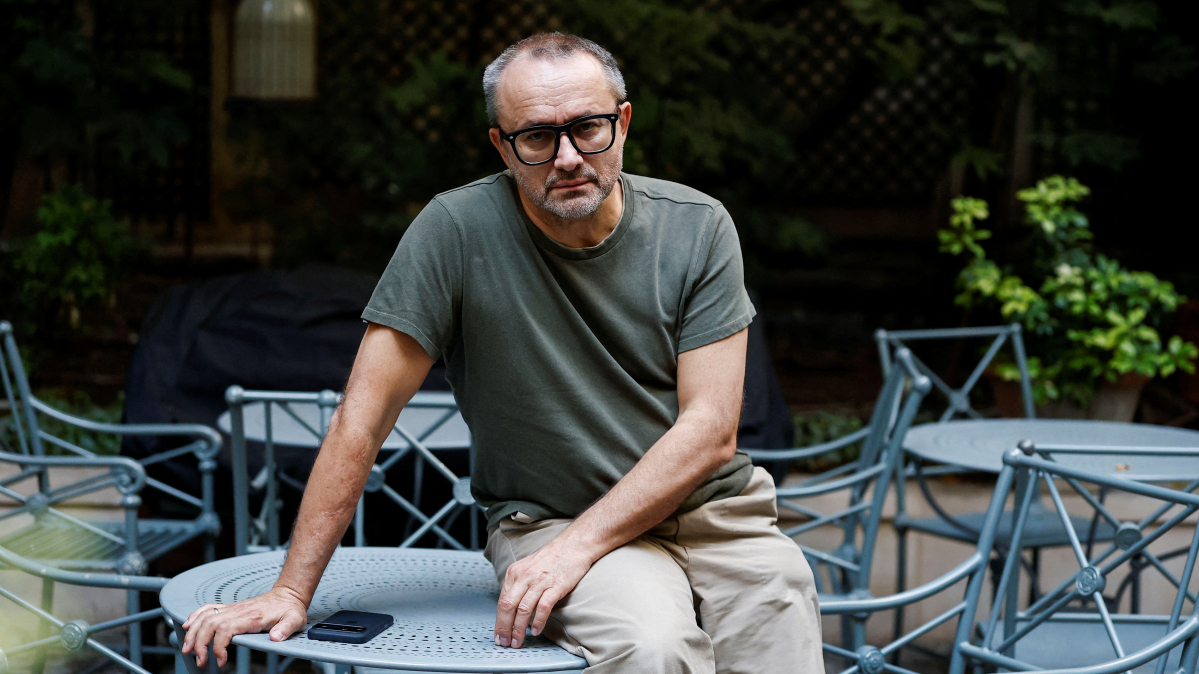
Exiled Russian filmmaker Andrey Zvyagintsev confronts conscription and moral compromise in wartime Russia in Minotaur, a drama released nearly five years after Moscow launched its full-scale invasion of Ukraine.
The film won the Grand Prix at this year's Cannes Film Festival and has been selected as Russia's entry for the 2027 Academy Awards in the Best International Feature Film category.
“Minotaur” follows Gleb, the owner of a logistics company who is ordered by a local mayor to provide 14 employees for military service.
Unwilling to send his existing workers to the front, Gleb recruits new drivers by promising them high salaries before sending them to the war.
The film also depicts Russian conscripts boarding a bus for the front, including a father saying goodbye to his teenage son, while another mother reacts in anguish. A later scene shows the image of a dead recruit displayed on a roadside billboard celebrating him as a war hero.
Zvyagintsev said the war had become impossible for a Russian filmmaker to ignore.
“For a director who has lived there, was born there, and speaks only Russian ... how could he not talk about what has become the main, if not the most important, event of recent years?” he told Reuters.
From French thriller to wartime drama
Zvyagintsev, 62, is best known internationally for his Oscar-nominated films Leviathan and Loveless. He left Russia in 2021 and now lives in France.
Minotaur was originally conceived as a remake of Claude Chabrol's 1969 thriller La Femme Infidele, about a husband who suspects his wife of having an affair.
After Russia's invasion of Ukraine in 2022, however, the project changed dramatically. The original suburban French setting became a bleak Russian town, while the domestic conflict was placed against the backdrop of war.
Unable to film in Russia, Zvyagintsev shot the production in Latvia.
The film will not receive an official release in Russia. Zvyagintsev said he was sceptical that the movie could directly change public opinion about the war, but argued that art could influence audiences over time.
“Propaganda is like a heavy hammer, like pliers, like an anvil. It's a very crude instrument,” he said. “Art, on the other hand, deals with subtleties. This soft power works over the long term.”
Filmmaker labelled ‘foreign agent’
Critics have described Minotaur as one of Zvyagintsev's most direct examinations of Russia's political and moral condition.
The director said the film sought to portray people navigating difficult choices rather than offer a simple political message.
“This is all we could do: tell the story as we see it and find the human being in this unbearable state of compromise,” he said.
Russia designated Zvyagintsev a “foreign agent” in August, a label used by Russian authorities for individuals and organisations they say receive foreign support or engage in activities deemed contrary to Russian interests.
Minotaur opens in French cinemas on 14 October.
Read more about other culture stories:















What is your opinion on this topic?
Leave the first comment