Uzbekistan is launching a new fashion academy in Tashkent to help local clothing manufacturers build their own brands, sharpen design skills and compete in international markets.
The new Tashkent International Academy of Fashion will be based at the site of the Korean-Uzbek Textile Technopark, which is being closed.
Established under a presidential resolution signed on 16 October, the state-run institution will build on an existing joint educational programme run by the Tashkent Institute of Textile and Light Industry and the Paris-based Académie Internationale de Coupe de Paris.
Students already enrolled in the programme will transfer to the new academy to complete their studies.
The institution will offer bachelor's and master's degrees in fashion design and related fields, alongside planned joint programmes with universities in Europe and Türkiye. It will also welcome international students.
Classes are due to start in the 2026–2027 academic year. Alongside training the next generation of designers, the academy will also develop clothing for government agencies.
From the following academic year, clothing manufacturers will be able to commission training programmes tailored to their needs. Under the proposed model, students will spend at least 30 per cent of their time studying at the academy, with the remainder spent gaining hands-on experience in textile factories.
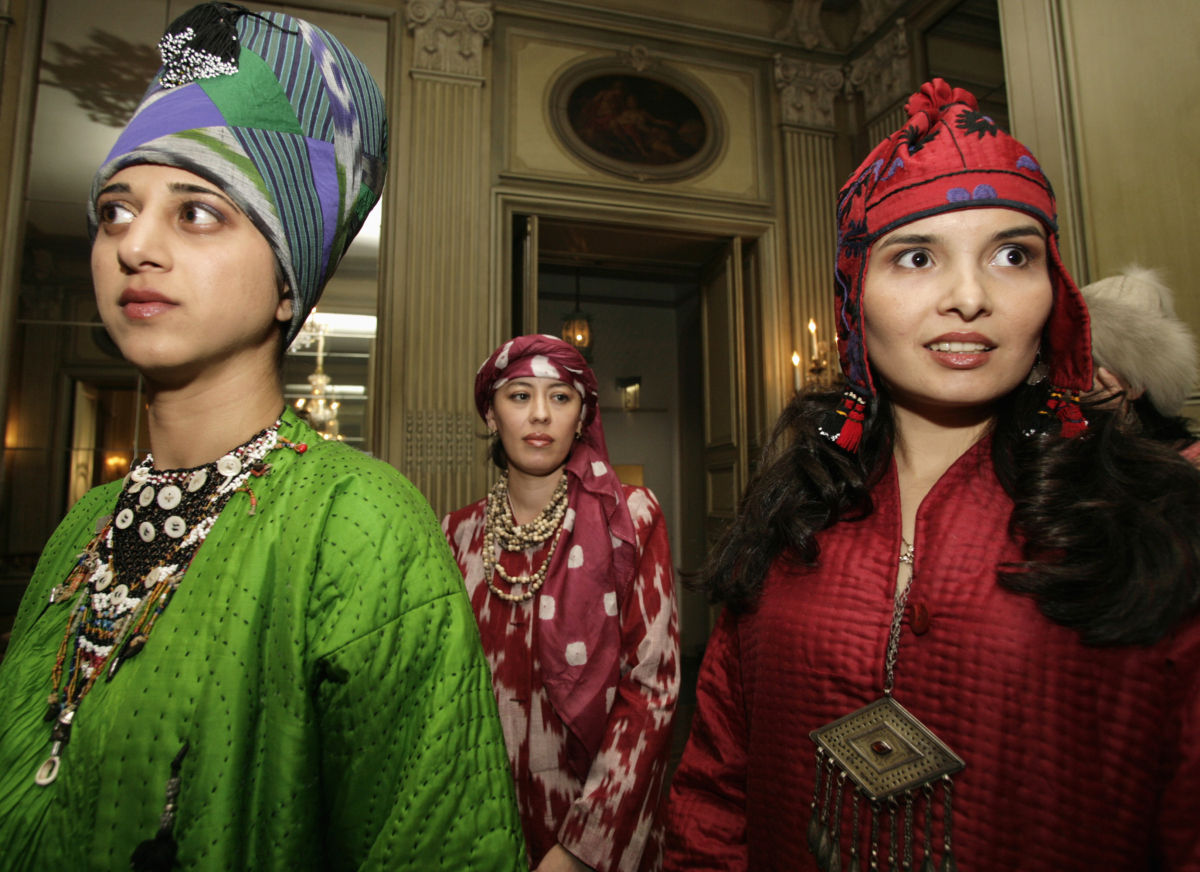 Models from Kazakhstan, Kyrgyzstan and Uzbekistan wait before a Central Asian fashion show at the Meridian International Centre in Washington, 9 November 2006.
From factory production to global fashion brands
Uzbekistan has long manufactured clothing for international clients, but homegrown fashion labels have struggled to gain recognition abroad.
The new academy aims to change that by helping manufacturers move beyond producing garments for other companies and establish brands of their own.
Combining professional education with practical industry experience, it will help aspiring designers transform creative ideas into commercially viable collections and sustainable businesses.
Textile exports continue to grow
The initiative comes as Uzbekistan's textile exports continue to grow, highlighting the industry's importance to the country's economy.
In 2025, Uzbekistan exported textile products worth $2.6 billion. During the first eight months of 2026, exports reached $2.1 billion, up 26.9 per cent from the same period a year earlier. Finished textile products accounted for 51 per cent of the total.
Uzbekistan's textile industry previously faced restrictions in accessing Western markets following an international boycott of Uzbek cotton over concerns about forced labour.
In 2022, the Cotton Campaign coalition lifted the boycott after independent monitoring found that systematic state-imposed forced labour had not occurred during the 2021 cotton harvest.
The move opened the door to new international partnerships, giving Uzbek manufacturers greater opportunities to work with global companies and expand into overseas markets.













What is your opinion on this topic?
Leave the first comment