In a workshop in Margilan, in eastern Uzbekistan's Fergana Region, silk threads are still being transformed into brightly coloured atlas and adras fabrics using techniques passed down through generations.
The craft has survived changing times and is now being connected to designers, exhibitions and international audiences. In 2017, UNESCO selected the Margilan Crafts Development Centre’s programme for safeguarding atlas and adras-making techniques for its Register of Good Safeguarding Practices.
Craft measured in metres
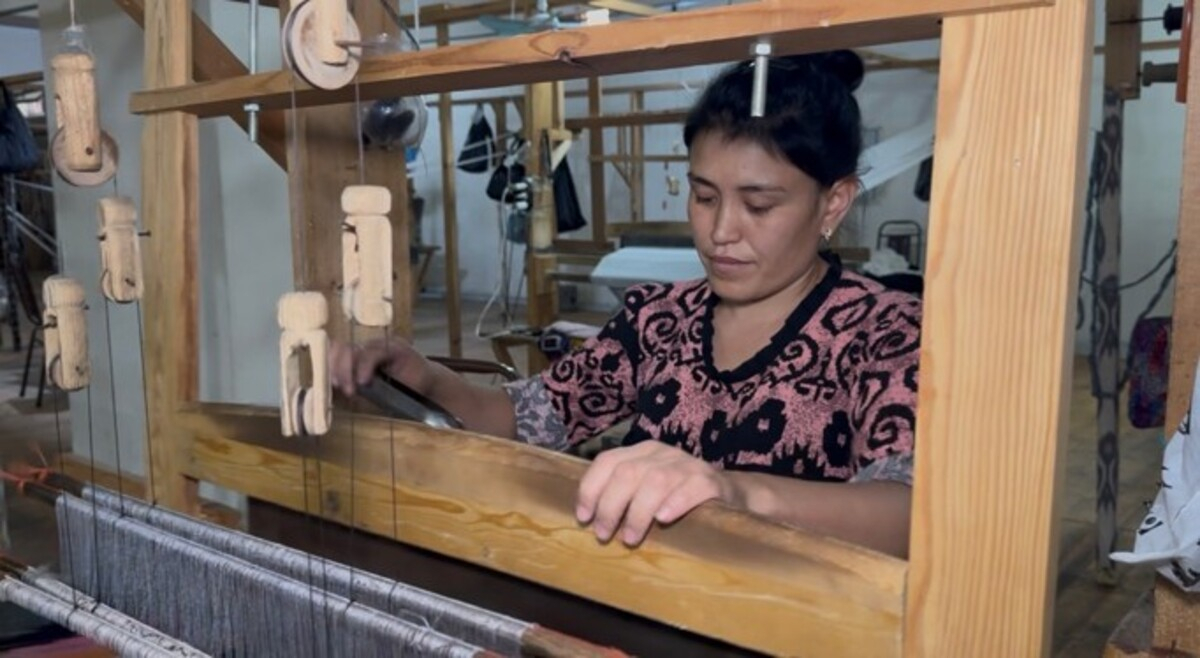
The process remains highly labour-intensive. Traditional textile craftswoman Khilola Isomova says she can weave around three to four metres of fabric in a day, depending on its length.
“At the moment, I am weaving alo baqmol (a high grade silk velvet). Depending on the length of the fabric, I can weave around three to four metres in one day.”
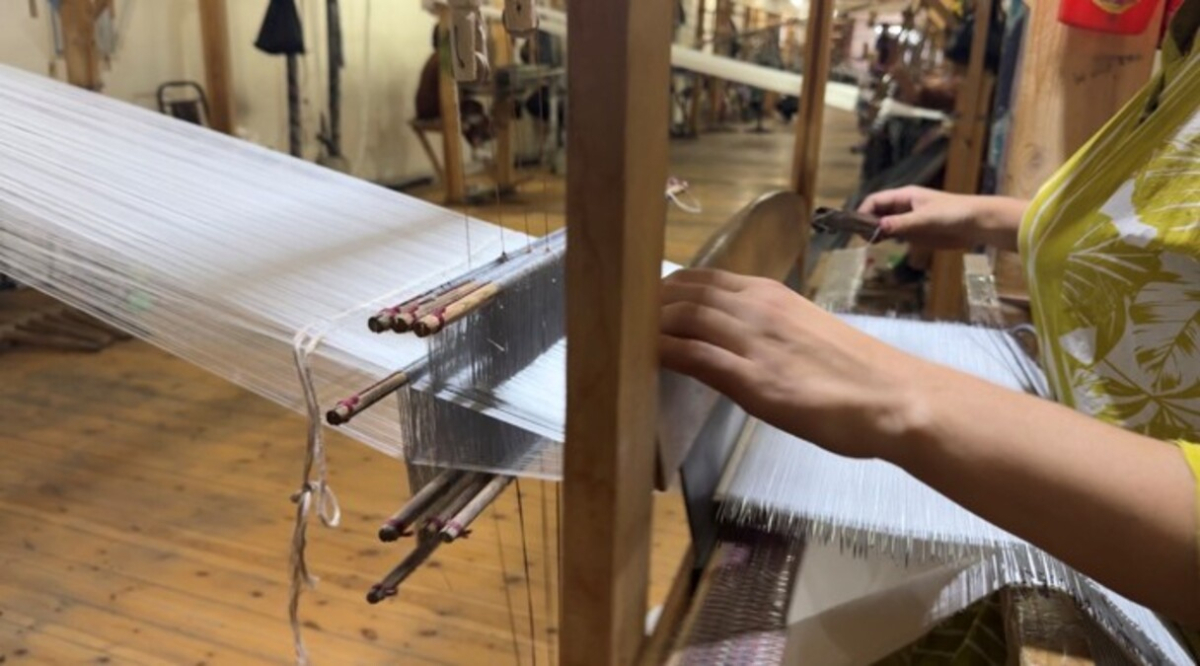
Isomova describes the loom, or dastgoh, as one stage in a much longer production process. According to her, there are around eight stages, beginning with dyeing the silk and creating the pattern. The threads are then treated to prevent the colours from running before the pattern is woven into the fabric. Further dyeing and finishing follow.
“There is a lot of work involved,” she says.
Elsewhere in the workshop, another stage of the process is done by hand. A craftsman uses small, petal-shaped printing tools covered with tiny needles. He dips each tool into dye and then presses it onto the fabric, gradually building the pattern across the material. The technique adds another layer of detail to a process that relies heavily on manual work.
That labour is also what distinguishes the traditional process from industrial textile manufacturing, where fabrics can be produced on a much larger scale.
Another part of the workshop is dedicated to processing the silk thread.
A craftsman works with a large, roughly two-metre-high machine used to handle and prepare the threads before they are woven into fabric. The scale of the equipment contrasted with the highly manual work carried out elsewhere in the workshop, showing how different stages of the traditional production process come together.
Preserving the technique, not just the fabric
The Margilan Crafts Development Centre was established in 2007 with the aim of safeguarding, developing and promoting traditional atlas and adras production. UNESCO says the centre combines training, exhibitions, craft fairs and textile festivals with efforts to transmit knowledge and skills to new generations.
The centre's work also extends beyond Margilan. UNESCO documentation describes training in traditional weaving and natural dyeing, including a “master-apprentice” approach through which experienced artisans pass their skills to younger practitioners.
The international interest is reflected in the city's Atlas Bayrami festival. A 2018 edition brought masters, artists and specialists from more than 30 countries, including China, South Korea, France and Germany, while workshops and fashion shows connected traditional craft with contemporary design.
From heritage to creative economy
For Margilan, the challenge is no longer simply whether atlas and adras can survive. It is whether a centuries-old textile tradition can remain economically relevant in a modern creative industry.
The answer may lie in the same combination that has helped preserve the craft: keeping the techniques intact while allowing the products, designs and applications to evolve. For the artisans working at the loom, however, the process itself remains much the same, one thread, one pattern and one metre of fabric at a time.

















What is your opinion on this topic?
Leave the first comment