U.S. to help ships stranded in Strait of Hormuz as tanker hit by projectiles
A tanker reported being hit by unknown projectiles in the Strait of Hormuz, a maritime security organisation sa...
Lawyers warn that the case could eventually involve up to 1.8 million UK drivers across 14 brands, potentially making it the largest consumer class action in British legal history.
A decade after Volkswagen’s emissions scandal shook the global auto industry, five of the world’s largest carmakers—Mercedes-Benz, Ford, Renault, Nissan, and Peugeot/Citroën—are now facing a landmark High Court trial in London that could permanently alter drivers’ perception of “clean diesel.”
The long-running “dieselgate” class action, which opened this week, brings together around 850,000 motorists who claim they were misled about the environmental performance of their vehicles.
Lawyers say the case could eventually expand to include as many as 1.8 million UK drivers across 14 brands, potentially making it the largest consumer class action in British history.
At the heart of the case are allegations that the manufacturers installed “defeat devices”—software designed to detect when a vehicle was undergoing official emissions testing and temporarily reduce pollution output to meet EU standards.
Outside testing conditions, however, the vehicles allegedly reverted to normal performance, emitting nitrogen dioxide and particulate matter far above legal limits.
All five companies have denied wrongdoing. Mercedes-Benz said its systems were “legally and technically justified,” while Renault and Stellantis insisted their vehicles complied with all European emissions regulations when sold.
Ford dismissed the lawsuit as “without merit,” and Nissan reiterated its “commitment to regulatory compliance in every market.”
The manufacturers are expected to argue that the software in question was intended to protect engines from damage rather than manipulate test results—a technical distinction that could prove crucial to the case’s outcome.
The High Court proceedings, expected to run for three months, will focus on a small sample of diesel vehicles produced by the five companies.
A judgment is not expected until mid-2026.

President Trump has issued a warning to the international community, claiming a nuclear-armed Iran would strike Israel "very quickly" before targeting Europe and the United States.
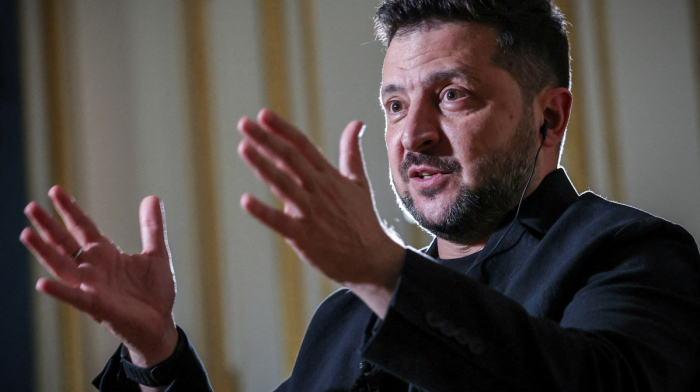
Ukraine is monitoring “unusual activity” along its border with Belarus, President Volodymyr Zelenskyy said in a video statement released on Saturday (2 May). He warned that Kyiv is ready to respond if necessary amid continued regional tensions linked to Russia’s war.
Hundreds of young people in South Korea have gathered in Seoul to take part in a city-backed “power nap contest”, aimed at drawing attention to the country’s chronic sleep deprivation.
Türkiye’s Vice President Cevdet Yılmaz is set to visit Armenia in early May to take part in the 8th European Political Community Summit, in what will be the highest-level Turkish visit to the country to date. Meanwhile, German Chancellor Friedrich Merz is reportedly expected to miss the forum.
U.S. President Donald Trump has said he will “soon be reviewing” a new 14-point proposal sent by Iran, casting doubt on the chances of a deal after Tehran called for security guarantees, an end to naval blockades and a halt to the war across the region, including in Lebanon.
U.S. President Donald Trump has said he will raise tariffs on cars and trucks imported from the European Union to 25% next week, up from the 15% level agreed last year, accusing the bloc of failing to comply with its trade commitments.
The decision by the United Arab Emirates to leave OPEC+ on 1 May has put renewed focus on one of the most influential groups in global energy - and how its decisions can shape oil prices worldwide.
The United Arab Emirates has said it's quitting OPEC from 1 May, dealing a major blow to the oil producers’ group and its de facto leader, Saudi Arabia, amid disruption caused by the Iran war.
As the Iran war disrupts global flows of oil and gas and energy prices skyrocket, the Drin River, which descends through the mountains of northern Albania, is acting as a kind of shield.
China has ordered Meta to unwind its more than $2 billion acquisition of artificial intelligence start-up Manus, marking a major escalation in Beijing’s scrutiny of foreign investment in sensitive technology sectors. The order was issued on Monday by the National Development and Reform Commission.
You can download the AnewZ application from Play Store and the App Store.
What is your opinion on this topic?
Leave the first comment