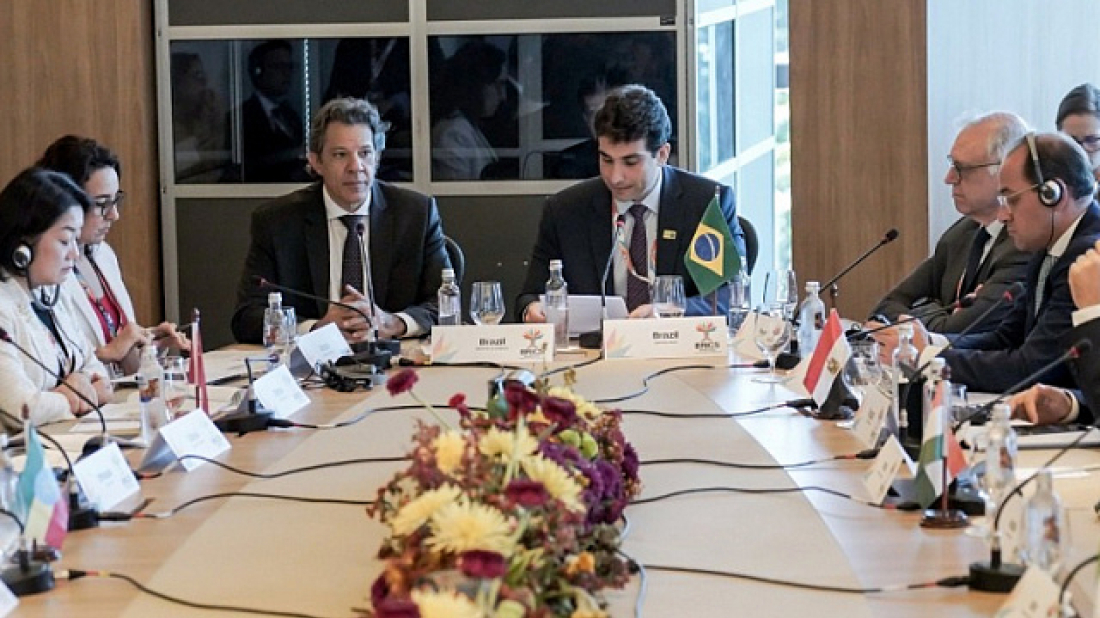
The BRICS member countries have reached a new agreement to establish a multilateral financial guarantee mechanism aimed at supporting sustainable development projects, including the energy transition, the expansion of renewable energy, and the strengthening of resilient infrastructure.
“We held a joint session on COP30 climate financing to review the agenda developed over the past six months. We’ve prepared a technical report to help align the positions of finance ministries and central banks, with the goal of contributing to the Leaders’ Declaration,” explained Tatiana Rosito, Secretary for International Affairs at Brasilian Ministry of Finance.
This agenda outlines specific instruments, such as BRICS guarantees designed to drive investment in climate-related initiatives—ranging from resilient infrastructure and nature-based solutions to adaptation and the energy transition,” Rosito added.
She explained that the mechanism is designed to increase the availability of resources for BRICS countries and reduce capital costs by lowering financial risk. The model functions similarly to the World Bank’s Multilateral Investment Guarantee Agency (MIGA), which provides credit guarantees to spur investment in developing countries.
The mechanism was officially launched on 5th July, during the BRICS Finance Ministers Meeting. The terms of its operation and the specific guarantees to be offered will be further defined in the coming months following ministerial endorsement. On the environmental front, carbon markets are also being discussed as part of the lead-up to COP30.
They called on international financial organisations to support measures to adapt to climate change and create conditions for active business participation in this. To attract private investment, it is planned to use various sustainable financing instruments, including green bonds, loans in national currencies and mixed financing mechanisms. At the same time, the BRICS countries intend to promote voluntary carbon markets.
The Ministers of Finance and Central Bank Governors of the BRICS member states have endorsed three declarations containing commitments to strengthen multilateralism and promote economic development among member countries. In addition to the ministerial document, the group adopted a dedicated declaration in support of the United Nations Framework Convention on International Tax Cooperation, as well as backing the revision of IMF quotas, in pursuit of reforming the international financial system.




















What is your opinion on this topic?
Leave the first comment