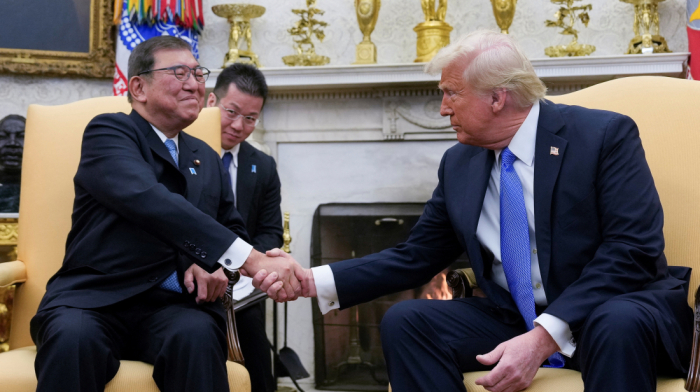
German parliament vote on pensions tests Merz's authority
German Chancellor Friedrich Merz faces a significant challenge on Friday as parliament votes on a pensions bill that has sparked a revolt within his o...
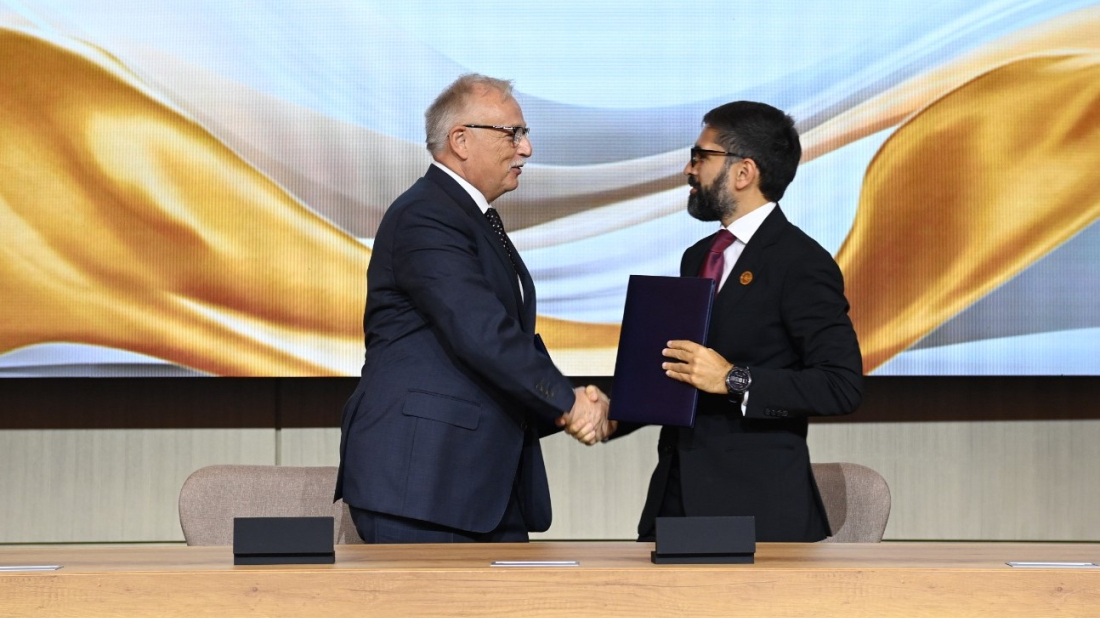
Hungary's MOL Group and SOCAR have signed key terms for an exploration, development, and production sharing agreement for a new onshore area covering the Shamakhi-Gobustan regions of Azerbaijan.
The agreement was signed during the Baku Energy Week.
"The Shamakhi-Gobustan joint exploration project will not just be a great addition to our international production portfolio but it will be an important puzzle to securing Central-Europe’s energy supply. We will have the flexibility to decide to sell or to ship the oil produced to MOL Group’s core region to contribute to the security of energy supply” – said Zsolt Hernádi, Chairman and CEO of the MOL Group in the company's statement.
He added that the new agreement builds on the momentum of the earlier cooperation and reflects the parties’ shared commitment to expand their collaboration in Azerbaijan’s upstream sector.
MOL will be the operator and hold a 65% stake in the project, while SOCAR will own the remaining 35%, the company said.
The finalization of a fully termed exploration, development, and production sharing agreement remains subject to further negotiations and regulatory approvals.
MOL Group entered the Azerbaijani market in 2020 by acquiring a 9.57% stake in the Azeri-Chirag-Gunashli (ACG) field—one of the world’s largest oil fields—as well as an effective 8.9% stake in the Baku-Tbilisi-Ceyhan (BTC) pipeline, which transports crude oil to the Mediterranean port of Ceyhan. As of 2024, these assets represent 14% of MOL’s total production and 25% of its total reserves.
The BTC pipeline plays a key role in supplying oil to MOL Group’s refineries in Central and Eastern Europe. To date, 15 million barrels of crude oil have been transported from the ACG field through the BTC pipeline and shipped to MOL Group’s refineries, including Slovnaft in Bratislava and INA’s Rijeka Refinery.
For nearly three decades following the dissolution of the Soviet Union, the international system was defined by a singular, overwhelming reality: American unipolarity.
Chinese scientists have unveiled a new gene-editing therapy that they say could lead to a functional cure for HIV, making it one of the most promising developments in decades of global research.
Faced with mounting public outrage following one of the deadliest environmental disasters in the nation’s recent history, the Indonesian government has pledged to investigate and potentially shut down mining operations found to have contributed to the catastrophic flooding on Sumatra.
Israel was cleared on Thursday to participate in the 2026 Eurovision Song Contest, a decision made by the organisers, the European Broadcasting Union (EBU), which sparked a major controversy.
Britain’s King Charles III welcomed German President Frank-Walter Steinmeier on Wednesday, marking the beginning of his three-day state visit to the United Kingdom. The visit, the first by a German President to the UK in 27 years, comes as the two countries continue to strengthen ties post-Brexit.
U.S. industrial production rose by 0.1% in September, rebounding after a decline in August, while capacity utilisation remained unchanged, according to Federal Reserve data on Wednesday.
Google’s YouTube has announced a “disappointing update” for millions of Australian users and creators, confirming it will comply with the country’s world-first ban on social media access for under-16s by locking affected users out of their accounts within days.
President of Turkmenistan Serdar Berdimuhamedow has signed the “On Virtual Assets” law, which will officially legalise cryptocurrency mining and exchange activities in the country from 1 January 2026.
European Union ministers will urge senior U.S. trade officials to implement more elements of the July EU–U.S. trade deal on Monday, including cutting tariffs on EU steel and lifting duties on goods such as wine and spirits.
Google has announced a major update for its Pixel 10 series: owners can now send and receive files with Apple devices using AirDrop, without any collaboration from Apple. The new functionality applies to iPhones, iPads, and macOS devices, though for now it is limited to the Pixel 10 line.
You can download the AnewZ application from Play Store and the App Store.
What is your opinion on this topic?
Leave the first comment