Former Iraqi president Barham Salih to lead UNHCR
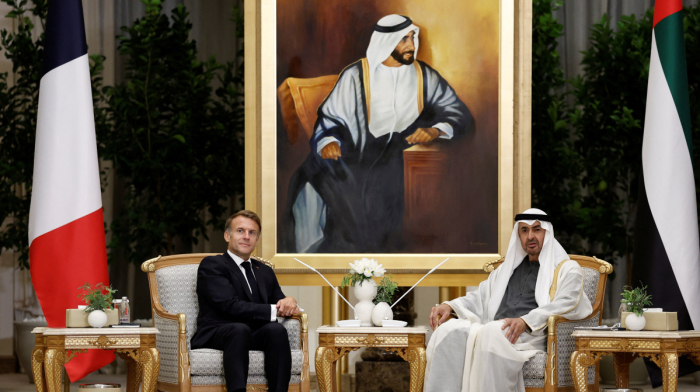
Former Iraqi President Barham Ahmed Salih has been elected by the UN General Assembly as the next High Commissioner for Refugees, beginning a five-yea...
The U.S. FTC has opened a broad antitrust investigation into Microsoft, focusing on cloud computing, licensing practices, and AI products, amid allegations of market abuse.
The U.S. Federal Trade Commission (FTC) has launched a comprehensive antitrust investigation into Microsoft, focusing on its software licensing and cloud computing operations.
The probe, approved by FTC Chair Lina Khan before her expected departure in January, comes amidst uncertainty over enforcement priorities under the incoming administration of President-elect Donald Trump.
The FTC is investigating allegations that Microsoft uses restrictive licensing terms to prevent customers from transferring data from its Azure cloud service to competing platforms. The agency is also examining Microsoft's practices in cybersecurity and artificial intelligence products.
Competitors have accused the company of locking customers into its Azure platform, with groups like NetChoice criticising its licensing policies and AI integrations.
Last year, Google filed a complaint with the European Commission, claiming Microsoft charged a 400% markup for running Windows Server on rival cloud platforms and provided delayed security updates. Similar concerns have been raised by other industry players, including Amazon and Google, who compete with Microsoft in cloud computing.
Microsoft, which declined to comment, has generally avoided the heightened scrutiny faced by other Big Tech firms like Google, Apple, Meta, and Amazon.
However, the FTC has already examined Microsoft's activities in artificial intelligence and its $650 million deal with Inflection AI.
While some expect Trump’s administration to adopt a more lenient approach towards Big Tech, past actions, including lawsuits against Google and Meta, indicate that ongoing investigations may continue regardless of leadership changes.

The latest clashes between Thailand and Cambodia mark a dangerous escalation in one of Southeast Asia’s oldest and most sensitive disputes.
In the complex world of international diplomacy, the ongoing tensions between India and Pakistan have raised significant questions about the role of third-party mediation.
FIFA has introduced a new “more affordable” ticket category for the 2026 World Cup, priced at $60 (£45) for all 104 matches in the U.S., Canada, and Mexico, according to agencies.
Petroleum products are being transported by rail from Azerbaijan to Armenia for the first time in decades. The move is hailed as a tangible breakthrough in efforts to normalise relations between the long-time rivals.
In a ground-breaking development, artificial intelligence (AI) is taking on new forms in Japan, where it has extended to a more personal and intimate domain being romantic relationships.
Warner Bros Discovery’s board rejected Paramount Skydance’s $108.4 billion hostile bid on Wednesday (17 December), citing insufficient financing guarantees.
Ford Motor Company said on Monday it will take a $19.5 billion writedown and scrap several electric vehicle (EV) models, marking a major retreat from its battery-powered ambitions amid declining EV demand and changes under the Trump administration.
Iran has rolled out changes to how fuel is priced at the pump. The move is aimed at managing demand without triggering public anger.
U.S. stock markets closed lower at the end of the week, as investors continued to rotate out of technology shares, putting pressure on major indices.
The U.S. Federal Reserve’s Federal Open Market Committee (FOMC) cut its benchmark interest rate by 25 basis points to a range of 3.50% to 3.75% following its two-day policy meeting, according to an official statement issued on Wednesday, 10 December.
You can download the AnewZ application from Play Store and the App Store.
What is your opinion on this topic?
Leave the first comment