live Zelenskyy says Russia hit six energy targets despite ceasefire
Ukrainian President Volodymyr Zelenskyy says Russia hit at least six energy targets in deadly strikes across Ukraine, showing Moscow is unwilling t...
NASA’s Perseverance rover has spotted the first aurora on Mars visible to the human eye, offering a glimpse of what future astronauts might one day enjoy under the Martian sky.
For the first time, an aurora on Mars has been detected in visible light, thanks to observations made by NASA’s Perseverance rover. The green glow, dimmed slightly by dust, appeared after a powerful solar storm swept across the planet in March 2024, according to findings published Wednesday in Science Advances.
Unlike previous auroras on Mars, which were only detectable in ultraviolet light, this one could potentially be seen by the naked eye—a promising development for future human explorers.
The event followed a solar flare and a coronal mass ejection, which sent a wave of charged plasma toward Mars. Scientists from the University of Oslo and other institutions had three days' notice to position the rover’s cameras, allowing them to capture the rare spectacle.
“This marks the first time we’ve had an aurora on Mars that could be visible to humans, not just instruments,” said Elise Wright Knutsen of the University of Oslo, lead author of the study. “It means astronauts on the surface could one day watch auroras just like we do on Earth.”
Researchers say that despite the dusty atmosphere dimming the aurora’s glow, more powerful solar events or clearer conditions could produce even brighter displays. The finding also demonstrates that space weather forecasting at Mars is now possible, opening the door to new research on how solar activity affects the red planet.

One person was killed and nearly a dozen hurt in a fresh attack on Riyadh's international airport on Sunday, Saudi authorities reported, a day after a strike claimed by Yemen's Houthis killed 13 people and wounded more than 300.
The Saudi-led coalition in Yemen said late Monday that it intercepted and destroyed two ballistic missiles launched by the Houthi group toward Khamis Mushait in southwestern Saudi Arabia.
The Houthi movement has escalated their attacks on Saudi Arabia, targeting the airport in Riyadh and other cities, killing more than a dozen people.
The Kremlin on Monday rejected a 60-day ceasefire idea proposed by Ukrainian President Volodymyr Zelenskyy to allow his country to hold presidential elections, saying it wanted an overall peace deal instead.
Ukrainian President Volodymyr Zelenskyy says Russia hit at least six energy targets in deadly strikes across Ukraine, showing Moscow is unwilling to accept the energy ceasefire announced by U.S. President Donald Trump.
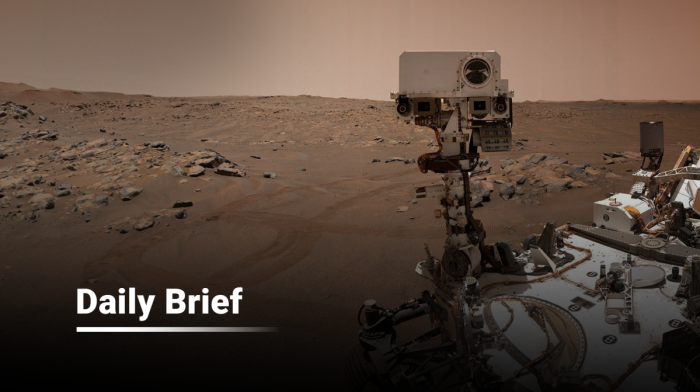
NASA's Perseverance rover has set a new driving record on Mars, travelling 45.2 kilometres since landing in 2021 and surpassing every other robotic vehicle to explore a world beyond Earth, the U.S. space agency said on Tuesday.
Small AI models could soon spread without human intervention across internet-connected devices, from smart appliances to Android TVs, Anthropic has warned, raising fears that self-replicating systems could become increasingly difficult to contain.
Here's your AnewZ Daily Brief for 13 October 2026 with the top five science and technology news happening around the world.
AnewZ’s recent reporting from Kazakhstan and the United Arab Emirates brings audiences closer to the technologies, and the decisions, shaping the future of artificial intelligence.
Anthropic has announced that it is updating its usage policy to allow its AI agents to end conversations involving repeated abuse or cruel behaviour towards them, citing previous incidents.
You can download the AnewZ application from Play Store and the App Store.
What is your opinion on this topic?
Leave the first comment