A recent discovery has revealed that ancient artifacts from the Treasure of Villena were crafted using metal from meteorites, offering new insights into early metalworking techniques in the Iberian Peninsula.
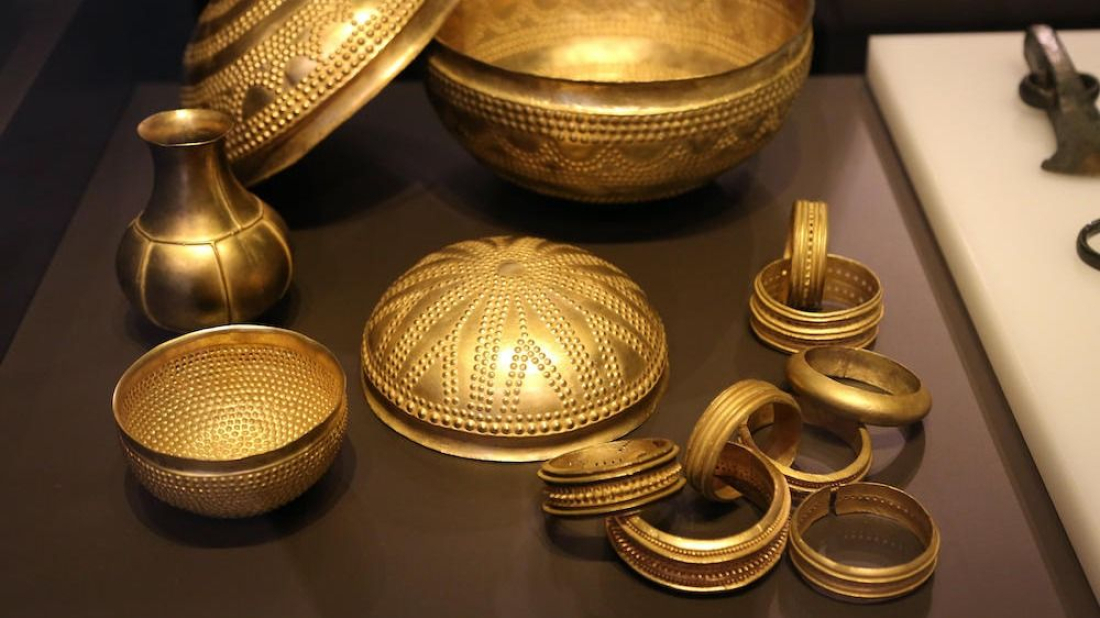
Amidst a treasure trove of glittering gold from the Iberian Bronze Age, two seemingly unremarkable objects have sparked a fascinating discovery that could rewrite our understanding of early metalworking. A rusted bracelet and a corroded hollow hemisphere, both part of the renowned Treasure of Villena, have been identified as possibly crafted from iron sourced not from the Earth’s crust, but from meteorites that fell from the sky. This revelation, led by the now-retired head of conservation at Spain’s National Archaeological Museum, Salvador Rovira-Llorens, points to a much more advanced metallurgical knowledge in Iberia over 3,000 years ago than previously thought.
The Treasure of Villena: A Glimpse into Ancient Craftsmanship
The Treasure of Villena, discovered in 1963 in Alicante, Spain, is regarded as one of the most important collections of Bronze Age goldsmithing in Europe. The cache contains 66 objects, predominantly made of gold, and was long considered a prime example of the intricate and highly skilled metalworking techniques of the Iberian Peninsula. However, within this glittering hoard were two pieces that stood out for their unusual appearance: a small hollow hemisphere and a torc-like bracelet. While the rest of the collection was easily identified as gold, these two objects exhibited a "ferrous" quality, appearing to be made of iron—an anomaly given that the Iron Age in Iberia didn’t begin until around 850 BCE.
The age of the collection was difficult to determine due to these perplexing artifacts. Gold materials found in the treasure were dated to between 1500 and 1200 BCE, while the ferrous objects seemed out of place, possibly pointing to the early Iron Age. To solve this puzzle, researchers delved deeper into the origins of the iron used to craft these objects.
Meteoric Iron: A Rare and Valuable Material
The key to understanding the ferrous artifacts lay in the realization that not all iron comes from the Earth’s crust. Meteoric iron, the metal found in meteorites, has been used by ancient civilizations to forge highly prized tools and weapons. One of the most famous examples of such meteorite iron is the dagger found in the tomb of Pharaoh Tutankhamun, but several other Bronze Age artifacts made from meteoritic iron have been discovered around the world. These materials were considered valuable and were often reserved for the creation of ceremonial or prestigious objects.
Iron sourced from meteorites is notably different from terrestrial iron. It contains much higher levels of nickel, which is absent or present only in trace amounts in iron extracted from the Earth. This distinctive feature allowed researchers to differentiate between meteoritic and terrestrial iron, a crucial step in analyzing the two artifacts from the Treasure of Villena.
Unveiling the Mystery Through Mass Spectrometry
To determine whether the artifacts were made from meteoritic iron, researchers carefully obtained samples from both the bracelet and the hemisphere. Despite the extensive corrosion on both objects, which typically alters the composition of the material, advanced techniques were employed to analyze the samples. Using mass spectrometry, the researchers were able to measure the amount of nickel present in the iron.
The results were striking. Despite the corrosion, the nickel content in both objects was far higher than what would be expected from terrestrial iron. This strongly suggests that both the bracelet and the hemisphere were crafted from iron sourced from meteorites that fell from the sky, making them the first known pieces of meteoritic iron in the Iberian Peninsula. The findings were published last year, confirming that these artifacts were forged around 1400 to 1200 BCE, firmly within the Bronze Age.
Rewriting the History of Iberian Metalworking
This discovery has profound implications for our understanding of Iberian metalworking technology. Until now, it was assumed that the widespread use of terrestrial iron in the Iberian Peninsula did not occur until after 850 BCE, marking the beginning of the Iron Age. However, the use of meteoritic iron in objects like those found in the Treasure of Villena suggests that metalworking techniques in Iberia were far more advanced than previously recognized. The ability to work with meteoritic iron would have required a deep understanding of metallurgy, including the skills to extract and refine such rare material.
While the findings are not entirely conclusive due to the degree of corrosion on the artifacts, the evidence strongly supports the hypothesis that early Iberians were able to craft objects using meteoritic iron. This opens up exciting new avenues for research into pre-Iron Age metallurgy and the technological capabilities of ancient cultures in the Iberian Peninsula.
Future Prospects for Research
The research team behind this discovery suggests that non-invasive techniques could be employed to further explore the composition of the objects, providing a more detailed understanding of the materials used in their creation. With the use of advanced technology, it may soon be possible to obtain even more conclusive data, further cementing the connection between the Treasure of Villena and meteorite iron.
In the meantime, this remarkable discovery adds a new layer to our understanding of the ingenuity and resourcefulness of ancient civilizations. The use of meteoritic iron in such prestigious objects highlights the value placed on rare and extraordinary materials, and underscores the remarkable craftsmanship of the Iberian people more than 3,000 years ago. As research into these artifacts continues, we may yet uncover more secrets of ancient metalworking and its connection to the cosmos.
Conclusion: A New Chapter in Ancient Metallurgy
The identification of meteoritic iron in the Treasure of Villena not only provides insight into the advanced metallurgical techniques of the Iberian Bronze Age, but also reinforces the idea that ancient civilizations were far more capable and innovative than we often give them credit for. By linking these objects to meteorites, this discovery offers a new perspective on the materials and technologies that shaped the ancient world, reminding us that history is full of surprising revelations waiting to be uncovered.
















What is your opinion on this topic?
Leave the first comment