Why Tashkent's summer storms are becoming more intense
Unusually heavy rain, thunderstorms and hail during Uzbekistan's hottest season have sparked widespread debate over the causes. While some blame clima...
China has accused the United States of stealing sensitive data and infiltrating its National Time Service Centre, warning that such breaches could have disrupted communications, financial systems, power supplies, and the international standard time network.
In a statement posted on its WeChat account on Sunday, China’s Ministry of State Security alleged that the U.S. National Security Agency (NSA) had conducted a prolonged cyberattack against the National Time Service Centre.
According to the ministry, investigators uncovered evidence of stolen data and login credentials dating back to 2022, which were allegedly used to monitor staff mobile devices and network systems at the centre.
The ministry claimed that the NSA “exploited a vulnerability” in the messaging app of an unnamed foreign smartphone brand to gain access to employees’ devices in 2022.
The National Time Service Centre, part of the Chinese Academy of Sciences, is responsible for producing, maintaining, and distributing China’s official standard time.
The ministry also said that the U.S. carried out further attacks on the centre’s internal networks and attempted to target its high-precision ground-based timing systems in 2023 and 2024.
The U.S. embassy in Beijing did not respond directly to the allegations but countered that China-based cyber actors have compromised major American and global telecommunications networks to conduct extensive espionage operations.
“China remains the most active and persistent cyber threat to U.S. government, private-sector, and critical infrastructure networks,” a spokesperson for the embassy said in an email to Reuters.
The two countries have increasingly exchanged cyber-espionage accusations in recent years, each branding the other as its principal digital adversary.
The latest claims come amid escalating trade tensions, following China’s tighter controls on rare earth exports and Washington’s warning that it could impose additional tariffs on Chinese products.

The death toll from Venezuela's devastating twin earthquakes has risen to 3,342, according to the country's information ministry, as rescue teams continue searching affected areas and survivors face an uncertain recovery.
Russia's Defence Ministry has said its forces are clearing the town of Lyman in Donetsk of Ukrainian forces, Moscow's state news agency Tass reported. Meanwhile, Russian attacks killed at least six people across three Ukrainian regions on Friday, regional officials said.
Governments are tightening restrictions on teenagers’ use of social media amid growing concerns over mental health, online safety and platform design, but questions remain over enforcement and whether bans can meaningfully change behaviour.
President Donald Trump said Iran is keen to reach a deal with the United States, claiming Washington had paused engagement to allow funeral ceremonies for late Iranian Supreme Leader Ali Khamenei.
Mexico's national football team has returned luxury Rolex watches gifted by American content creator Stevewilldoit after concerns that they could conflict with FIFA's ethics rules.
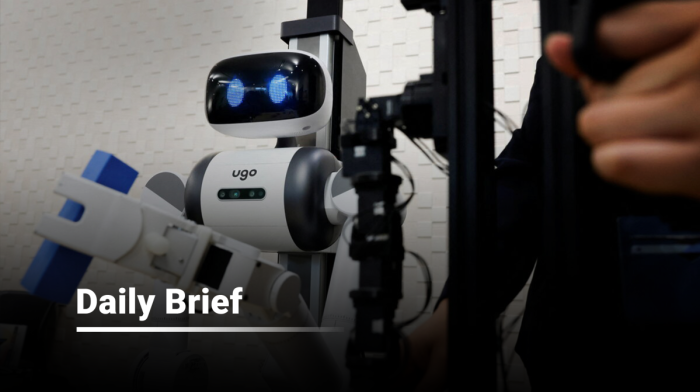
Humanoid robots stumbled, collided and recovered as they battled for the RoboCup 2026 football title on Sunday (5 July), showcasing the latest advances in robotics and artificial intelligence at the world's largest competition of its kind.
India is investigating a data breach at Tata Electronics that exposed sensitive documents linked to Apple's unreleased iPhone 18 Pro, marking the government's first public comments on the incident.
Humanity’s return to the Moon is about far more than planting flags and collecting samples. Under NASA’s Artemis programme, the goal is to establish a lasting human presence, with lunar rovers set to play a vital role in making that vision possible.
American technology company Snap has launched its first augmented-reality (AR) glasses for consumers, marking a major push into wearable computing as tech firms race to redefine personal devices in the AI era.
The Canadian government has introduced a digital safety bill that would ban children under the age of 16 from using social media, unless platforms meet specific safety standards.
You can download the AnewZ application from Play Store and the App Store.
What is your opinion on this topic?
Leave the first comment