Attack on Riyadh airport killed 12 people, injured hundreds
The explosion at King Khalid International Airport in Riyadh on Saturday afternoon killed at least 12 people and injured a further 309, according t...
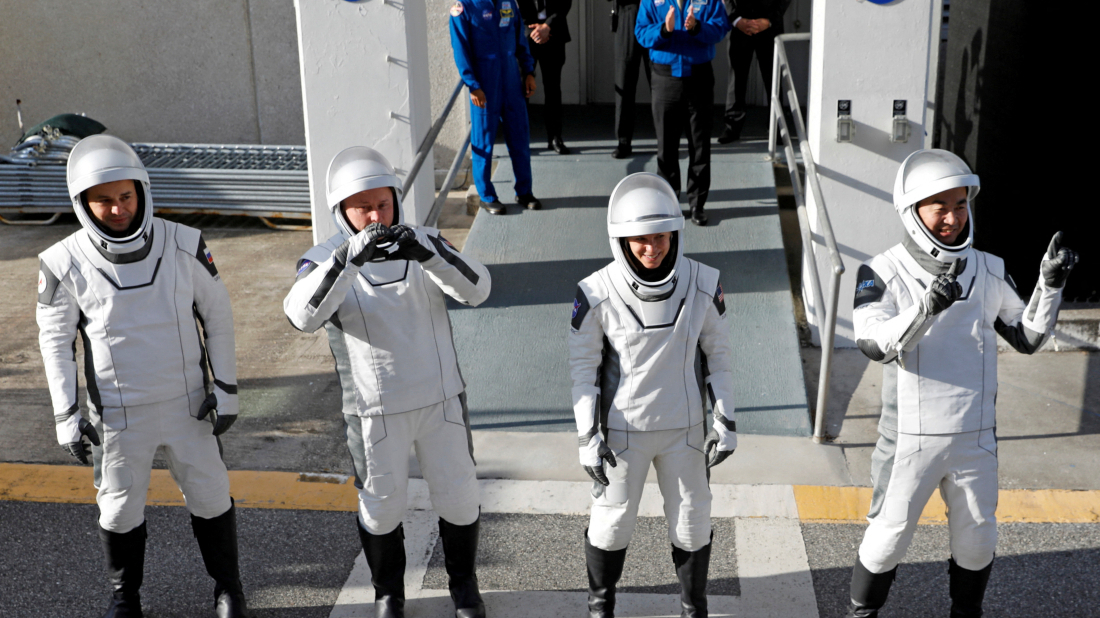
A SpaceX Falcon 9 rocket successfully launched from NASA’s Kennedy Space Center in Florida on Friday, sending an international crew of four astronauts to the International Space Station (ISS) aboard the Dragon spacecraft as part of NASA’s Crew-11 mission.
The crew — NASA astronauts Zena Cardman and Mike Fincke, Japan’s Kimiya Yui, and Russian cosmonaut Oleg Platonov — lifted off at 11:43 a.m. local time (1543 GMT) following a one-day delay due to bad weather. They are expected to dock with the ISS at around 3 a.m. (0700 GMT) on Saturday after a 15-hour flight.
The mission, originally planned for a six-month rotation, may be extended to eight months to better synchronise schedules between NASA and Roscosmos, NASA said. The decision will depend on the spacecraft’s performance while docked to the station.
This marks the eleventh crew rotation flight under NASA’s Commercial Crew Program and comes amid heightened geopolitical tensions, but continued cooperation aboard the ISS. Despite Russia’s ongoing war in Ukraine and its pivot away from U.S.-led lunar missions, both nations remain partners in space station operations.
The Crew-11 astronauts will join seven others currently on the ISS, briefly increasing the station’s population to 11. Once the new crew settles in, NASA’s Crew-10 astronauts will return to Earth following a handover period.
While in orbit, the Crew-11 team will carry out a wide range of scientific experiments, including research on plant biology, bacterial resistance, stem cell growth, and vision protection strategies. The mission is also expected to simulate conditions relevant to future Moon and Mars expeditions.
The launch follows a rare face-to-face meeting in Florida between acting NASA Administrator Sean Duffy and Roscosmos head Dmitry Bakanov — their first since 2018. According to Roscosmos, discussions included continued ISS cooperation and lunar exploration, though no new joint projects were announced.
Russia is currently aligned with China on lunar missions, having withdrawn from NASA’s Artemis programme following its isolation from Western space initiatives due to the Ukraine conflict.
Despite diverging goals on future Moon projects, space station collaboration remains one of the last functioning areas of U.S.-Russia cooperation, with Crew-11 highlighting the ongoing partnership — at least in orbit.

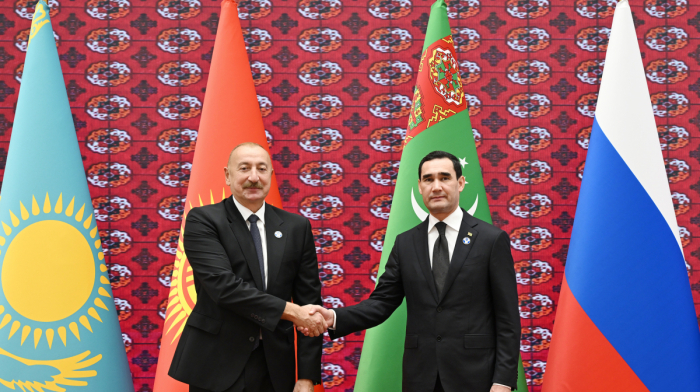
Leaders of countries from the Commonwealth of Independent States (CIS) have agreed to hold coordinated population censuses around 2030. They took the decision at the CIS Council of Heads of State meeting in Awaza, Turkmenistan on Friday, media reported.
The explosion at King Khalid International Airport in Riyadh on Saturday afternoon killed at least 12 people and injured a further 309, according to Saudi Arabia’s Civil Aviation Authority. The airport remains closed until further notice.
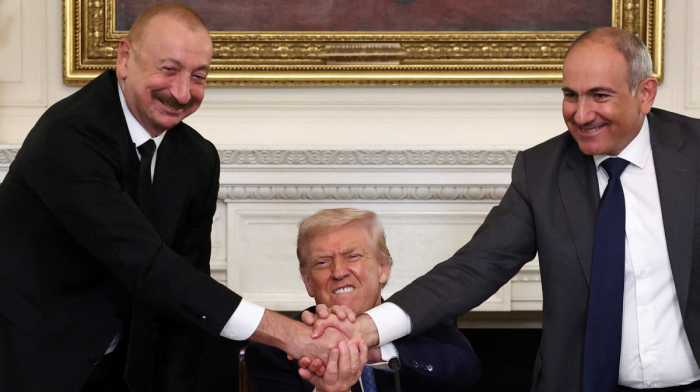
Russian President Vladimir Putin expressed surprise after Donald Trump mediated the Armenia-Azerbaijan peace agreement in 2025, the U.S. President said at a rally in New York state on Friday.
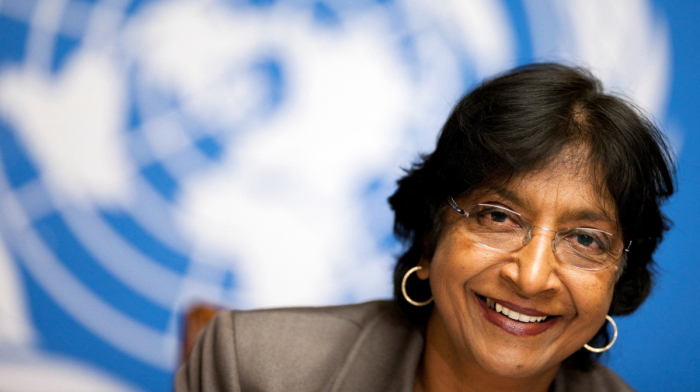
South African judge Navanethem “Navi” Pillay won the Nobel Peace Prize on Friday “for her efforts to promote peace and international law,” the Norwegian Nobel Committee said.
The U.S. has imposed sanctions on the International Criminal Court (ICC) on Friday (9 October) escalating tensions with European allies and potentially targeting companies that provide services to the tribunal. The move came hours after former ICC judge Navi Pillay won the Nobel Peace Prize.
Anthropic has announced that it is updating its usage policy to allow its AI agents to end conversations involving repeated abuse or cruel behaviour towards them, citing previous incidents.
Türkiye has banned children under 15 from using social media under new regulations published on Saturday. The new regulations prohibit firms from providing services to children “who have not reached the age of 15.”
Microsoft has introduced new tools to stop AI agents from accessing data without permission, alongside a Nvidia-powered Surface laptop that can run advanced AI directly on the device.
Picture three scenarios: a hospital that can spot a disease before the patient feels sick, a power grid that feeds thousands of data centres and a government network that is attacked daily. All three depend on artificial intelligence, and one question matters most: who is really in charge?
OpenAI and Anthropic told Australian parliament on Tuesday they would welcome laws requiring them to report data breaches carried out by their AI agents, acknowledging the decision to notify authorities was currently at their discretion.
You can download the AnewZ application from Play Store and the App Store.
What is your opinion on this topic?
Leave the first comment