What does the UN secretary-general do and who could be next?
The United Nations will choose its next secretary-general this summer, with António Guterres set to leave office after two terms. Several candidates ...
Scientists have detected the most massive black hole merger ever observed, with gravitational waves from more than 10 billion light years away challenging current theories of black hole formation.
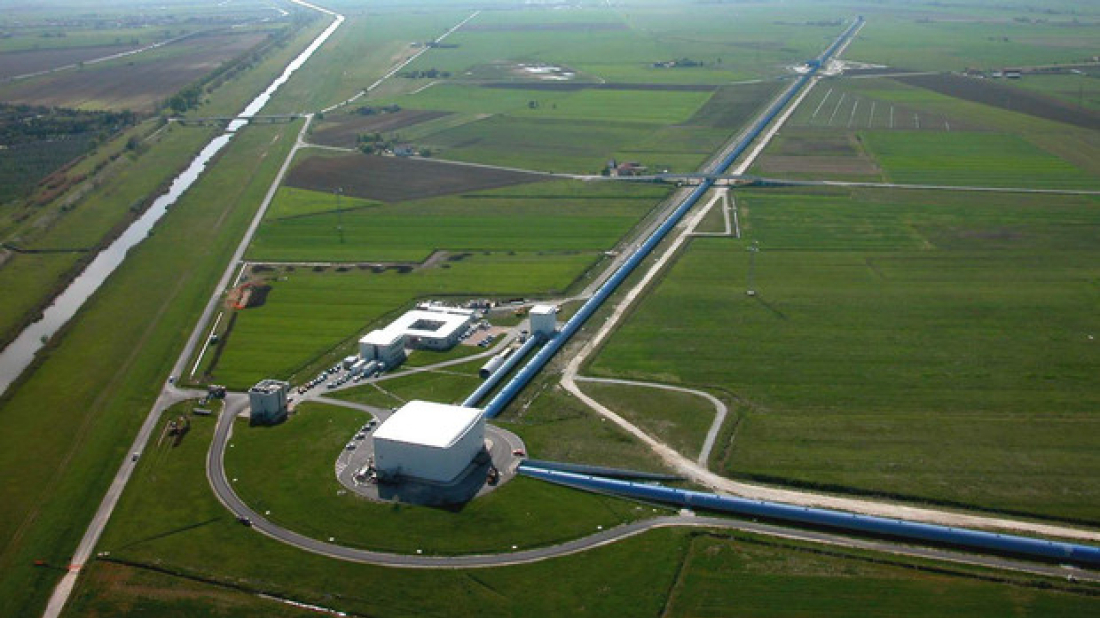
Researchers using the U.S.-based Laser Interferometer Gravitational-wave Observatory (LIGO) have announced the detection of an extraordinary cosmic event: the most massive black hole merger ever observed. The collision, which occurred more than 10 billion light years from Earth, involved two black holes each exceeding 100 solar masses.
The resulting black hole was formed after the two massive entities spiralled into each other and is estimated to weigh about 265 times the mass of the sun. According to scientists, the newly merged black hole is spinning at nearly the maximum possible rate, approximately 400,000 times faster than Earth.
“These are the most violent events we can observe in the universe, but when the signals reach Earth, they are the weakest phenomena we can measure,” said Professor Mark Hannam, a member of the LIGO collaboration. He noted the possibility that both black holes were themselves products of earlier mergers.
Gravitational waves from the event, which are tiny ripples in the fabric of space-time, reached Earth on 23 November 2023. LIGO detectors in Washington and Louisiana simultaneously recorded a brief signal lasting just one tenth of a second. This phase, known as the ringdown, marks the moment the newly formed black hole settled into a stable state.
Such high-mass black hole mergers defy current astrophysical models. “They’re strange, because they are slap bang in the range of masses where, because of all kinds of weird things that happen, we don’t expect black holes to form,” Hannam explained.
The findings suggest a possible hierarchy of black hole mergers, where previously formed black holes combine again to create even larger ones. Hannam also highlighted the potential of future detectors to unveil even more distant and exotic cosmic collisions.
“The detectors we have planned for the next 10 to 15 years will be able to see all the black hole mergers in the universe, and maybe some surprises we didn’t expect,” he said.

Russian authorities said 11 people, including four children, had been killed by Ukraine in an overnight attack on a holiday camp, accusing Kyiv on Saturday of deliberately targeting civilians.
Iran will halt its own attacks as long as the United States maintains its pause on strikes, but Tehran remains sceptical of U.S. intentions, a senior Iranian source told on Sunday.
Kazakhstan's President Kassym-Jomart Tokayev called on Saturday for Russia and Ukraine to freeze the conflict and return to peace talks, saying a negotiated settlement remained possible despite the entrenched positions of both sides.
Marvel Studios used its return to San Diego Comic-Con to reveal several major projects, including a new Ghost Rider film starring Ryan Gosling and the long-awaited Black Panther 3.
U.S. President Donald Trump says Israeli Prime Minister Benjamin Netanyahu will visit Washington next week as tensions continue to rise across the Middle East.
A New York school district has put plans to introduce a humanoid robot into classrooms on hold after fierce criticism from teachers, Indigenous community members and state education officials over the use of artificial intelligence in schools.
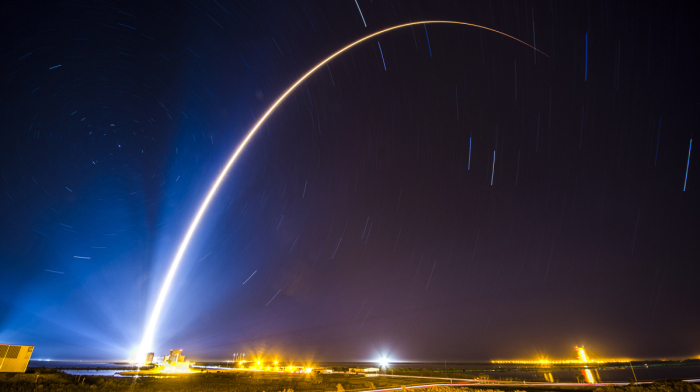
SpaceX successfully launched its Starship megarocket on its 13th flight test Friday, deploying 20 next-generation Starlink V3 satellites and completing a soft splashdown of the spacecraft in the Indian Ocean.
Britain's new Prime Minister Andy Burnham has appointed Kanishka Narayan as Minister for Artificial Intelligence, making it the first time the role has held cabinet-level status. The move signals a stronger government focus on AI as the UK seeks to strengthen its position in the sector.
Scientists have identified a planetary system in the Milky Way unlike anything seen before, leaving astronomers debating how to classify one of its unusual worlds. The discovery challenges long-held definitions of planets, moons and stars.
A U.S. federal judge has approved Anthropic's $1.5 billion settlement with authors and publishers over the company's acquisition and use of pirated books to train its Claude artificial intelligence chatbot, marking the first major resolution in the growing wave of AI copyright litigation.
You can download the AnewZ application from Play Store and the App Store.
What is your opinion on this topic?
Leave the first comment