Thousands of Tajik national security documents stolen by Kazakhstan-linked hackers
Kazakhstan-linked hackers stole thousands of national security documents from Tajikistan, a cybersecurity company has said. ...
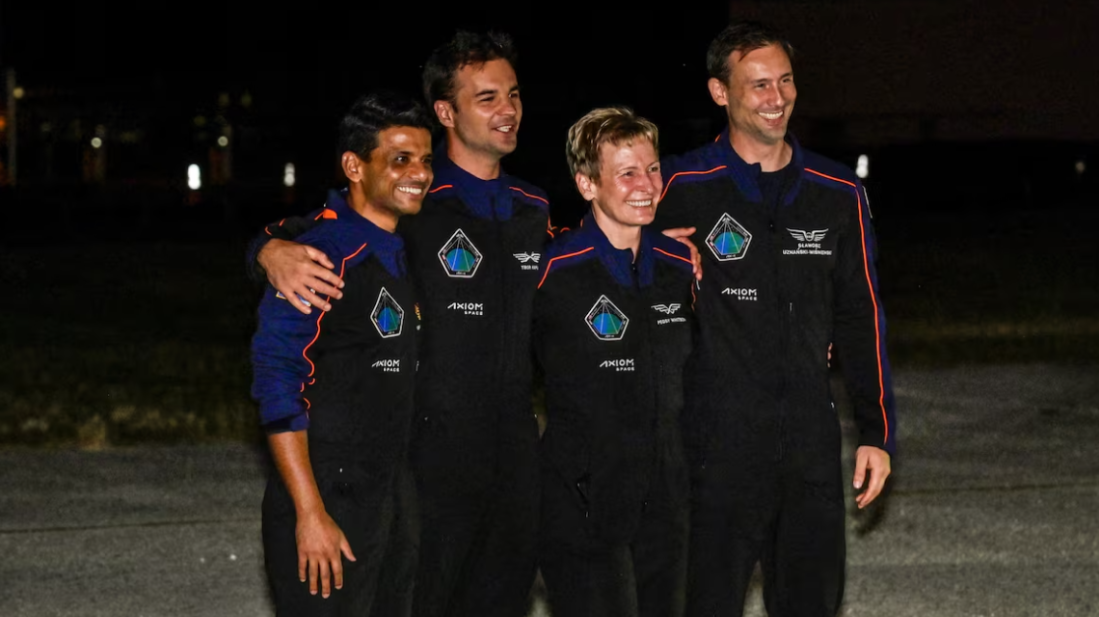
An historic mission began early on Wednesday (25 June) as astronauts from India, Poland, and Hungary were launched to the International Space Station (ISS) for their countries’ first-ever visit. They were joined by NASA veteran Peggy Whitson.
The crew lifted off from NASA's Kennedy Space Center in Cape Canaveral, Florida, at approximately 2:30 a.m. EDT, embarking on a mission organized by Texas-based startup Axiom Space in partnership with SpaceX.
The four astronauts - Peggy Whitson of the U.S., Shubhanshu Shukla of India, Sławosz Uznański-Wiśniewski of Poland, and Tibor Kapu of Hungary - were carried aboard a SpaceX Crew Dragon capsule on top of a Falcon 9 rocket.
This launch marked the first Crew Dragon flight since Elon Musk briefly considered retiring the spacecraft amid political tensions earlier this month.
After a roughly 28-hour flight, the capsule is expected to dock with the ISS, orbiting 402 kilometres (250 miles) above Earth.
Onboard, the crew will spend 14 days conducting microgravity research alongside the station’s current seven occupants - three Americans, one Japanese, and three Russian cosmonauts.
For India, Poland, and Hungary, this mission represents a major milestone: their first human spaceflight missions to the ISS in more than 40 years. The flight also acts as a stepping stone for India’s Gaganyaan crewed spacecraft, planned for launch in 2027.
Leading the crew is Peggy Whitson, a retired NASA astronaut and the first woman to command two ISS expeditions. With 675 days in space - the U.S. record - Whitson now serves as Axiom’s director of human spaceflight.
The mission was delayed by one day due to the weather but successfully launched early Wednesday, marking the fourth private astronaut flight arranged by Axiom since 2022 as the company expands its commercial space endeavours.
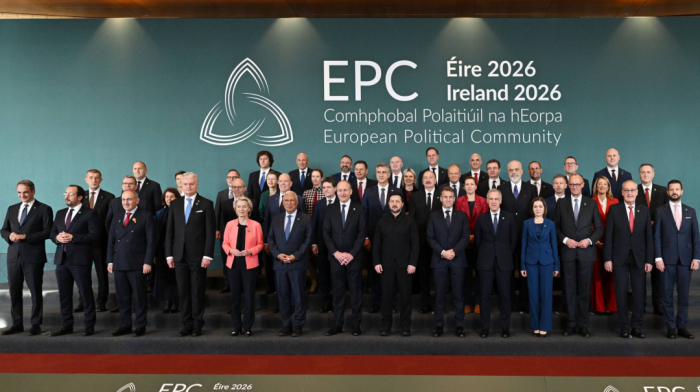
European leaders gathered in Dublin on Thursday, 12 November, for the ninth European Political Community (EPC) summit, with security, defence and energy high on the agenda. Azerbaijani President Ilham Aliyev held talks focused on peace, trade and regional cooperation.
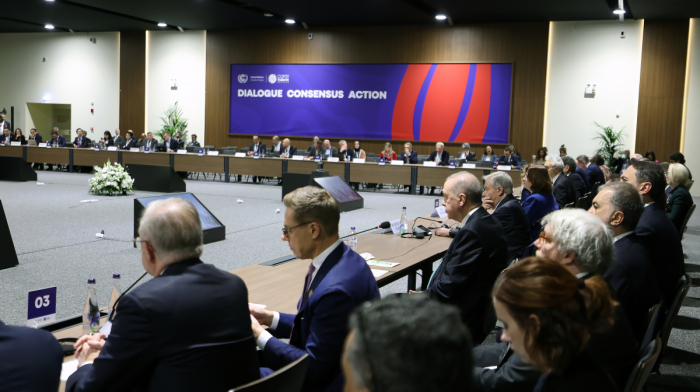
UN Secretary-General António Guterres delivered a stark warning at this year's COP31 summit, saying the climate crisis iss advancing faster than governments' efforts to contain it.
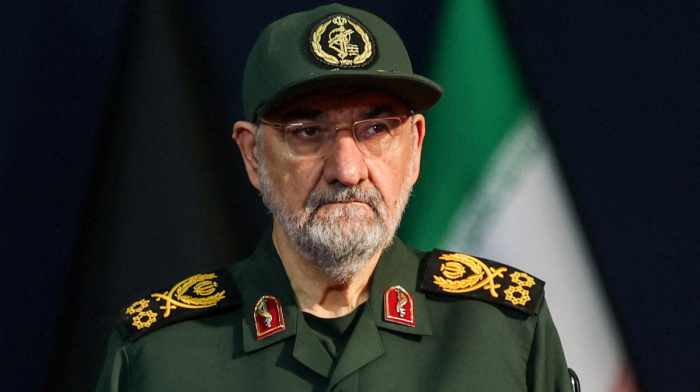
Iran will not let a single particle of its enriched nuclear material leave the country, and any new U.S. attack would be met with strikes on distant American bases, Iranian security chief Mohsen Rezaei has said.
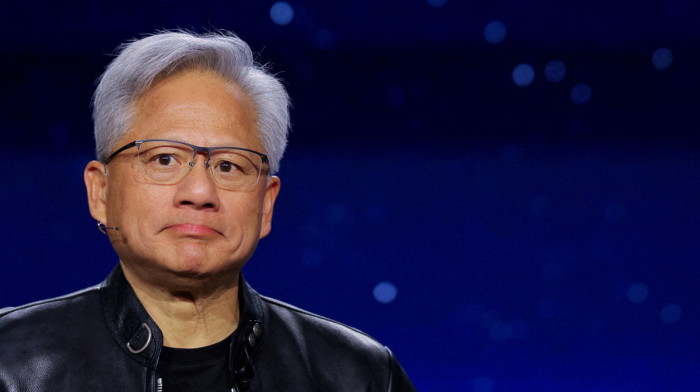
Nvidia chief executive Jensen Huang is stepping down amid reports linking him to a woman suspected by U.S. authorities of spying for China, throwing the future of the $4 trillion chipmaker into uncertainty.
Four million workers across Spain joined a general strike on Wednesday over the country’s deepening housing crisis, unions said, bringing disruption to factories, ports, shops and public transport just weeks before a snap general election.
NASA is inviting people to send their names to Titan, Saturn’s largest moon, aboard its Dragonfly spacecraft. Set to arrive in late 2034, the mission will explore dunes and an impact crater in search of clues about how the chemical ingredients for life may have formed.
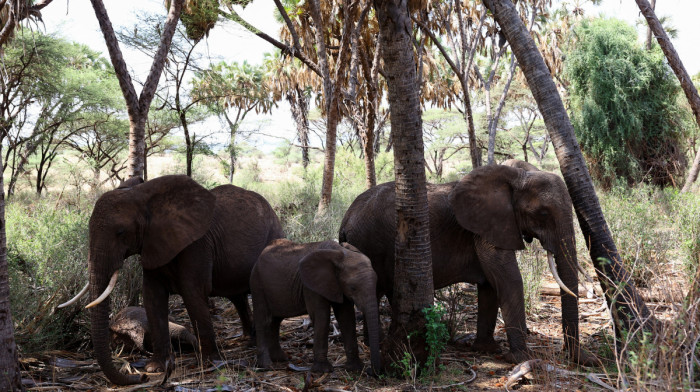
Environmental organisations worldwide are increasingly using artificial intelligence to monitor wildfires, protect endangered species and analyse climate data, even as the technology's rising energy and water consumption raises concerns about its environmental impact.
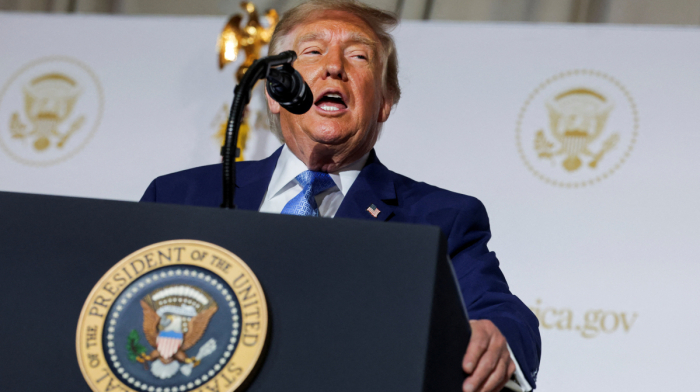
U.S. President Donald Trump said on Friday he would support states seeking to generate wealth through artificial intelligence, pledging to work with them as Democrats outlined plans to address the technology following Tuesday’s elections, which unsettled markets.
Dubai will host GITEX Global 2026 from 7 to 11 December, bringing together global technology leaders, governments and investors as surging demand for artificial intelligence (AI) puts pressure on energy supplies, computing capacity and digital infrastructure.
Saudi Aramco's acquisition of a 49 per cent stake in artificial intelligence (AI) company HUMAIN is putting a spotlight on a wider investment question: why are some of the world's biggest energy companies moving deeper into AI, and what do they expect to gain?
You can download the AnewZ application from Play Store and the App Store.
What is your opinion on this topic?
Leave the first comment