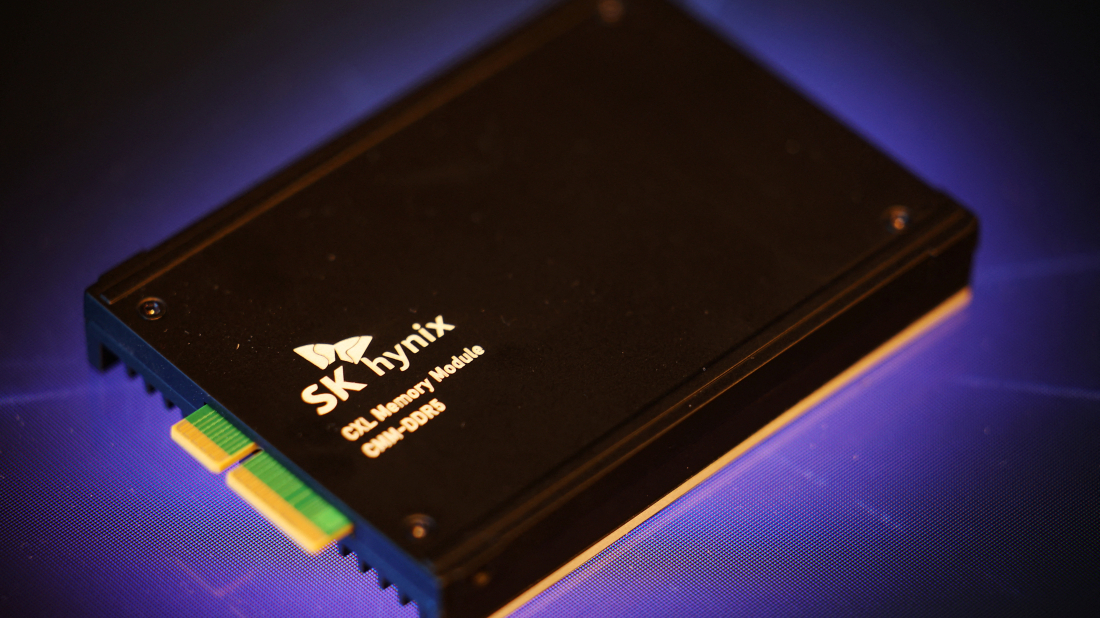
South Korean chipmaker SK Hynix said Thursday that some customers have accelerated orders in anticipation of potential U.S. tariffs on semiconductors, contributing to improved market conditions. However, the company cautioned that it remains unclear whether this trend will persist.
South Korea’s SK Hynix, the world’s second-largest memory chipmaker, reported on Thursday that some customers have accelerated orders in anticipation of potential U.S. tariffs on semiconductors.
Speaking at the company’s annual shareholder meeting, Lee Sang-rak, SK Hynix’s Head of Global Sales and Marketing, noted that the early orders, combined with reduced inventory levels among clients, have contributed to favorable market conditions. However, he cautioned that it remains uncertain whether this trend will continue.
In January, SK Hynix projected a 10-20% decline in shipments of DRAM and NAND flash memory chips for the first quarter compared to the previous quarter. Meanwhile, U.S. chipmakers Micron and SanDisk, along with China’s YMTC, have reportedly raised memory chip prices, partly due to strong demand from the AI sector. These companies have not yet commented on the matter.
U.S. President Donald Trump announced in February that he intends to impose tariffs of approximately 25% on semiconductor imports, among other products. Analysts at Nomura noted this week that concerns over these potential tariffs have led to preemptive transfers of semiconductor inventory to the United States. However, they also cautioned that if the tariffs are implemented, they could lead to higher consumer prices and potentially dampen demand.
SK Hynix remains optimistic about its business outlook, particularly in high-bandwidth memory (HBM) chips. CEO Kwak Noh-Jung told shareholders that demand for HBM chips, which are critical for AI applications, is expected to see “explosive growth” this year, supported by continued investments in data centers.
The company has already sold out its HBM sales for 2025 and plans to finalize 2026 sales agreements within the first half of this year to enhance revenue stability, Kwak said.
While some industry observers raised concerns about a slowdown in AI hardware spending—particularly after Chinese startup DeepSeek claimed to have developed cost-efficient AI models—Nvidia, a key player in the sector, recently reaffirmed strong demand for AI chips. Kwak suggested that companies like DeepSeek could ultimately contribute to medium-to-long-term demand for AI memory chips rather than reducing it.



















What is your opinion on this topic?
Leave the first comment