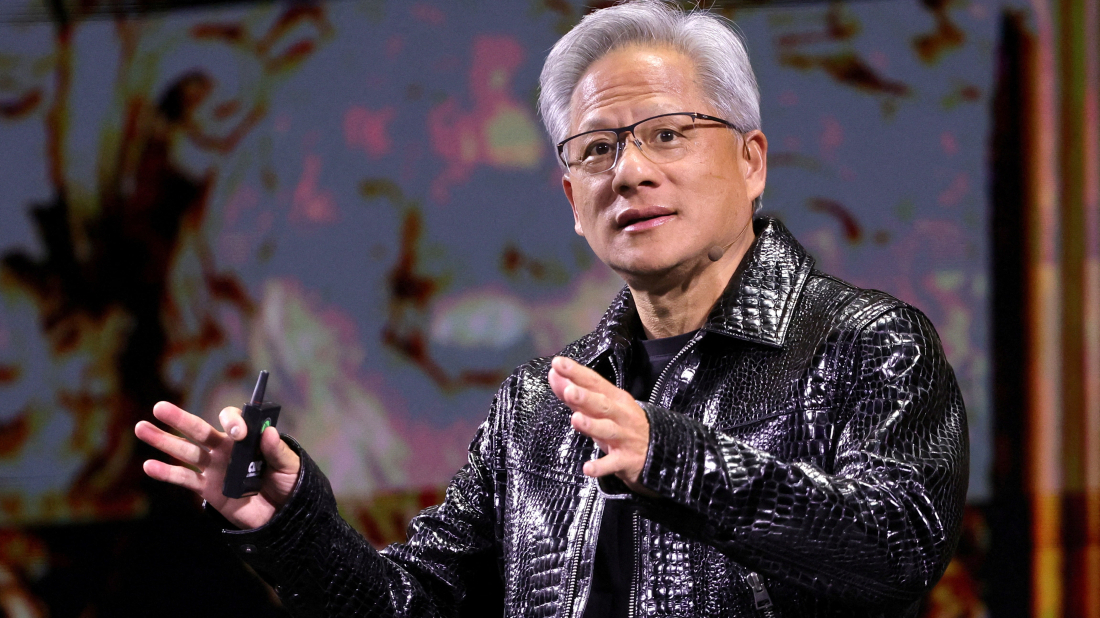
The Nvidia’s annual software developer conference this week, CEO Jensen Huang is set to defend the company’s leading position in the AI chip market amid growing competition and cost pressures on its largest customers.
The nearly $3 trillion chip giant, which has seen its revenue more than quadruple over the past three years to $130.5 billion, now faces challenges as rivals and emerging startups target both the training and inference segments of AI computing.
Huang’s keynote address on Tuesday will come at a critical juncture following recent market tremors sparked by China’s DeepSeek. The competitor’s release of a cost-efficient chatbot—allegedly requiring less computing power than those of its rivals—caused U.S. markets to react sharply. While Nvidia continues to dominate the training market with a market share exceeding 90%, it now confronts increasing pressure in the inference arena, where the process of generating real-time responses in AI systems is becoming ever more essential.
Among the highlights at the conference is the anticipated unveiling of details for a new chip system, Vera Rubin, named after the pioneering astronomer. Expected to go into mass production later this year, Vera Rubin is part of Nvidia’s ongoing efforts to stay ahead of competitors. Its predecessor, a chip named after mathematician David Blackwell, was introduced last year but encountered production delays that have affected Nvidia’s margins.
Industry experts note that the shift from AI training—feeding large volumes of data to models—to inference, which powers the delivery of AI outputs, is reshaping the market. “The market for inference is going to be many times bigger than the training market,” said Jay Goldberg, chief executive of D2D Advisory. While Nvidia’s share in the inference market may decline, the overall revenue pool is expected to expand significantly. Startups, such as Untether AI, and established rivals like AMD are betting on selling chips that promise lower electricity costs, a critical factor given the high power consumption of Nvidia’s current offerings. “They have a hammer, and they're just making bigger hammers,” commented Bob Beachler, vice president at Untether AI, underscoring the challenge Nvidia now faces.
Beyond chip development, Nvidia is also expected to discuss its broader ambitions in other computing markets, including advancements in robotics and quantum computing. Recent comments by Huang suggesting that quantum computing remains decades away had previously rattled markets, prompting competitors like Microsoft and Google to challenge that view. In response, Nvidia plans to devote an entire day at the conference to explore the state of quantum computing and outline its own plans in this emerging field.
Additionally, Nvidia is venturing into building a personal computer central processor chip—a move that industry analyst Maribel Lopez warned “could eat into what’s left of the Intel market.” This expansion into new product categories reflects Nvidia’s strategy to diversify its portfolio and capture new revenue streams as the AI landscape continues to evolve.
As Jensen Huang takes the stage, all eyes will be on his defense of Nvidia’s technological leadership and his vision for maintaining the company’s competitive edge in an increasingly dynamic market.



















What is your opinion on this topic?
Leave the first comment