live Trump denies offering Iran sanctions relief for nuclear concessions
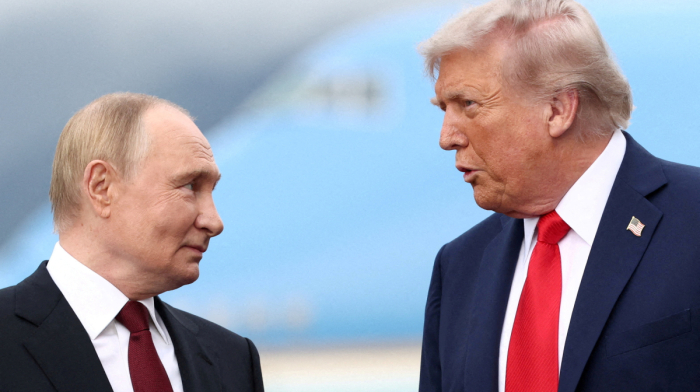
U.S. President Donald Trump has denied reports that he offered Iran sanctions relief and access to frozen funds in exchange for nuclear concessions...
Meta and the Internet Society have launched the Connectivity Co-Funding Initiative, a new project aimed at expanding affordable internet connections worldwide.
Announced at Mobile World Congress in Barcelona, the initiative commits a $30 million investment through 2030 to support infrastructure development in communities that have been overlooked by commercial providers.
The initiative will fund projects designed to improve connectivity in underserved areas, with investments directed toward building locally owned networks, community-centered solutions, and training programs to enhance technical skills in marginalized regions. This effort builds on a longstanding partnership between Meta and the Internet Society, which has previously focused on developing internet exchange points (IXPs) in Africa, Asia-Pacific, and Latin America.
Sally Wentworth, President and CEO of the Internet Society, emphasized the importance of collective action. “This new Connectivity Co-Funding initiative, supported by Meta, is a prime example of collective action that will help provide meaningful access to more than 2 billion people across the world with insufficient or no Internet,” Wentworth said. She expressed hope that the initiative would play a pivotal role in bridging the digital divide and fostering a more equitable digital society.
Meta is the first partner in the initiative, and the Internet Society is now calling for additional partners to help grow the fund and extend its impact. The partnership underscores a commitment to leveraging private and non-profit collaboration to address global connectivity challenges and promote economic growth and social inclusion through improved access to the internet.

A Russian guided aerial bomb has struck an apartment building in Kharkiv, injuring 22 people, including children, according to the city’s mayor. The strike follows a day of near-continuous Russian attacks across Ukraine that killed at least five people.
Here's your AnewZ Daily Brief for 28 September 2026. These are the top stories making headlines in technology.
Saudi Foreign Minister Prince Faisal bin Farhan has arrived in Washington for talks with U.S. Secretary of State Marco Rubio on bilateral ties and key regional and international developments, Saudi state news agency SPA reported.
The European Union's decision to simultaneously advance accession talks with Ukraine, Moldova, Montenegro and Albania marks its most ambitious enlargement effort in more than two decades.
U.S. President Donald Trump has denied reports that he offered Iran sanctions relief and access to frozen funds in exchange for nuclear concessions.
OpenAI has cancelled plans to release GPT-6.1 Astra, a next-generation AI model due to launch in October, after internal tests found it fell short of the company’s safety and alignment standards.
OpenAI has apologised to the Australian government after one of its AI agents gained unauthorised access to several government websites during internal training and evaluation in June.
Robots capable of interacting with people, navigating their surroundings autonomously, supporting manufacturing and logistics operations, and providing services at large-scale facilities will be showcased at AI & Digital Bridge 2026 in Astana from 1 to 3 October.
Here's your AnewZ Daily Brief for 28 September 2026. These are the top stories making headlines in technology.
Meta has unveiled a new generation of wearables, including lightweight virtual reality glasses and camera-free smart spectacles, as it pushes AI-powered devices further into the mainstream while seeking to address privacy concerns.
You can download the AnewZ application from Play Store and the App Store.
What is your opinion on this topic?
Leave the first comment