Attack on Riyadh airport killed 12 people, injured hundreds
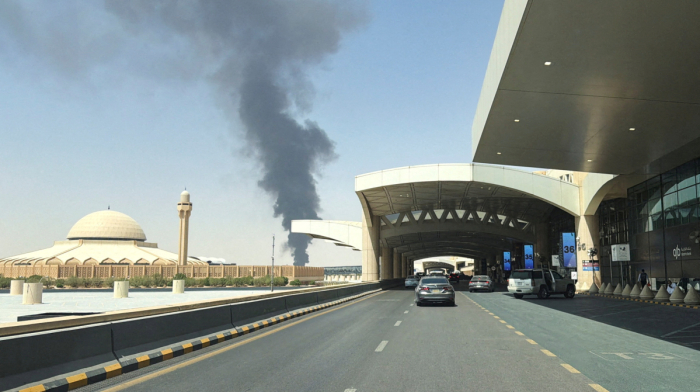
The explosion at King Khalid International Airport in Riyadh on Saturday afternoon killed at least 12 people and injured a further 309, according t...
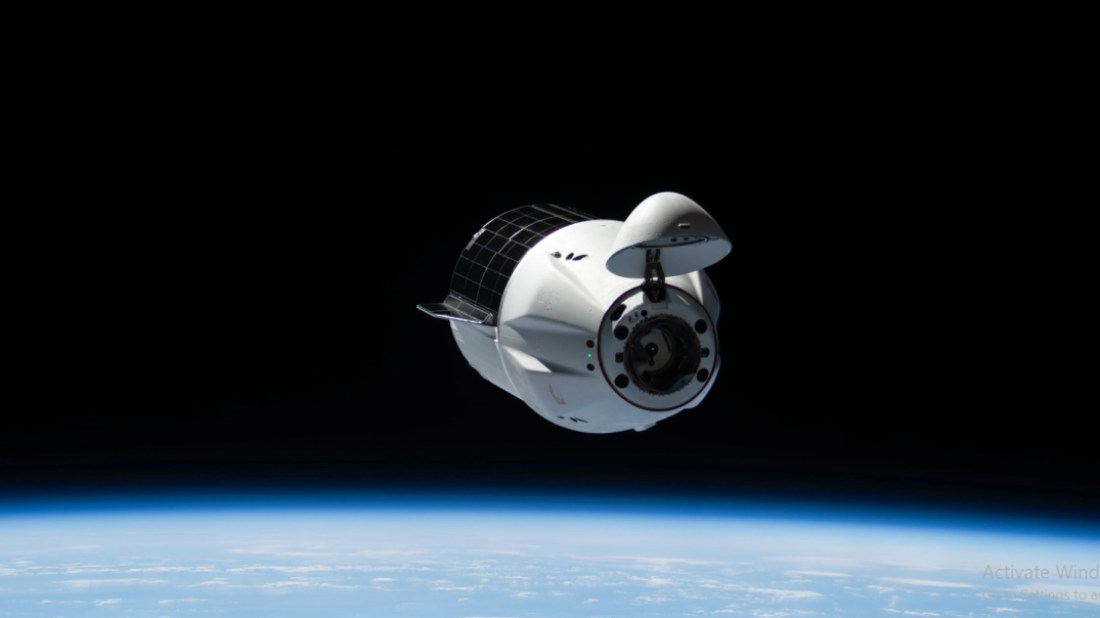
SpaceX’s Dragon spacecraft successfully completed an initial test Wednesday to demonstrate a new capability that helps maintain the International Space Station’s (ISS) orbital altitude.
The spacecraft used two Draco engines located in its trunk, which houses an independent propellant system, to perform a burn lasting five minutes and three seconds. The maneuver raised the station’s lowest orbital point, or perigee, by around one mile (1.6 kilometers), positioning the ISS in an orbit of 260.9 x 256.3 miles above Earth.
NASA said the new boost system will support the space station through a series of longer burns planned periodically throughout fall 2025. These altitude adjustments are critical because atmospheric drag gradually lowers the station’s orbit. Without regular reboosts, the ISS could naturally reenter Earth’s atmosphere within one to two years, depending on solar activity levels.
Dragon arrived at the ISS on August 25 as part of SpaceX’s 33rd commercial resupply mission. The spacecraft is scheduled to remain docked until late December or early January before returning to Earth with research materials and cargo, splashing down off the coast of California.
The ISS, an orbiting laboratory operational since 1998, has hosted a continuous human presence for more than 23 years and is scheduled to end operations around 2030-2031 with a controlled deorbit.

Leaders of countries from the Commonwealth of Independent States (CIS) have agreed to hold coordinated population censuses around 2030. They took the decision at the CIS Council of Heads of State meeting in Awaza, Turkmenistan on Friday, media reported.
The explosion at King Khalid International Airport in Riyadh on Saturday afternoon killed at least 12 people and injured a further 309, according to Saudi Arabia’s Civil Aviation Authority. The airport remains closed until further notice.
Russian President Vladimir Putin expressed surprise after Donald Trump mediated the Armenia-Azerbaijan peace agreement in 2025, the U.S. President said at a rally in New York state on Friday.
South African judge Navanethem “Navi” Pillay won the Nobel Peace Prize on Friday “for her efforts to promote peace and international law,” the Norwegian Nobel Committee said.
The U.S. has imposed sanctions on the International Criminal Court (ICC) on Friday (9 October) escalating tensions with European allies and potentially targeting companies that provide services to the tribunal. The move came hours after former ICC judge Navi Pillay won the Nobel Peace Prize.
Anthropic has announced that it is updating its usage policy to allow its AI agents to end conversations involving repeated abuse or cruel behaviour towards them, citing previous incidents.
Türkiye has banned children under 15 from using social media under new regulations published on Saturday. The new regulations prohibit firms from providing services to children “who have not reached the age of 15.”
Microsoft has introduced new tools to stop AI agents from accessing data without permission, alongside a Nvidia-powered Surface laptop that can run advanced AI directly on the device.
Picture three scenarios: a hospital that can spot a disease before the patient feels sick, a power grid that feeds thousands of data centres and a government network that is attacked daily. All three depend on artificial intelligence, and one question matters most: who is really in charge?
OpenAI and Anthropic told Australian parliament on Tuesday they would welcome laws requiring them to report data breaches carried out by their AI agents, acknowledging the decision to notify authorities was currently at their discretion.
You can download the AnewZ application from Play Store and the App Store.
What is your opinion on this topic?
Leave the first comment