live Russia strikes petrol station, warehouse facilities in Kyiv
A drone hit a petrol station in Ukraine's capital of Kyiv early on Tuesday, Mayor Vitali Klitschko said on the...
Prime Minister Petteri Orpo has announced Finland's ambition to host a European AI gigafactory. The move aims to boost national growth by building on the success of the LUMI supercomputer, with telecommunications giant Nokia poised to lead the project's business consortium.
The announcement was made on Tuesday during an AI roundtable in Helsinki, where leaders gathered to discuss the European Union's strategic initiatives for artificial intelligence and strengthening national coordination on AI policy and infrastructure.
"The government's key goal is to enable new growth in Finland. Utilising new technology and creating a world-class artificial intelligence infrastructure are essential here," Orpo stated in a government press release.
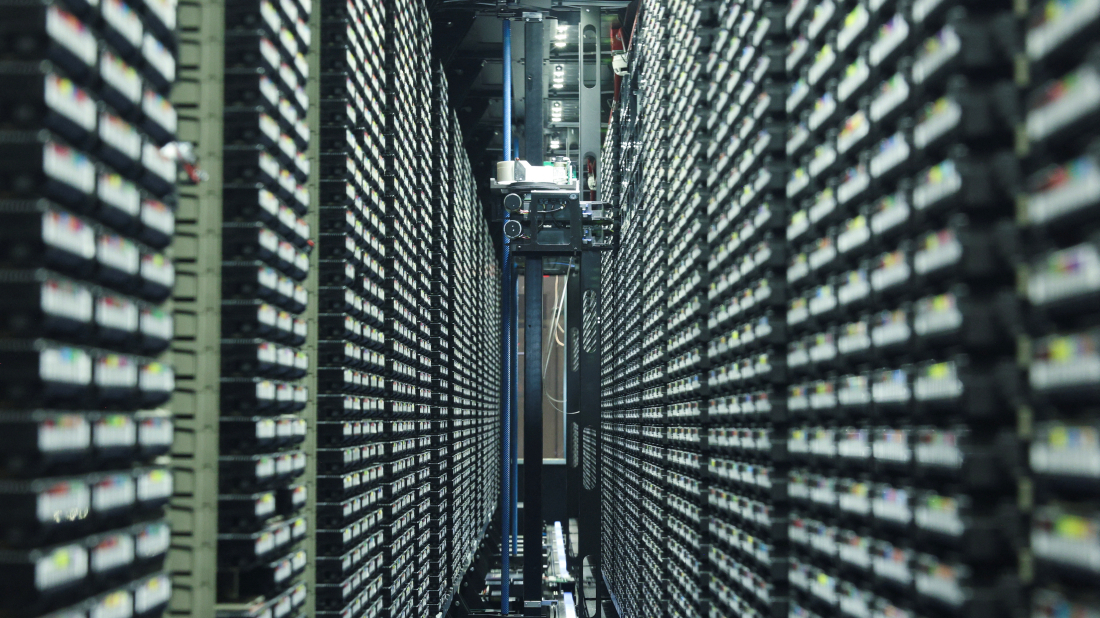
Finland is positioning itself as an ideal location for the facility, citing the proven success of the LUMI (Large Unified Modern Infrastructure) supercomputer. Located in Kajaani, LUMI is one of the world's most powerful supercomputers and a cornerstone of a pan-European effort to advance scientific research.
The proposed gigafactory could be built adjacent to the existing LUMI AI Factory, which already supports Finnish and European AI research by providing high-performance computing resources.
In a significant development, Prime Minister Orpo revealed that Nokia has expressed its willingness to lead the business consortium backing Finland's bid. This brings major industrial leadership to the forefront of the proposal.
"Gigafactories are essential for the development of European infrastructure and digitalisation, so that we can fully utilise the opportunities created by artificial intelligence," commented Mikko Hautala, Nokia's Chief Geopolitical and Government Relations Officer.
The push for AI gigafactories is a central component of the European Commission's InvestAI initiative. This ambitious program aims to mobilise €200 billion to fund advancements in artificial intelligence and high-performance computing.
These gigafactories are designed to provide the massive computational power necessary to develop next-generation AI models, ensuring that Europe remains globally competitive in this critical technological domain.

Maritime trackers received new reports of an attack on a ship in the Strait of Hormuz on Sunday, according to the UK Maritime Trade Operations (UKMTO), adding to concerns about energy supplies after Saudi Arabia shut down a vital oil pipeline on Saturday.
A Kyiv-Warsaw train was struck near the Polish border, Ukraine's state railway firm said on Sunday. No passengers were injured. Ukrainian Railways said that the country's railways were facing systematic attacks for a second day and warned of widespread delays.
U.S. Central Command said 101 commercial vessels have been redirected in the Strait of Hormuz, while oil prices rose more than three per cent amid fresh regional attacks and supply concerns.
A Russian strike on a farm warehouse in Pryluky, north-central Ukraine, has killed at least three people, local police said. Meanwhile, EU foreign policy chief Kaja Kallas said an attack on a train near the Polish border was an attempt to intimidate Ukraine's allies.
China will lead the creation of an open source platform among BRICS members to promote cooperation on large language models, Chinese President Xi Jinping said on Sunday.
Shares in artificial intelligence-related companies fell sharply across Asian markets on Monday, after some of the industry's most prominent chief executives warned that the breakneck pace of AI development needs to slow down.
The head of artificial intelligence company Anthropic has called for the industry to slow the pace at which it develops increasingly capable artificial intelligence (AI) systems, arguing that more time is needed to address the risks they may create.
GITEX AI Türkiye opened in Istanbul on Wednesday, bringing the international technology exhibition network to the country for the first time.
A former OpenAI and Anthropic researcher has quit his job with a stark warning: the companies building some of the world’s most powerful artificial intelligence (AI) systems are racing towards technology they themselves fear could threaten humanity.
Nobel laureate Geoffrey Hinton has warned against rushing to develop artificial superintelligence, arguing that scientists still do not know how to ensure systems more capable than humans remain safe and under control.
You can download the AnewZ application from Play Store and the App Store.
What is your opinion on this topic?
Leave the first comment