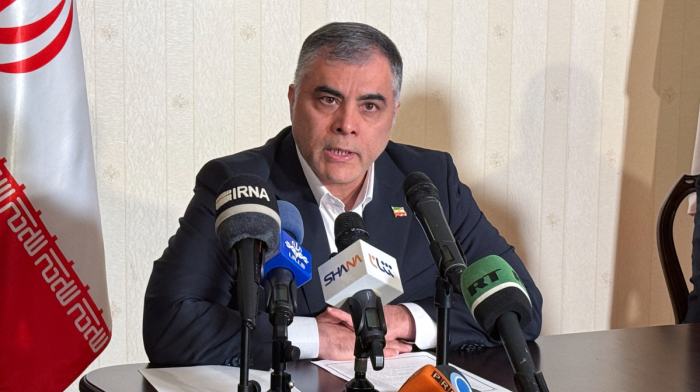
live Massive crowds attend Ali Khamenei funeral procession in week-long farewell
Massive crowds are gathering in the streets of Tehran on Monday for the funeral procession of Iran's slain former supreme leader, Ali Khamenei, as ...
In a sweeping regulatory move aimed at curbing misinformation and enhancing transparency, Chinese authorities have announced new rules requiring all AI-generated content to be clearly labeled.
The directive, set to take effect on September 1, 2025, mandates both explicit and implicit labeling for text, images, audio, video, and virtual scenes produced by artificial intelligence.
Jointly issued by the Cyberspace Administration of China, the Ministry of Industry and Information Technology, the Ministry of Public Security, and the National Radio and Television Administration, the regulations require service providers to implement a two-tier labeling system. Explicit labels must be prominently displayed—whether as text, sound, or graphics—within the content or its user interface. Meanwhile, implicit labels, embedded in the metadata of digital files, must include detailed information such as the content’s attributes, the service provider’s name or code, and specific identification numbers.
The measures are designed to prevent the misuse of AI technologies by ensuring that users can readily distinguish between human-created and AI-generated content. Authorities warn that any malicious removal, tampering, forgery, or concealment of these labels is strictly prohibited, as are tools that facilitate such actions.
Officials say that the new rules aim to combat the spread of misinformation, fraud, and fake news by providing clear indicators of AI involvement. They also hope that the requirements will deter fraudulent practices and academic dishonesty while promoting the healthy development of AI technologies in China.
The comprehensive approach reflects a broader global trend toward increased oversight of AI, as similar initiatives have been introduced in the European Union and the United States. By holding digital platforms and service providers accountable, Chinese regulators are seeking to balance the benefits of rapid AI adoption with the need to safeguard social stability and national security.
The new regulations will apply to all online platforms and services operating within China, marking a significant step in the country’s efforts to govern the expanding role of artificial intelligence in modern media.

The death toll from Venezuela's devastating twin earthquakes has risen to 3,342, according to the country's information ministry, as rescue teams continue searching affected areas and survivors face an uncertain recovery.
Mexico's national football team has returned luxury Rolex watches gifted by American content creator Stevewilldoit after concerns that they could conflict with FIFA's ethics rules.
Governments are tightening restrictions on teenagers’ use of social media amid growing concerns over mental health, online safety and platform design, but questions remain over enforcement and whether bans can meaningfully change behaviour.
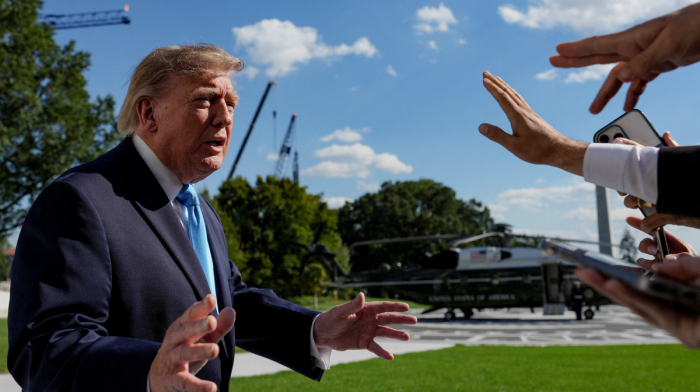
President Donald Trump said Iran is keen to reach a deal with the United States, claiming Washington had paused engagement to allow funeral ceremonies for late Iranian Supreme Leader Ali Khamenei.
Thousands of mourners gathered in Tehran on Sunday as Iran held funeral prayers for Ayatollah Ali Khamenei and four members of his family on the second day of mass processions. Three of Khamenei's sons attended the ceremony, while his successor, Mojtaba Khamenei, made no public appearance.
Humanoid robots stumbled, collided and recovered as they battled for the RoboCup 2026 football title on Sunday (5 July), showcasing the latest advances in robotics and artificial intelligence at the world's largest competition of its kind.
India is investigating a data breach at Tata Electronics that exposed sensitive documents linked to Apple's unreleased iPhone 18 Pro, marking the government's first public comments on the incident.
Humanity’s return to the Moon is about far more than planting flags and collecting samples. Under NASA’s Artemis programme, the goal is to establish a lasting human presence, with lunar rovers set to play a vital role in making that vision possible.
American technology company Snap has launched its first augmented-reality (AR) glasses for consumers, marking a major push into wearable computing as tech firms race to redefine personal devices in the AI era.
The Canadian government has introduced a digital safety bill that would ban children under the age of 16 from using social media, unless platforms meet specific safety standards.
You can download the AnewZ application from Play Store and the App Store.
What is your opinion on this topic?
Leave the first comment