From cotton fields to global markets: How Uzbekistan is building a textile industry
For decades, Uzbekistan’s cotton industry was primarily associated with the production and harvesting of ...
Israeli researchers have unveiled an artificial intelligence tool that can determine a person’s true biological age from tiny DNA samples with remarkable precision.
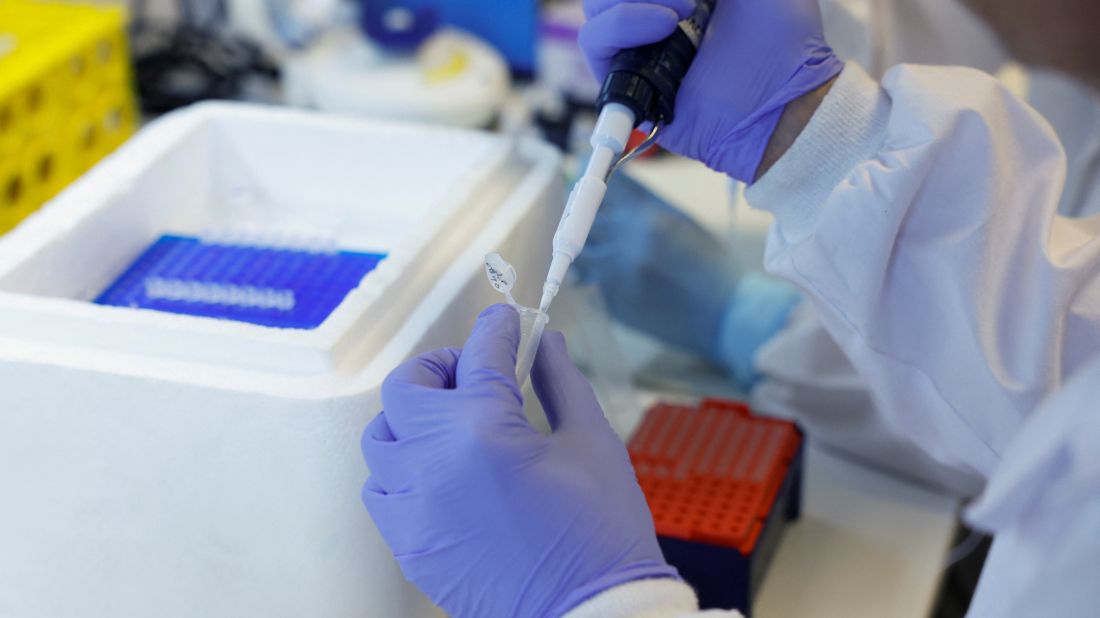
Israeli scientists from the Hebrew University of Jerusalem have created a groundbreaking AI-based tool capable of accurately predicting a person’s biological age from minimal DNA traces. The research, published in Cell Reports, could revolutionise medicine, forensics, and ageing research.
The tool, named "MAgeNet", uses a deep learning model to assess molecular ageing by analysing specific chemical changes in DNA known as methylation. Remarkably, the tool relies on just two DNA regions to deliver its prediction, achieving a median error of only 1.36 years in individuals under 50.
Unlike many existing age estimation techniques, MAgeNet’s accuracy remains consistent regardless of a person's smoking habits, weight, or gender, the university said in a statement.
According to the researchers, the innovation could be used in clinical settings to tailor treatments according to a patient’s biological age rather than their chronological age. This approach may better reflect the body’s actual condition and potential response to therapies.
In addition to medical applications, the tool holds promise in forensic science, allowing investigators to estimate the age of individuals from minute DNA traces left at crime scenes.
The research team believes MAgeNet could also help deepen scientific understanding of how humans age at the molecular level, potentially opening new paths for studying age-related diseases and longevity.

Saudi Arabia, Türkiye and Pakistan will hold an urgent high-level meeting under a joint defence pact to discuss ways to support the kingdom amid attacks by Yemen's Iran-aligned Houthis. The meeting comes as Tehran seeks to distance itself from the rapid advance of its Houthi allies.
World leaders return to the United Nations headquarters in New York on Friday for the fourth day of the high-level General Debate, with speeches and diplomatic meetings continuing throughout the day.
Finland and Sweden deployed fighter aircraft on Thursday after a group of Russian military planes was detected over the Gulf of Finland, the Finnish Air Force reported on Friday (25 September).
U.S. President Donald Trump welcomed Chinese President Xi Jinping to the White House on Thursday, 24 September, for talks focused on trade, artificial intelligence, Taiwan and the war with Iran.
Fourteen Kazakh military personnel died after being swept out to sea during a naval training exercise in the western Mangistau region, authorities said on Thursday.
Meta has unveiled a new generation of wearables, including lightweight virtual reality glasses and camera-free smart spectacles, as it pushes AI-powered devices further into the mainstream while seeking to address privacy concerns.
U.S. President Donald Trump announced on Saturday (19 September) the creation of an “AI Force” and plans to appoint an artificial intelligence (AI) czar, while rejecting calls to slow the development of increasingly powerful AI systems.
Google’s Gemini AI model accessed the internet and hacked three companies during a cybersecurity test, in what is believed to be the first known case of the company’s AI systems autonomously carrying out such activity.
Here's your AnewZ Daily Brief for 18 September 2026. These are the top five stories making headlines in the field of science.
French prosecutors have launched a criminal investigation into suspected sexual harassment involving smart glasses, amid mounting global concern over the privacy risks posed by the devices.
You can download the AnewZ application from Play Store and the App Store.
What is your opinion on this topic?
Leave the first comment