Moscow blames Ukraine after five Azerbaijanis killed in the Sea of Azov
Five Azerbaijani crew members were killed, and three others were injured after two cargo vessels were hit in a drone attack in the Sea of Azov, Azerba...
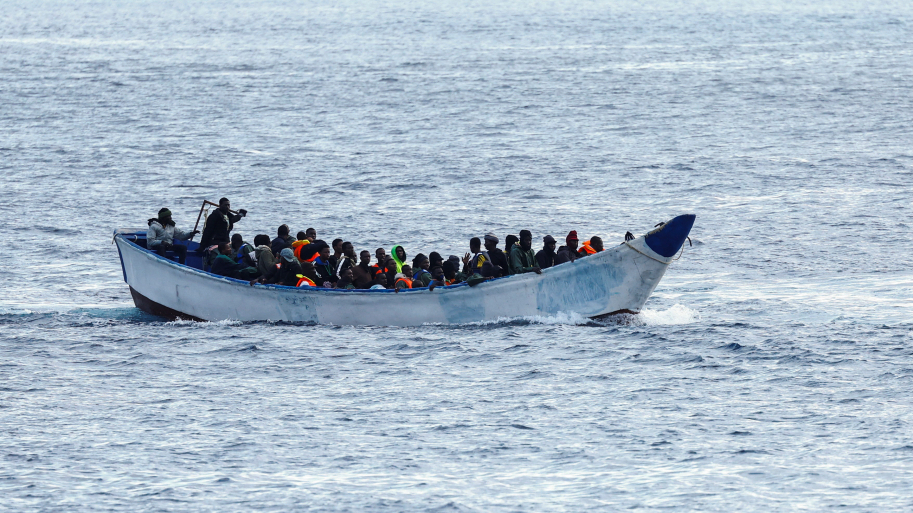
MADRID (Reuters) - The number of migrants reaching Spain's Canary Islands on precarious vessels from West Africa has hit an all-time annual record with 41,425 arrivals between Jan. 1 and Nov. 30 of this year, Interior Ministry data showed on Monday.
The seven islands off northwestern Africa's Atlantic coast are struggling to absorb the surge in irregular migrants arriving on crammed, open-topped boats seeking better opportunities in Europe.
With one month of 2024 still pending, this is the second year in a row that the archipelago, a front line in Europe's struggle to curb migration, has seen a record number.
Mali, Senegal and Morocco were the top three nationalities of migrants reaching the Canaries, according to latest data until October from the European Union's border agency Frontex.
Seeking to revert the trend, Spain has asked Frontex to resume an air and maritime surveillance operation that had ended in 2018 in Mauritania, Senegal and Gambia.
Last year, 39,910 migrants arrived, surpassing the previous record in 2006.
Between January and October, the Canaries registered the fastest increase in arrivals by sea in the EU, even as illegal migrant arrivals in the bloc slumped overall, Frontex data showed.

Five Azerbaijani crew members were killed, and three others were injured after two cargo vessels were hit in a drone attack in the Sea of Azov, Azerbaijan's Foreign Ministry said on Friday, as Russia blamed Ukraine for the strike.
The new AnewZ documentary, TARGET: Yerevan, builds its explosive case on exclusive, secret recordings originally published by Minval Politika.
Azerbaijan has strongly rejected allegations published by CNN claiming that its territory was used for Israeli military and intelligence operations against Iran, describing the report as entirely baseless and demanding a retraction.
Armenia will hold parliamentary elections on 7 June 2026, a vote that will shape the country’s political direction for the next five years. Understanding how the electoral system converts votes into parliamentary power is key to following the outcome and its wider regional implications.
Armenia’s National Assembly election on 7 June is increasingly being viewed not only as a domestic political contest, but also as a vote that could shape the future direction of the South Caucasus.
People across Gaza are facing a worsening humanitarian crisis, with millions struggling to access food, clean water, shelter and medical care as the conflict continues.
The United States has approved the possible sale of five Seahawk maritime helicopters to New Zealand in a deal valued at $1.5 billion, as Wellington moves to strengthen its armed forces.
The United States has announced an additional $38 million to support efforts to contain the Ebola outbreak in the Democratic Republic of Congo, as health officials warn that the virus could spread further without stronger action.
More than 6,000 people gathered outside a vote-counting centre in Seoul on Friday night, demanding this week’s local elections be repeated after ballot shortages left some voters unable to cast their ballots.
The next time a goal goes in during a Champions League final, fans around the world could watch it from every angle at once — frozen, rotated and replayed in ways that were impossible only a few years ago.
You can download the AnewZ application from Play Store and the App Store.
What is your opinion on this topic?
Leave the first comment