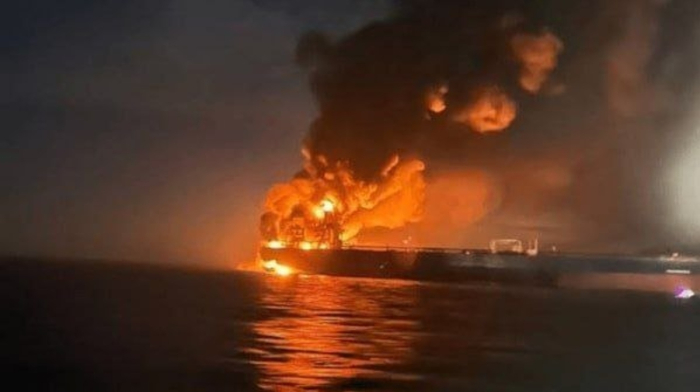
Iran vows response after drone strike on merchant vessel in Caspian Sea
Tehran has stressed that its commercial vessel hit by a Ukrainian drone in the Caspian Sea on Saturday was carrying only civilian cargo and vowed to ...
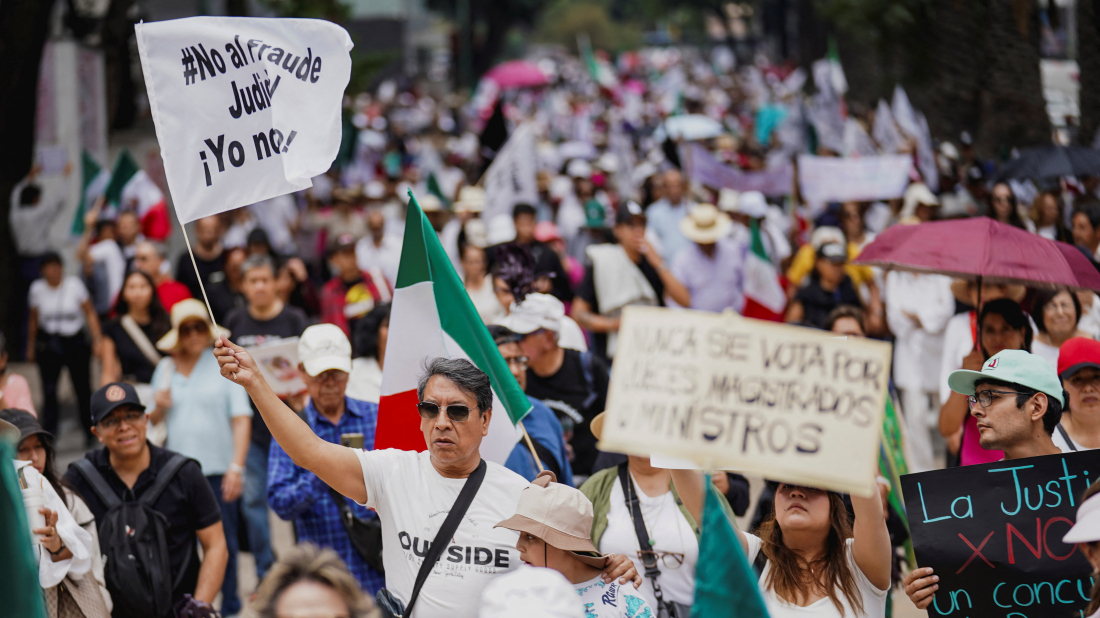
Demonstrators marched in Mexico City against a historic vote to elect judges, with critics warning the move could weaken judicial independence and empower political or criminal interests.
Protesters marched through Mexico City on Sunday to oppose the country’s first-ever nationwide judicial elections.
For the first time in Mexico’s history, more than 2,600 judges and magistrates — including Supreme Court justices and hundreds serving in federal, state, and local courts — will be chosen through popular vote, replacing the traditional appointment-based system.
Demonstrators, including members of the judiciary, gathered at the Monument to the Revolution, denouncing the election as a fraud. Critics raised concerns about how the process was organized and opposed the idea of judges being elected by popular vote.
Opponents argue the reform could undermine checks and balances by enabling the ruling Morena party to install sympathetic judges, while also opening the door for organized crime to influence the judiciary by fielding their own candidates.
The government, however, defends the move as a necessary step to eliminate corruption in what it describes as an elitist and disconnected judiciary, saying it will empower citizens to choose who serves as judge.
Pollsters anticipated low voter turnout, citing calls from the opposition to boycott the vote and the sheer complexity of the process, including the large number of candidates.

U.S. President Donald Trump said on Monday that there is a good chance” of reaching a deal with Iran, but warned that Washington would resume military operation if negotiations fail.
Iran will halt its own attacks as long as the United States maintains its pause on strikes, but Tehran remains sceptical of U.S. intentions, a senior Iranian source told on Sunday.
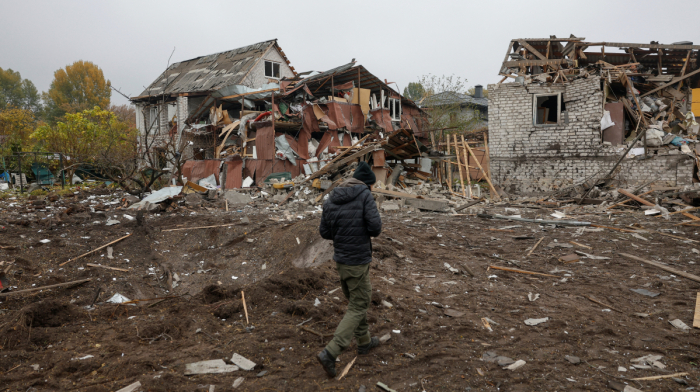
The Russia-Ukraine war is increasingly reshaping the Caspian region. From threats to energy infrastructure to renewed diplomatic efforts, countries across the region are adapting to the wider consequences of a conflict that continues to disrupt trade, transport and security.
A New York school district has put plans to introduce a humanoid robot into classrooms on hold after fierce criticism from teachers, Indigenous community members and state education officials over the use of artificial intelligence in schools.
A known Islamist suspected of driving a minivan into a crowd near a major LGBTQ Pride gathering in Berlin was shot dead during a police operation at an allotment garden complex, broadcaster RBB reported on Sunday.
Tehran has stressed that its commercial vessel hit by a Ukrainian drone in the Caspian Sea on Saturday was carrying only civilian cargo and vowed to respond appropriately while holding Kyiv responsible for the attack.
Since 1946, nine people have served as UN Secretary-General, the closest thing the world has to a chief diplomat. The role carries no army and little hard power, yet its occupants have shaped how nations respond to war, famine and global crises. Here are five who left the deepest mark.
Two shallow earthquakes hit a remote area of China's Qinghai province on Tuesday, with authorities reporting no casualties or collapsed buildings so far.
Australia is considering building its first new oil refinery in more than six decades as conflict in the Middle East exposes the country's heavy reliance on imported fuel.
U.S. House Democrats opened an investigation into FIFA, alleging potential corruption, fraudulent sales tactics, illegal price gouging and a possible quid pro quo involving the organisation and the Trump administration.
You can download the AnewZ application from Play Store and the App Store.
What is your opinion on this topic?
Leave the first comment