Iran deploys ballistic missile at underground base ahead of U.S. nuclear talks in Oman
Iran’s Islamic Revolutionary Guard Corps (IRGC) deployed one of its largest ballistic missiles at a newly unveiled underground base on Wednesday (3 ...
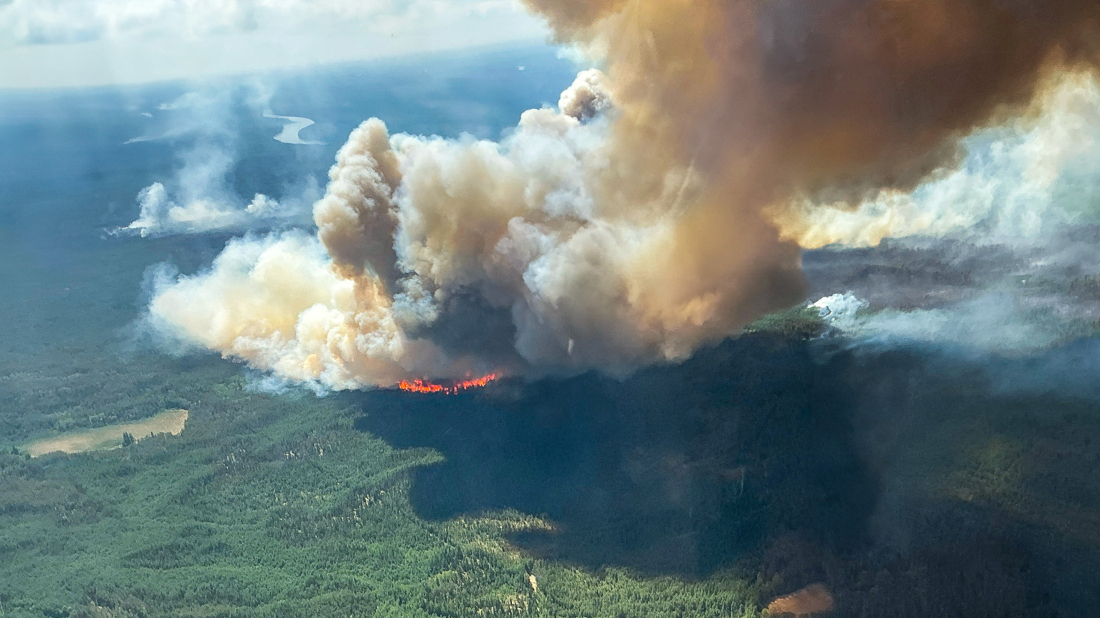
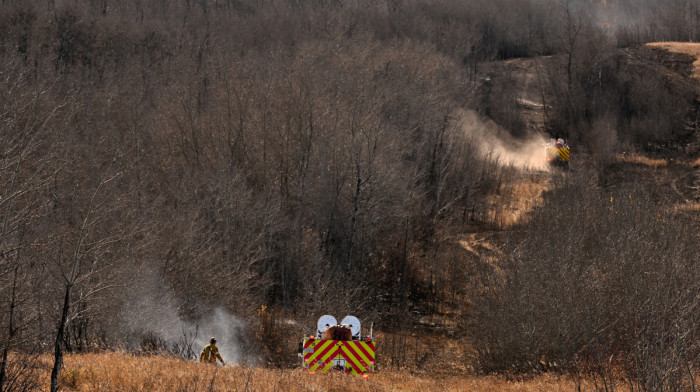
Wildfires in western and central Canada have triggered the evacuation of more than 26,000 people, with provinces including Manitoba, Saskatchewan and Alberta facing major threats.
The Canadian Interagency Forest Fire Centre reported 187 active fires nationwide on Sunday, 97 of which were marked “out of control.”
Local officials said Manitoba alone accounts for over 17,000 evacuees, followed by 8,000 in Saskatchewan and 1,300 in Alberta.
Prime Minister Mark Carney said the federal Incident Response Group has been convened. The Canadian Armed Forces are now assisting with air evacuations, particularly in the Mathias Colomb Cree Nation.
Carney confirmed that the government will match Red Cross donations and is coordinating efforts with Indigenous leaders and provincial authorities.
“The scale and complexity of these air evacuations cannot be overstated,” he posted on X.
Evacuation centres have opened throughout Manitoba, including in Winkler, near the US border. Meanwhile, drifting smoke has crossed into the Upper Midwest and Great Lakes, triggering air quality alerts in several US states.
The US Department of Agriculture said it sent 150 firefighters and an air tanker to assist in Alberta.

Iran’s Islamic Revolutionary Guard Corps (IRGC) deployed one of its largest ballistic missiles at a newly unveiled underground base on Wednesday (3 February), just two days ahead of mediated nuclear talks with the United States in Muscat, Oman.
Rivers and reservoirs across Spain and Portugal were on the verge of overflowing on Wednesday as a new weather front pounded the Iberian peninsula, compounding damage from last week's Storm Kristin.
Morocco has evacuated more than 100,000 people from four provinces after heavy rainfall triggered flash floods across several northern regions, the Interior Ministry said on Wednesday.
The World Health Organization has added the Nipah virus to its list of the world’s top 10 priority diseases, alongside COVID-19 and the Zika virus, warning that its epidemic potential highlights the global risk posed by fast-spreading outbreaks.
Uzbekistan is accelerating plans to expand uranium production and deepen international nuclear cooperation, positioning the sector as a pillar of long-term industrial growth and resource security.
“Having a good security relationship with the United States is of utmost importance for the Japanese as a whole,” said Professor Seijiro Takeshita of the University of Shizuoka, highlighting the strategic stakes ahead of Japan’s national election.
Iran and the United States are set to hold high-stakes negotiations in Oman on Friday (6 February) over Tehran’s nuclear programme. However, disputes over the agenda, particularly Iran’s missile programme, suggest progress will be difficult.
Indonesia and Australia have signed a security treaty on Friday (6 February) that commits them to consult each other if either country is threatened, Indonesian President Prabowo Subianto said.
Start your day informed with AnewZ Morning Brief: here are the top news stories for the 6th of February, covering the latest developments you need to know.
Security services say they have now rescued all 166 worshippers who were kidnapped by gunmen during attacks on two churches in northern Nigeria last month, a Christian group said on Thursday (5 February).
You can download the AnewZ application from Play Store and the App Store.
What is your opinion on this topic?
Leave the first comment