The Organization of Turkic States marked a historic milestone as Hungary hosted the May 2025 summit, deepening cooperation, expanding cultural ties, and adopting key decisions, including Uzbekistan's accession to the Turkic Culture and Heritage Foundation.
The Member States of the Organization of Turkic States (OTS) had long been bound by a common cultural and historical heritage. While the modern institutionalization of Turkic cooperation formally began in 2009 with the signing of the Nakhchivan Agreement, its foundations had been laid much earlier, in the early 1990s, when the first Summits of the Heads of Turkic-speaking States set the stage for future integration.
In October 2024, the Organization marked its 15th anniversary with a commemorative celebration in Ankara. In this short but dynamic period, cooperation among the countries expanded to cover more than 35 areas — from foreign policy and trade to digital transformation, artificial intelligence, and sustainable development.
By that time, six key structures were operating under the umbrella of Turkic cooperation, including the International Organization of Turkic Culture (TURKSOY), the Parliamentary Assembly of Turkic States (TURKPA), the Turkic Academy, the Turkic Culture and Heritage Foundation (TCHF), the Union of Turkic Chambers of Commerce and Industry (TCCI), and the recently established Turkic Investment Fund. Partnerships with international organizations were also actively developing — memoranda of understanding had been signed with the UN, OIC, ECO, ICESCO, and other institutions. At the latest summit in Bishkek, the Heads of State adopted a series of landmark decisions, including the approval of a new flag.
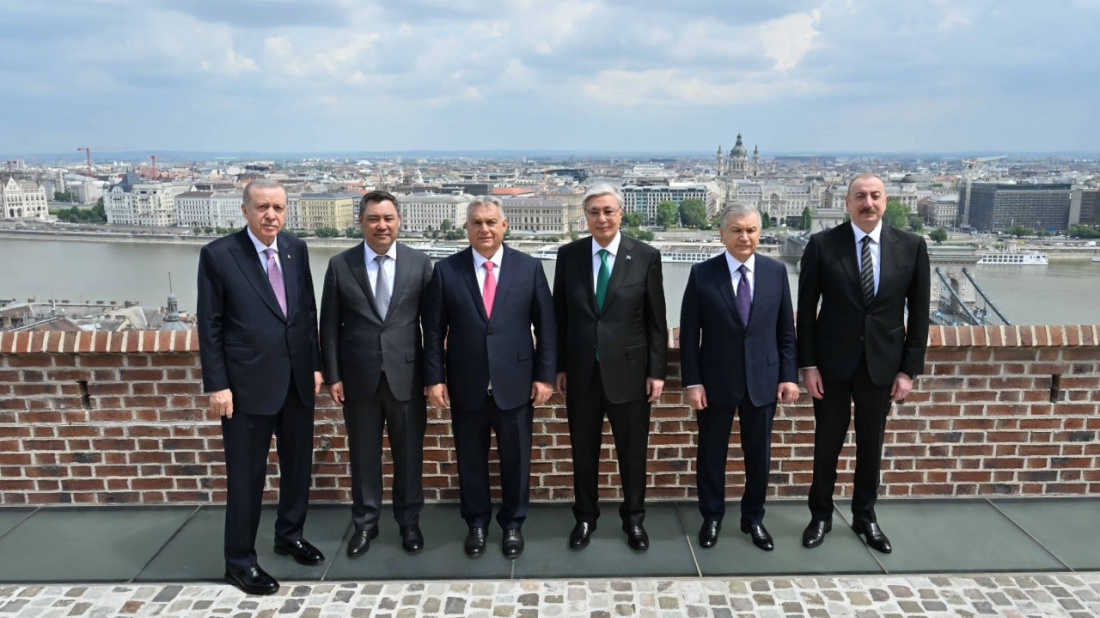
The Informal Summit of the Heads of State of the OTS took place on May 20–21, 2025, in Budapest, Hungary. This marked the first time an Observer State hosted an OTS summit, underscoring Hungary's growing role in Turkic cooperation. Under the theme “Meeting Point of East and West,” leaders from Member States and Observers discussed strategies to deepen collaboration in key priority areas and tackled regional and global issues of shared interest.
The summit concluded with the signing of the Budapest Declaration, reaffirming the OTS's strategic direction and commitment to regional integration. In addition, the leaders signed the Decision on the “Accession of the Republic of Uzbekistan to the Turkic Culture and Heritage Foundation,” a significant step further deepening cultural cooperation and solidarity across the Turkic World, and adopted a Statement of the Council on Afghanistan, underscoring the unified stance and coordinated approach of the OTS Member States regarding the situation in Afghanistan.
Meanwhile, the Council of Foreign Ministers signed the Decision on the “Appointment of Executive Director of the Representation Office of the Organization of Turkic States in Hungary,” a milestone that enhanced the Organization’s institutional presence and engagement in Europe. Foreign Ministers also signed the Decision on the “Granting Observer status to the Turkish Republic of Northern Cyprus at the Turkic Academy”.
During the Summit, an award ceremony was held in recognition of Prof. Dr. Aziz Sancar, world-renowned scientist and Nobel Laureate, who received the “Alisher Navoi International Prize of the Organization of Turkic States,” honoring his outstanding scientific contributions and enduring commitment to the unity and identity of the Turkic World.
















What is your opinion on this topic?
Leave the first comment