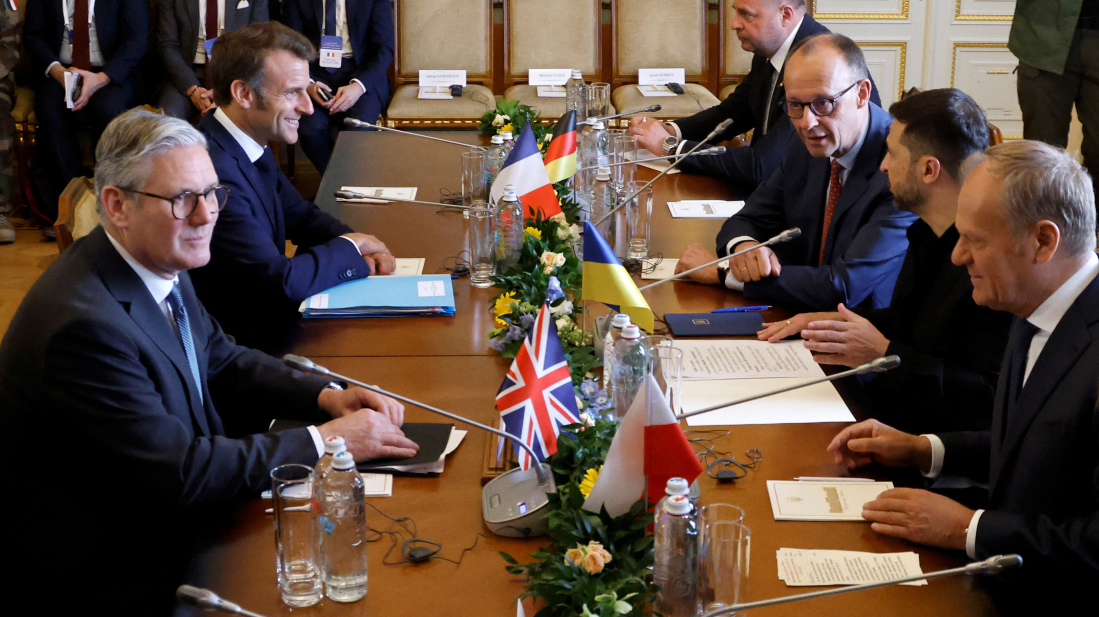
Leaders from Britain, France, Germany and Poland met with Ukraine’s President in Kyiv to support a proposed 30-day ceasefire, amid diplomatic efforts involving the US and Europe aimed at reducing hostilities in the conflict with Russia.
Major European powers threw their weight behind an unconditional 30-day Ukraine ceasefire on Saturday, with the backing of U.S. President Donald Trump, and warned Russian President Vladimir Putin of “massive” new sanctions if he did not accept the plan within days.
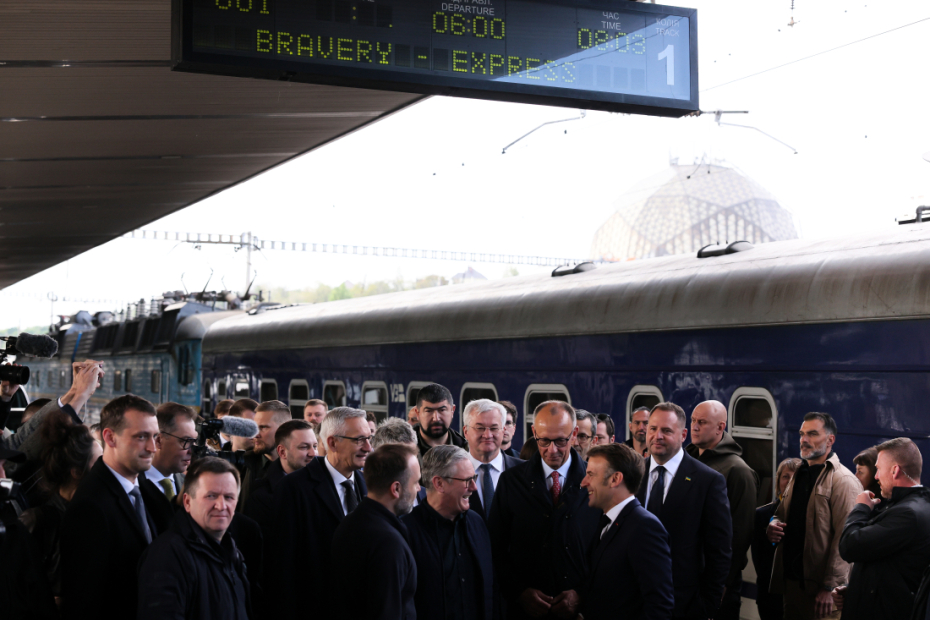
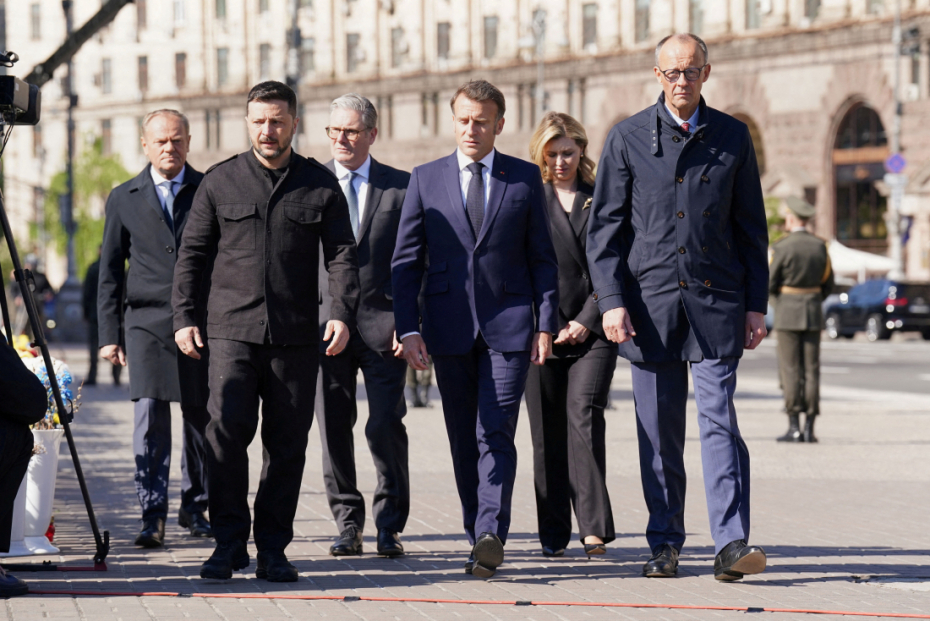
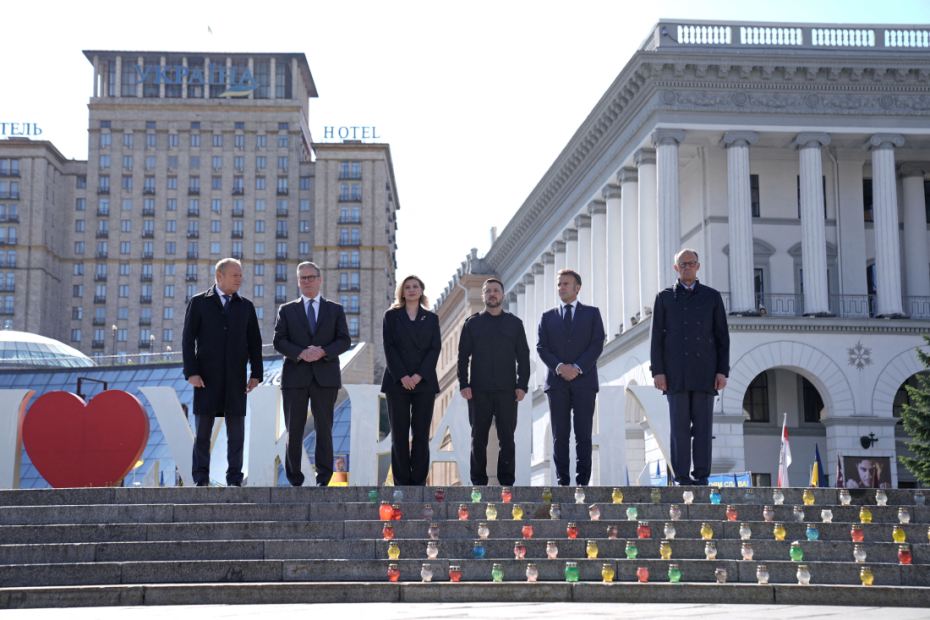
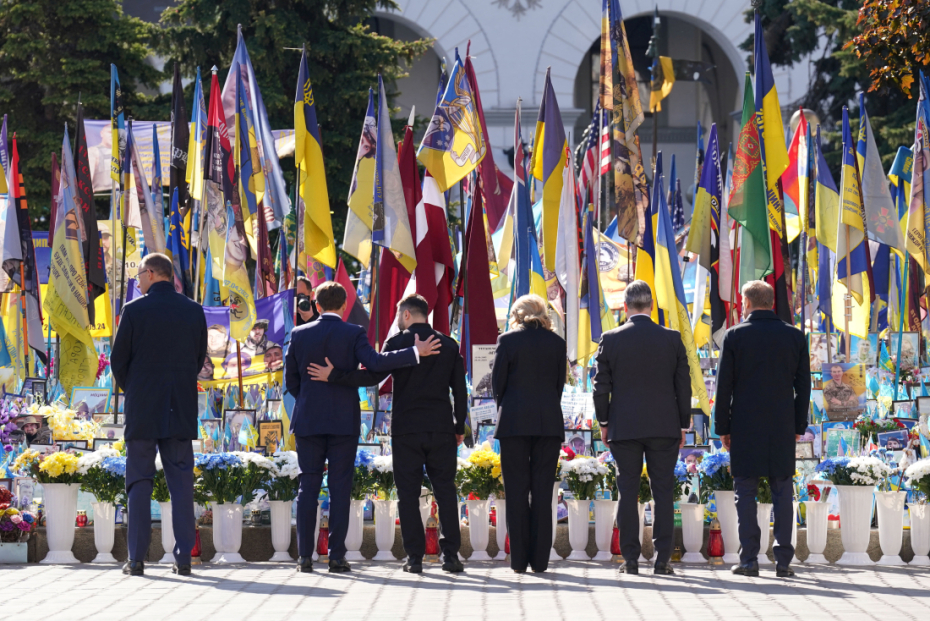
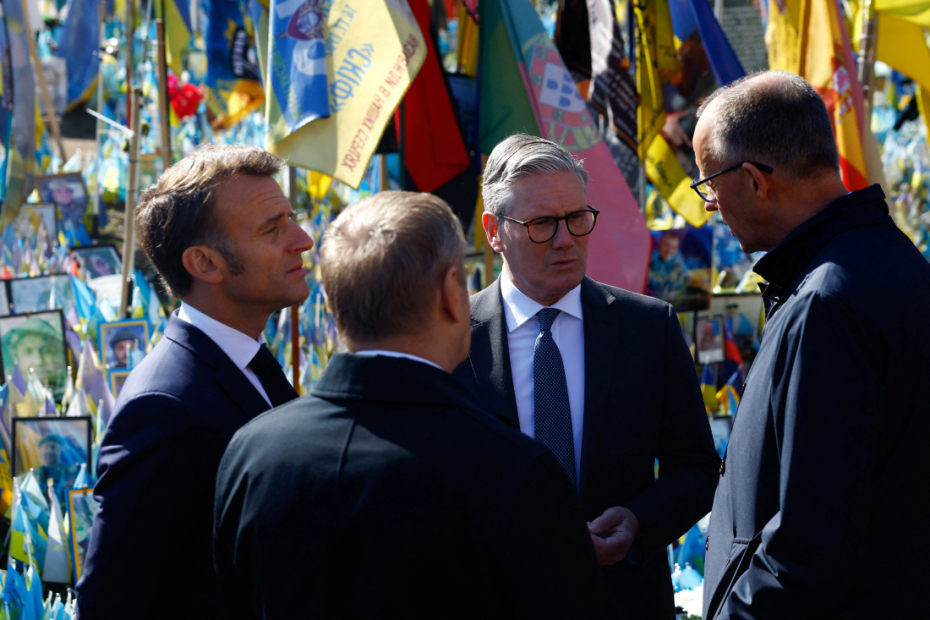
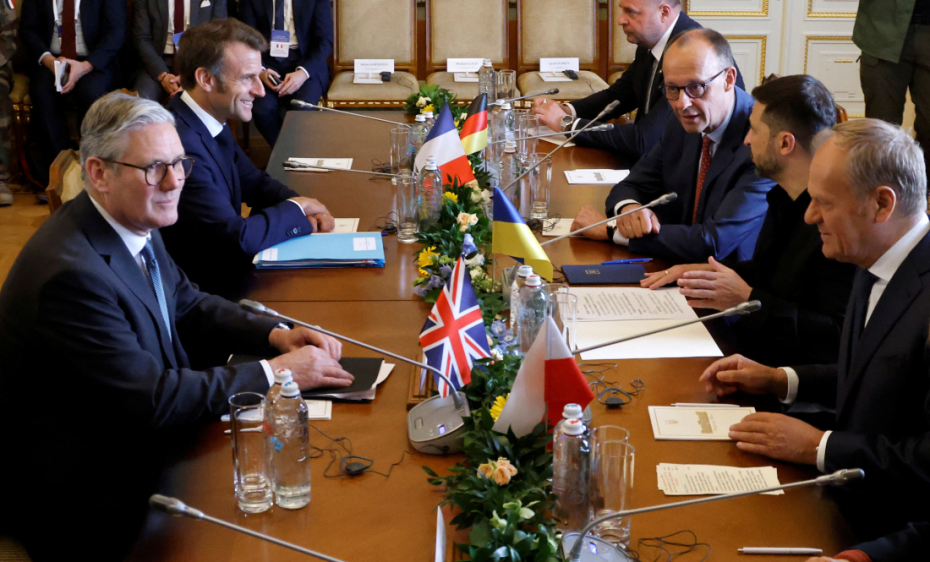
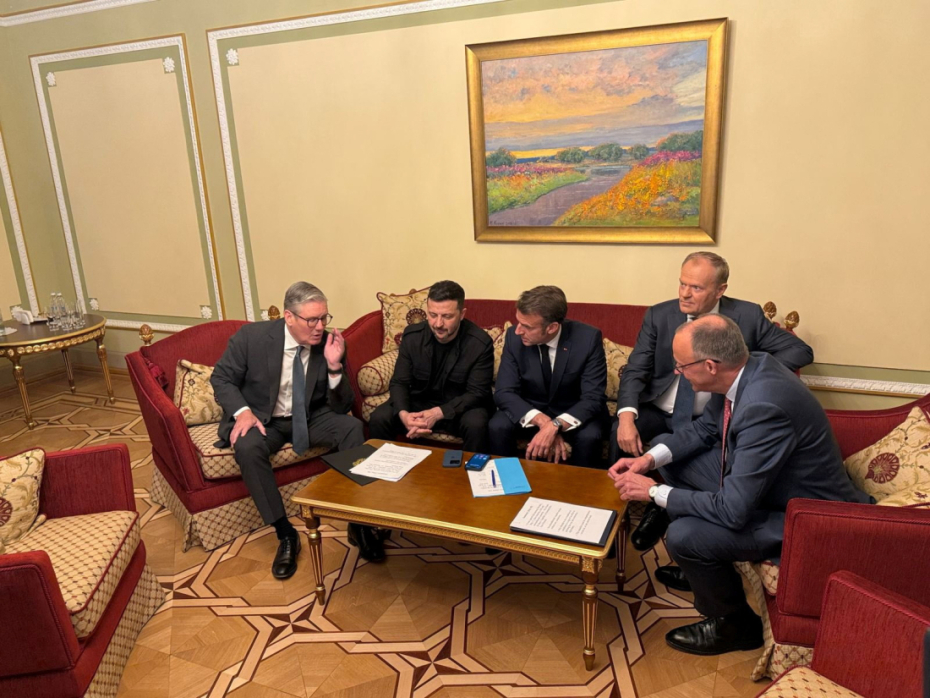
The leaders of Britain, France, Germany, and Poland travelled together by train to Kyiv—an unprecedented joint visit—to meet with Ukrainian President Volodymyr Zelenskyy. Upon arrival, they visited a memorial for fallen Ukrainian soldiers and held a joint press conference with Zelenskyy after a phone call with President Trump.
The proposed ceasefire, set to begin on May 12, is intended to cover air, sea, and land operations. It is aimed at creating space for renewed peace talks, with terms of a potential agreement to be negotiated during the pause.
British Prime Minister Keir Starmer urged Moscow to act swiftly: “So all of us here together with the U.S. are calling Putin out. If he is serious about peace, then he has a chance to show it. No more ifs and buts, no more conditions and delays.”
Ukrainian Foreign Minister Andrii Sybiha confirmed the coordinated diplomatic push, stating that the U.S. and European nations were united behind the effort. French President Emmanuel Macron added that if Russia violated the ceasefire, massive sanctions would follow, coordinated between the U.S. and EU.
Zelenskyy reiterated that Russia would face severe consequences, including reinforced sanctions targeting its energy and banking sectors, if it rejected the ceasefire or breached its terms.
The Kremlin responded dismissively. “We hear many contradictory statements from Europe. They are generally confrontational in nature rather than aimed at trying to revive our relations. Nothing more,” said Kremlin spokesman Dmitry Peskov, according to Interfax. He also stressed that any truce must consider halting Western military aid to Ukraine, warning that ongoing support would create military imbalance.
Former Russian President Dmitry Medvedev reacted angrily online, writing, “Shove these peace plans up your pangender arses!” on social media platform X.
Despite past tensions with Kyiv, Trump has restored dialogue since taking office in January and signed an agreement securing U.S. access to Ukrainian mineral resources. Though he remained silent following the Kyiv summit, officials said he voiced frustration with Moscow’s delay in peace efforts during the call.
The White House’s alignment with European powers on potential sanctions reflects growing Western unity after months of policy unpredictability, particularly amid Trump's tariffs on European nations and criticism of NATO spending.
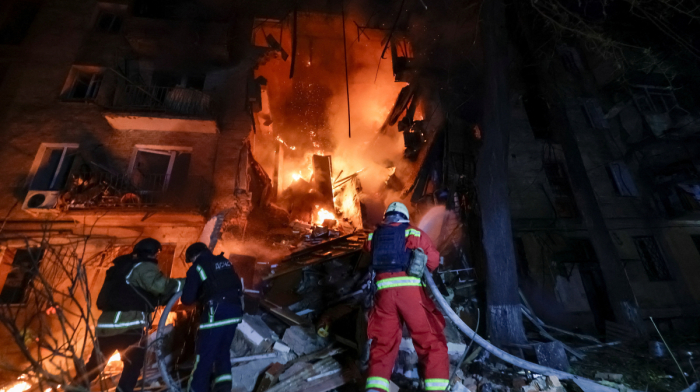
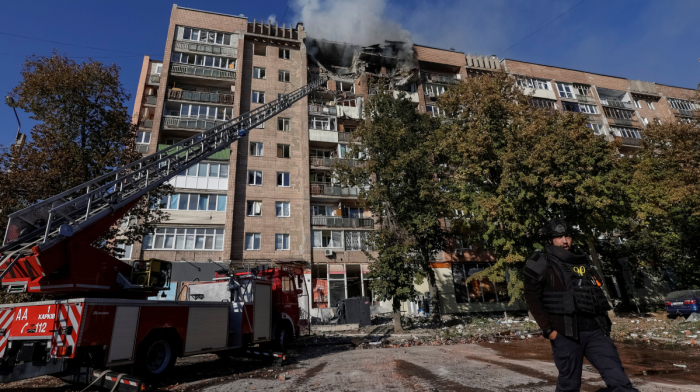
On the eve of the summit, the U.S. embassy in Kyiv warned of a potentially significant air assault. Meanwhile, Ukraine dismissed the May 8–10 ceasefire declared by Russia as symbolic and ineffective. Ukrainian sources and field reports indicated ongoing shelling and injuries among soldiers, undermining the truce.
Reuters journalists at a field hospital near the front lines in Zaporizhzhia observed continued hostilities. “There hasn’t been any ceasefire, shelling has continued just as before,” said a wounded Ukrainian soldier named Stanislav.
While in Kyiv, the European leaders are expected to brief international partners during a virtual summit on future coordination for Ukraine’s military and post-war reconstruction aid. Support for accountability efforts, including proposals for a special tribunal on alleged war crimes, also remains on the agenda.
















What is your opinion on this topic?
Leave the first comment