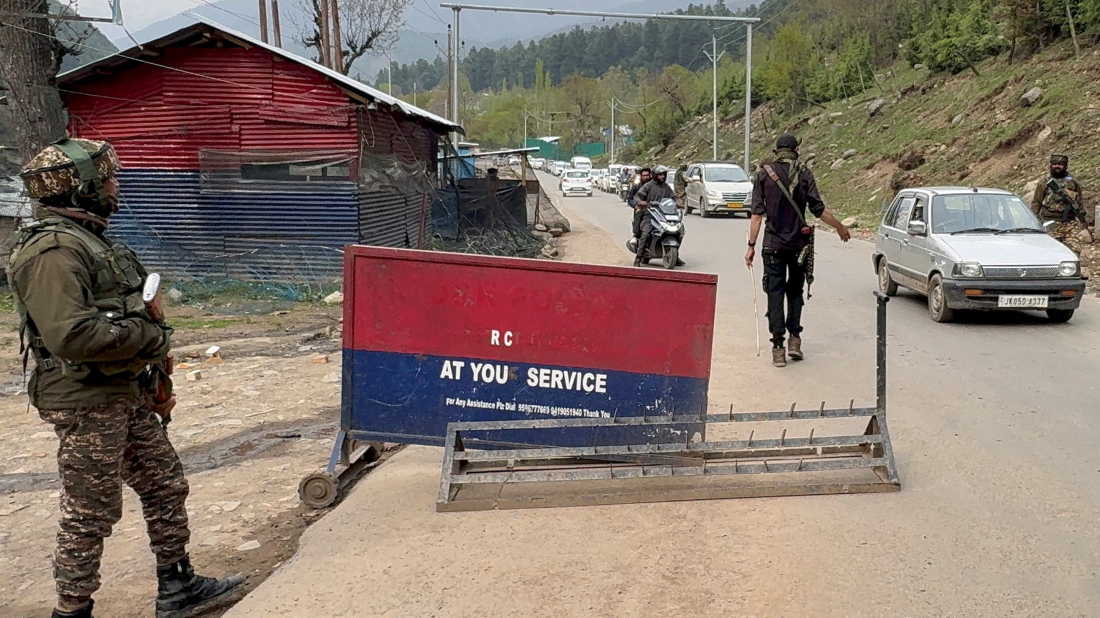
A deadly attack targeting tourists in India’s Jammu and Kashmir territory has left at least 20 feared dead, marking the deadliest incident against civilians in the region for years, according to security sources.
At least 20 people were feared killed after suspected militants opened fire on tourists in India’s Jammu and Kashmir territory on Tuesday, according to three security sources, in what is believed to be the worst civilian attack in the troubled Himalayan region in years.
The incident took place in Pahalgam, a popular mountainous destination where tourism has flourished in recent years amid a decline in militant violence. One security source put the death toll at 20, another at 24, and a third at 26. All three spoke on condition of anonymity, lacking official authorisation to brief the media.
Witnesses described scenes of panic as gunfire erupted. “The firing happened in front of us,” one person told India Today, adding, “We thought it was firecrackers, but then we heard people screaming. We ran for four kilometres without stopping.”
According to reports in the Indian Express, the attack was carried out in a meadow off the main road by two or three militants. The identities of the attackers remain unconfirmed, while the nationalities of the victims have yet to be disclosed.
A little-known group calling itself the "Kashmir Resistance" claimed responsibility for the assault in a social media post, linking the attack to concerns over demographic changes in the region following recent domicile grants to non-locals. Reuters has not independently verified the message.
Jammu and Kashmir’s Chief Minister Omar Abdullah acknowledged the severity of the incident, stating on social media platform X, “This attack is much larger than anything we’ve seen directed at civilians in recent years.”
Prime Minister Narendra Modi condemned the attack, vowing justice for the victims. “Their evil agenda will never succeed,” he posted on X. Home Minister Amit Shah announced his immediate departure for Kashmir to oversee a security review.
The region has experienced decades of conflict since the outbreak of an anti-India insurgency in 1989, with violence declining notably in recent years. India revoked Jammu and Kashmir’s special status in 2019, dividing it into two federally administered territories and granting domicile rights to thousands of outsiders, a move that sparked political tensions and drew criticism from Pakistan.
Attacks on tourists in the area have become rare. The last major incident occurred in June 2024, when a militant assault led to the deaths of nine Hindu pilgrims and injuries to 33 others after their bus plunged into a gorge.
The latest violence comes a day after U.S. Vice President JD Vance began a four-day personal visit to India, though no official connection between the visit and the attack has been suggested.














What is your opinion on this topic?
Leave the first comment