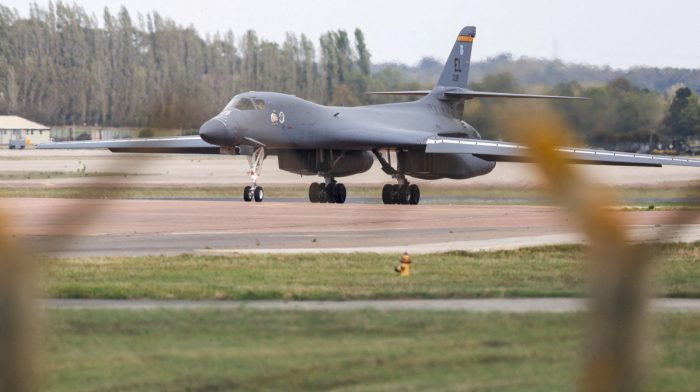
EU leaders condemn hybrid attacks by Russia and Belarus
European Union leaders on Thursday denounced a wave of hybrid attacks against the bloc, attributing them to Russia and Belarus, and called for stronge...
After a week of deadly cross-border strikes and rising fears of war, India and Pakistan have agreed to an immediate ceasefire — brokered by Washington. The agreement follows one of the most dangerous escalations in years between the two nuclear powers.
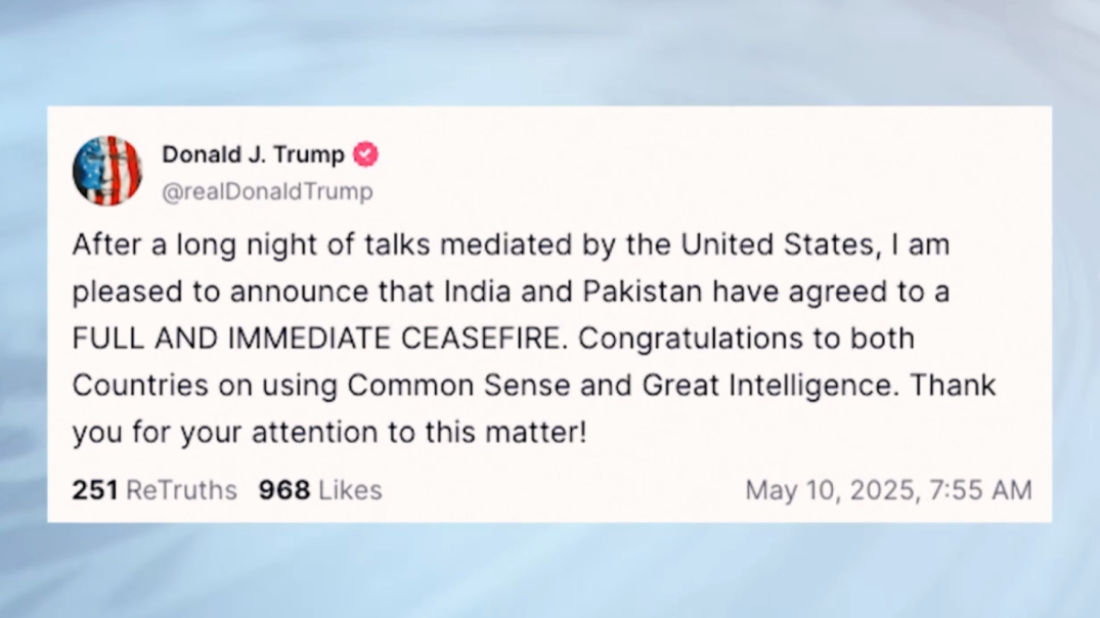
After days of cross-border violence, India and Pakistan have agreed to a full and immediate ceasefire. The announcement was made just hours ago by U.S. President Donald Trump, who said the agreement followed a long night of high-level negotiations mediated by Washington.
In a statement posted on Truth Social, President Trump wrote that India and Pakistan had “agreed to a full and immediate ceasefire.”
The news was quickly confirmed by Pakistan’s Deputy Prime Minister, Ishaq Dar, who noted that Islamabad remains committed to peace while defending its sovereignty.
Meanwhile, U.S. Secretary of State Marco Rubio stated that both nations have also agreed to launch formal talks on a broader set of issues.
He praised Indian Prime Minister Narendra Modi and Pakistani Prime Minister Shehbaz Sharif for what he called wisdom and statesmanship in choosing the path of peace. Rubio also revealed that he and fellow official JD Vance had spent the past 48 hours in closed-door meetings with senior officials from both countries.
The ceasefire follows one of the most dangerous escalations in years between the two nuclear-armed neighbours.
Over the past week, missile strikes, drone incursions, and artillery fire have killed at least 48 people and injured dozens more — the majority of them on the Pakistani side of the border.
Within the last two days, Pakistan launched Operation Bunyan-un-Marsoos, targeting Indian military sites. This was in retaliation for India’s Operation Sindoor, carried out on May 6, which Islamabad says killed 33 civilians inside Pakistani territory.

The latest clashes between Thailand and Cambodia mark a dangerous escalation in one of Southeast Asia’s oldest and most sensitive disputes.
In the complex world of international diplomacy, the ongoing tensions between India and Pakistan have raised significant questions about the role of third-party mediation.
Citizens from an additional seven countries, including Syria, are being banned from travelling to the U.S. from the 1st of January next year. President Donald Trump made the annoucement on Tuesday (16 December) now has a total of 39 countries banned from entering the States.
Austria’s public broadcaster ORF, which is hosting the Eurovision Song Contest next year, has said it will not block Palestinian flags in the audience or suppress crowd reactions during Israel’s performance.
Police in Australia have charged a man who allegedly opened fire on a Jewish event on Sydney's Bondi Beach with 59 offences, including 15 counts of murder and one of committing a terrorist act.
Brazilian President Luiz Inácio Lula da Silva has offered to mediate between the U.S. and Venezuela, warning that urgent diplomatic intervention is needed to prevent a “fratricidal war” in Latin America.
Türkiye has enhanced its environmental and cultural conservation efforts, registering 10,503 monumental trees and 319 caves nationwide, the Ministry of Environment, Urbanisation and Climate Change confirmed.
Former Iraqi President Barham Ahmed Salih has been elected by the UN General Assembly as the next High Commissioner for Refugees, beginning a five-year term on 1 January 2026.
Ukrainian President Volodymyr Zelenskyy arrived in Poland on Thursday following a summit of the European Council in Brussels.
Russian Foreign Minister Sergey Lavrov arrived in Cairo on Thursday ahead of a two-day ministerial conference of the Russia-Africa Partnership Forum.
You can download the AnewZ application from Play Store and the App Store.
What is your opinion on this topic?
Leave the first comment