Kazakhstan offers Germany bigger role in critical minerals supply chains
Kazakhstan and Germany have agreed to expand cooperation in critical minerals, industry, energy and transport, with Astana seeking a greater German...
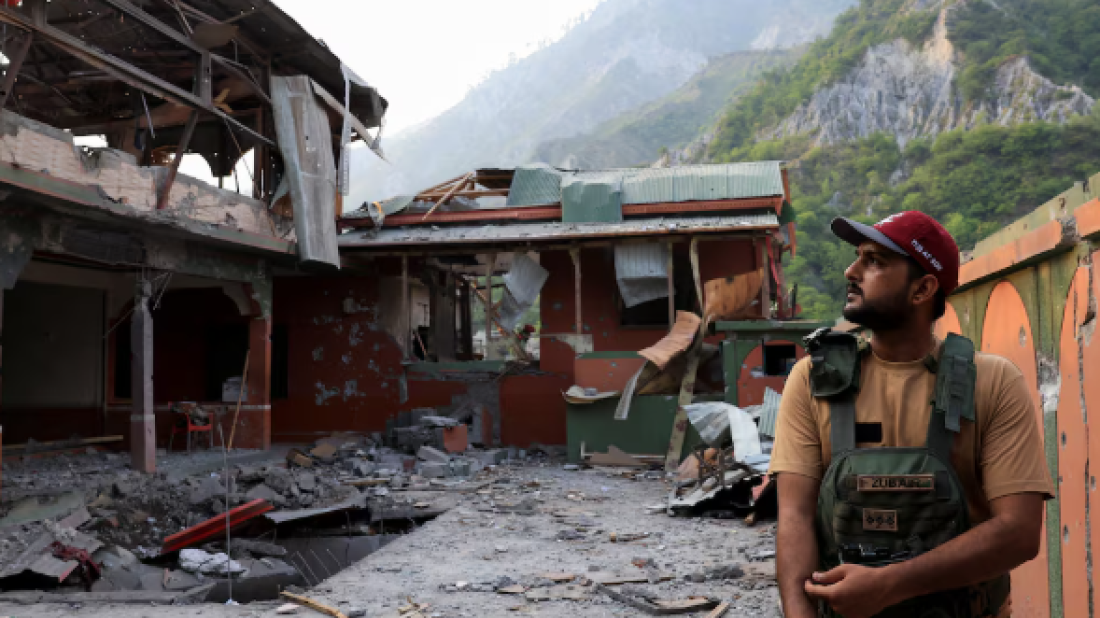
At least 13 civilians have been killed and over 50 injured in Pakistani Kashmir within 12 hours, as military strikes and cross-border shelling intensify between India and Pakistan following Islamabad's launch of Operation Bunyan-un-Marsoos.
A deadly escalation between India and Pakistan has left at least 13 civilians dead and more than 50 injured in Pakistani-administered Kashmir as of Saturday noon, the region's disaster management authority confirmed. The casualties come amid a wave of military strikes exchanged by the nuclear-armed neighbors over the past several days.
The Pakistani military launched a large-scale retaliatory offensive early Saturday, dubbed Operation Bunyan-un-Marsoos or "Iron Wall," targeting Indian military installations. Islamabad says the strikes were in direct response to Operation Sindoor, an Indian military campaign on May 6 that killed 33 people and injured 62 in Pakistan.
Pakistan claims it targeted key Indian military facilities, including a missile storage site in the Beas region, and used Al-Fatah missiles named in honor of Pakistani children killed in earlier Indian strikes. State media also reported that Pakistani drones were seen operating over India’s capital, New Delhi.
The situation further deteriorated after Indian missiles reportedly struck multiple Pakistan Air Force bases, including the Noor Khan Airbase near Islamabad, according to Pakistan Army spokesperson Lieutenant General Ahmad Sharif Chaudhry.
India, for its part, has justified its actions as a response to a deadly attack last month on Hindu pilgrims in Indian-administered Kashmir, blaming Islamabad for supporting the perpetrators—an accusation Pakistan strongly denies.
Cross-border hostilities, including artillery fire, drone incursions, and missile exchanges, have intensified since Wednesday. A total of 48 deaths have been reported so far, though independent verification remains difficult amid the active conflict.
With tensions rapidly escalating and civilian casualties mounting, international observers are voicing concerns over the possibility of a broader regional war between the two nuclear states.

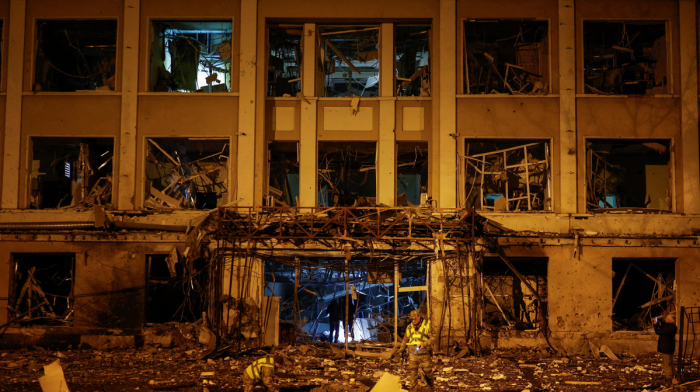
A Russian guided aerial bomb has struck an apartment building in Kharkiv, injuring 22 people, including children, according to the city’s mayor. The strike follows a day of near-continuous Russian attacks across Ukraine that killed at least five people.
Here's your AnewZ Daily Brief for 28 September 2026. These are the top stories making headlines in technology.
Saudi Foreign Minister Prince Faisal bin Farhan has arrived in Washington for talks with U.S. Secretary of State Marco Rubio on bilateral ties and key regional and international developments, Saudi state news agency SPA reported.
The European Union's decision to simultaneously advance accession talks with Ukraine, Moldova, Montenegro and Albania marks its most ambitious enlargement effort in more than two decades.
U.S. President Donald Trump has denied reports that he offered Iran sanctions relief and access to frozen funds in exchange for nuclear concessions.
British Prime Minister Andy Burnham has declared that Brexit has done more harm than good, while reaffirming support for Ukraine and NATO as he used his first Labour conference speech as leader to set out a new direction for Britain.
The arrival in South Korea of two North Korean soldiers captured while fighting for Russia has created a rare legal, diplomatic and humanitarian case, raising questions over their status, security and future.
At midnight on 30 September, the last U.S. troops are due to leave Iraq, ending a military presence that began with the 2003 invasion and cost the lives of around 4,500 American service members.
Here’s your AnewZ Daily Brief for 29 September 2026, with the latest from Azerbaijan, from $10.8 billion in investment deals and Formula 1 drama to diplomacy and preparations for major FIFA tournaments.
Crude oil exports from major Middle Eastern producers rebounded in September to their highest level since the U.S.-Israeli war on Iran began in late February, according to data from analytics firm Kpler.
You can download the AnewZ application from Play Store and the App Store.
What is your opinion on this topic?
Leave the first comment