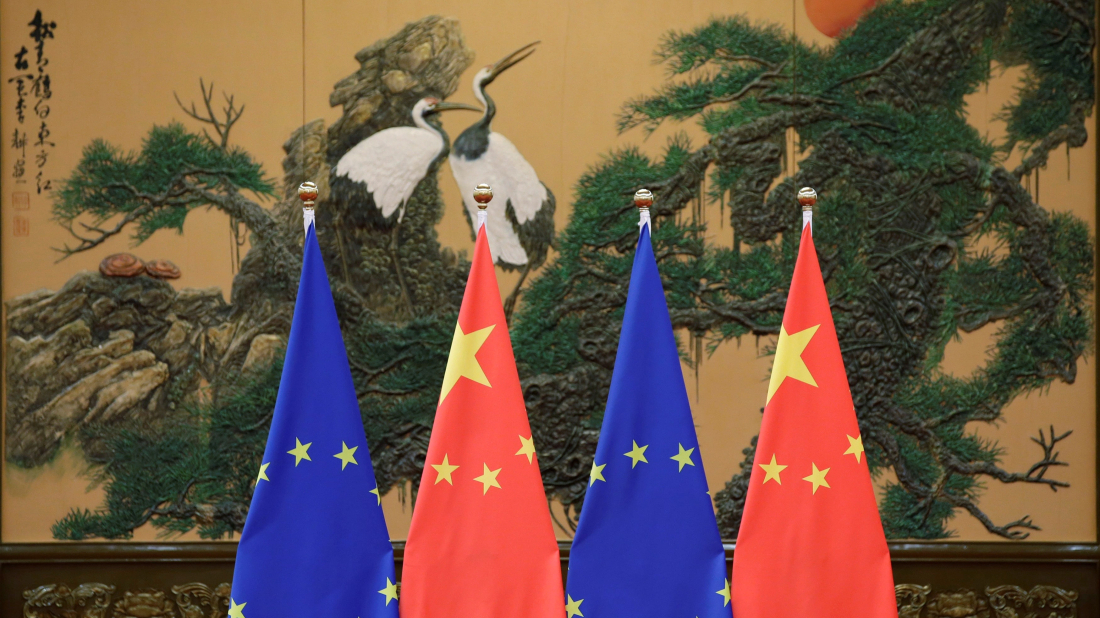
China’s Ambassador to Spain, Yao Jing, stated that China is eager to be seen as a partner rather than a rival to the European Union, emphasizing the need for collaboration amidst shifting global dynamics and U.S. trade policies, which he described as "unilateral economic abuse."
In an interview with Reuters, Yao criticized the EU's 2019 strategy that described China as its "partner for cooperation, economic competitor, and systemic rival," calling it a contradictory stance. He pointed out that both China and the EU advocate for open markets and rules-based trade, and he stressed that China would never pose a threat to the EU. "We should put our focus on partnership," Yao said, contrasting China’s multilateral approach with U.S. President Donald Trump's isolationist policies.
Yao’s comments come as Spain seeks to strengthen its economic and political ties with China. Last week, Spanish Prime Minister Pedro Sanchez met with Chinese President Xi Jinping in Beijing. The meeting was widely seen as an effort to bolster Sino-European relations amid the economic fallout from U.S. tariffs. Before the trip, U.S. Treasury Secretary Scott Bessent warned that closer ties with China would be "cutting your own throat," a remark that was dismissed by the Spanish government.
Responding to Bessent’s comments, Yao expressed surprise and frustration, accusing the U.S. of causing harm with its unilateral tariffs. "The U.S. in fact cuts everyone's throats with its unilateral tariffs," he said. "And this is why China is firmly against this kind of economic abuse by the United States."
Trade Issues and Cooperation
On the subject of trade, Yao urged the EU to lift export controls on key high-tech products like semiconductors and remove tariffs on Chinese electric vehicles (EVs). He also called for an end to restrictions on Chinese companies such as Huawei and ZTE, which have faced limitations in accessing Europe's 5G network.
In return, Yao highlighted China's efforts to open its own markets to foreign investment, including in sectors like telecommunications, banking, and manufacturing. "We've made it very clear that China will open its door with the passage of time, and this door will never be closed," he said, noting that China is ready to expand market access to EU members, as demonstrated by recent agreements with Spain.
One such agreement involved granting China access to Spanish pork stomach, a product previously unauthorized for export. This move was seen by some analysts as a possible signal that Beijing may ease its anti-dumping investigation into EU pork, which was launched last year in retaliation for EU tariffs on Chinese EVs.
Despite the ongoing probe into EU pork imports, Yao conveyed a willingness to resolve trade differences through dialogue and negotiations, reinforcing China’s commitment to long-term economic cooperation with Europe.
As the U.S. continues to impose tariffs on global trade, including with both China and the EU, the economic and political landscape is evolving, with China positioning itself as a key player in reshaping international relations and trade norms.















What is your opinion on this topic?
Leave the first comment