U.S. airlifts nuclear microreactor in first rapid deployment test
The United States has carried out its first air transport of a nuclear microreactor on a cargo plane, flying the unit from California to Utah in a dem...
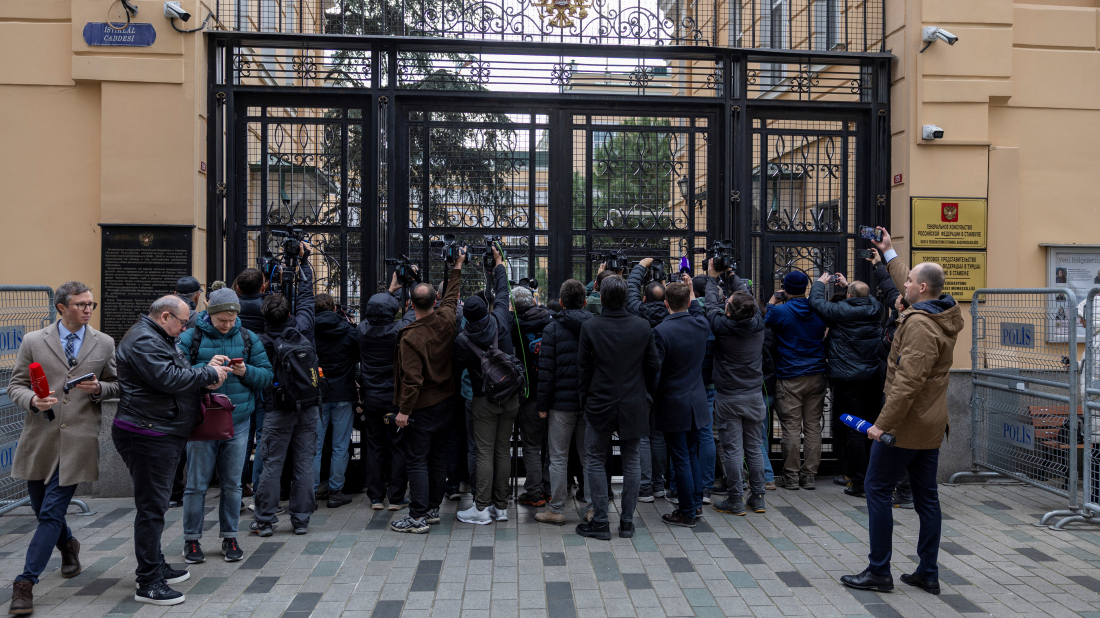
U.S. and Russian delegations have arrived in Istanbul for talks aimed at normalising diplomatic operations. The focus is on resolving embassy issues that have been hindered by tensions, restrictions, and property disputes, with broader relations dependent on resolving the Ukraine conflict.
U.S. and Russian delegations have arrived in Istanbul for crucial talks aimed at normalising the functioning of their diplomatic missions. These discussions come after the war in Ukraine strained relations between the two nations, marking one of the most significant confrontations since the Cold War.
The talks will be led by Russia's new ambassador to Washington, Alexander Darchiev, and U.S. Deputy Assistant Secretary of State Sonata Coulter. The primary focus will be on restoring the day-to-day operations of the embassies, which have been hindered by years of escalating tensions, property freezes, and claims of intimidation.
Both Moscow and Washington have faced difficulties in managing their diplomatic operations, with restrictions affecting the movement and financial operations of diplomats. Russia has highlighted complications in paying its diplomats due to Western sanctions, while the U.S. has faced restrictions on its diplomats' mobility in Russia.
Despite these challenges, both sides have emphasised that the talks are solely focused on embassy operations, with the broader issue of the bilateral relationship tied to the resolution of the ongoing conflict in Ukraine. These discussions are seen as a first step toward stabilising diplomatic communications amid a tumultuous geopolitical landscape.

U.S. Ambassador to NATO Matthew Whitaker said China has the power to bring an end to Russia’s war in Ukraine, arguing that Beijing is enabling Moscow’s military campaign.
Austria’s Janine Flock won the gold medal in the women’s skeleton event at the Milano-Cortina 2026 Winter Olympics on Saturday.
U.S. Secretary of State Marco Rubio on Sunday (15 February) called it “troubling” a report by five European allies blaming Russia for killing late Kremlin critic Alexei Navalny using a toxin from poison dart frogs.
Iran’s Supreme National Security Council Secretary Ali Larijani said the United States could evaluate its own interests separately from those of Israel in ongoing negotiations between Tehran and Washington.
Israeli army chief Eyal Zamir said on Friday (13 February) that Israel remains committed to the complete demilitarization of the Gaza Strip and the disarmament of Hamas, calling for intensified operations to destroy tunnel networks and control access along the ceasefire line.
The United States has carried out its first air transport of a nuclear microreactor on a cargo plane, flying the unit from California to Utah in a demonstration designed to show the technology can be rapidly deployed for military and civilian use.
Start your day informed with AnewZ Morning Brief: here are the top news stories for the 16th of February, covering the latest developments you need to know.
Former Ukrainian energy minister German Galushchenko has been detained while attempting to leave the country, anti-corruption authorities said on Sunday.
Britain and Germany’s highest ranking military chiefs have made an unprecedented joint appeal to the public to accept the “moral” case for rearmament and prepare for the threat of war with Russia.
Norway is holding a commanding lead in the medal standings with 12 golds and a total of 26, with Italy having an historic performance on home soil on the ninth day of the Milano-Cortina Winter Olympics on Sunday (15 February).
You can download the AnewZ application from Play Store and the App Store.
What is your opinion on this topic?
Leave the first comment