Oscars 2026 nominations announced: 'Sinners' breaks record with 16 nods
The Academy Awards nominations have been announced, with the crime drama Sinners leading the race securing a record 16 nominations ahe...
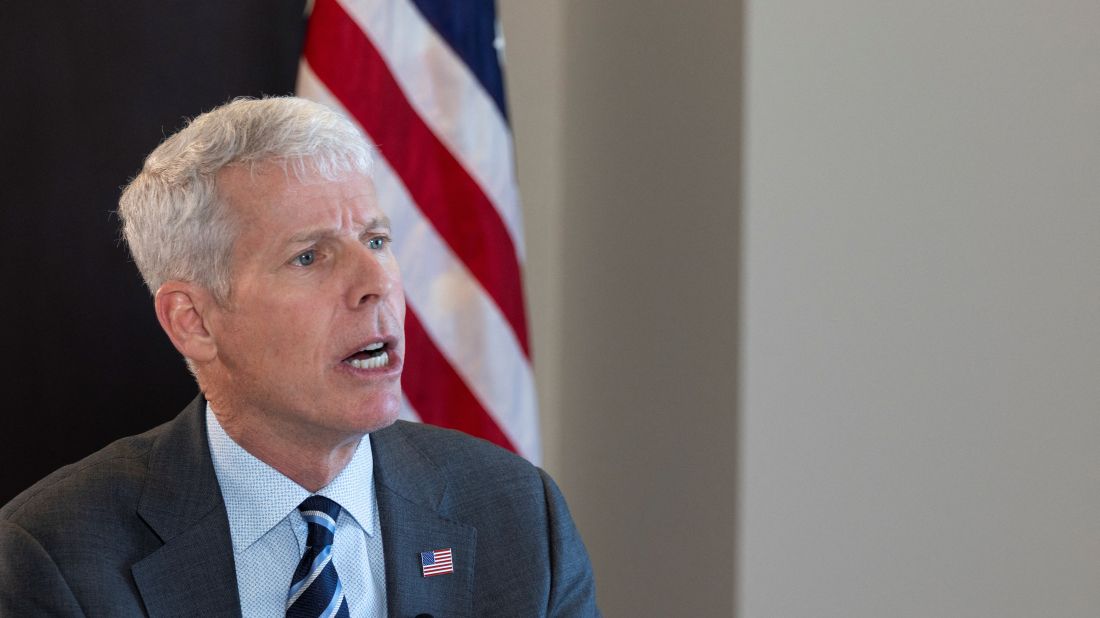
U.S. Energy Secretary Chris Wright has warned that Iran could face tighter sanctions if it fails to reach an agreement with President Donald Trump over its nuclear programme.
In an interview with CNBC on Tuesday, Wright said, “Absolutely, I would expect very tight sanctions on Iran, and hopefully drive them to abandon their nuclear program.” The remarks come just ahead of his first diplomatic tour to the Middle East as energy chief.
Wright will begin a nearly two-week visit to three Middle Eastern countries, including Saudi Arabia — the de facto leader of OPEC. The trip is expected to focus on energy cooperation, market stability, and strategic alignment in a region undergoing geopolitical realignment.
At home, Wright also defended President Trump’s forthcoming executive order to revive the U.S. coal industry. He argued that coal is essential to power artificial intelligence data centres, as well as meet the energy needs of steel and industrial production.
“We need a growing supply of electricity to hit the AI boom and also for this re-industrializing of the United States,” Wright said. “If we want to grow America’s electricity production meaningfully over the next five or 10 years, we’ve got to stop closing coal plants.”
The energy chief also addressed Trump’s calls for the European Union to buy more American energy. “I’ve had countries in Asia, in Europe, and elsewhere reach out to express interest in buying more American energy,” he said.
On Europe’s long-term energy strategy, Wright was blunt: “As I talk to European leaders, one thing they all share is a regret that they bet their energy future on Russia. I don’t think there’s a huge desire that, when the war is over, we’re going to re-count on Russia.”
Wright’s remarks underscore a broader shift in U.S. energy policy — one that blends foreign policy leverage with a renewed push for domestic production. As tensions with Iran escalate and Europe recalibrates its energy dependence, Washington appears ready to assert itself on multiple fronts.

Israel and Iran continued to exchange strikes on Friday (13 March), as the U.S. and French militaries reported deaths in Iraq, and the U.N. launched a $325 million appeal to help Lebanon, where a seventh of the population have left their homes since fighting began.
Israeli Prime Minister Benjamin Netanyahu issued veiled threats to Iran’s new Supreme Leader, Mojtaba Khamenei, and Hezbollah on Thursday (12 March), during his first press conference since the conflict with Iran began.
A long-running investigation has suggested that the street artist known as Banksy may be legally named David Jones. A report indicates that Jones was previously known as Robin Gunningham, a name long associated with Banksy, before legally changing his name several years ago.
A widening conflict involving Iran, the United States and Israel has triggered escalating military strikes across the Middle East, disrupted shipping through the strategic Strait of Hormuz and raised concerns over global energy supplies. This live report tracks the latest developments.
Ayman Ghazali, a 41-year-old U.S. citizen born in Lebanon, crashed his truck into the hallway of a Detroit-area synagogue on Thursday (12 March) while children attended preschool. Security personnel shot him dead during the confrontation, and authorities said no one else was seriously injured.
Kremlin spokesman Dmitry Peskov said on Saturday (14 March) that many countries are interested in purchasing Russian oil after the United States temporarily eased sanctions on certain exports.
An explosion lightly damaged a Jewish school in Amsterdam early on Saturday (14 March) in what the city’s mayor described as “a deliberate attack against the Jewish community.”
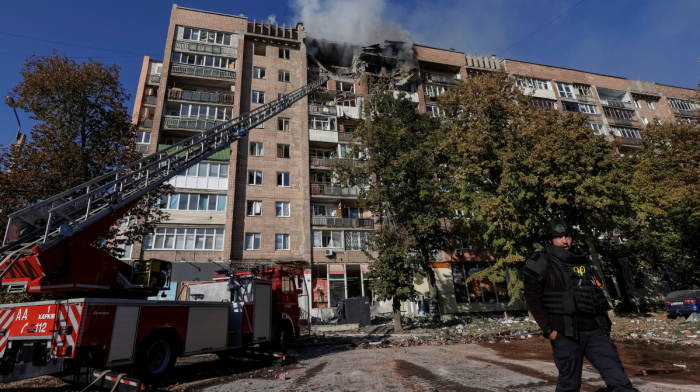
Ukrainian drones struck an oil refinery and a key port in Russia’s southern Krasnodar region overnight (13-14 March), local authorities said, causing injuries and damage. In separate action, Russian air attacks on Ukrainian territory killed and wounded civilians near Kyiv, officials reported.
Start your day informed with AnewZ Morning Brief. Here are the top news stories for the 13rd of March, covering the latest developments you need to know.
North Korea fired what appeared to be a ballistic missile on Saturday (14 March), Japanese and South Korean officials said. The development comes amid the joint annual U.S.-South Korea "Freedom Shield" military drills and South Korean Prime Minister Kim Min-seok's visit to Washington.
You can download the AnewZ application from Play Store and the App Store.
What is your opinion on this topic?
Leave the first comment