Web Summit Qatar 2026 opens as Doha positions itself as rising global tech hub
Web Summit Qatar 2026 opened in Doha on Sunday, drawing tens of thousands of founders, investors, policymakers and technology leaders to what organise...
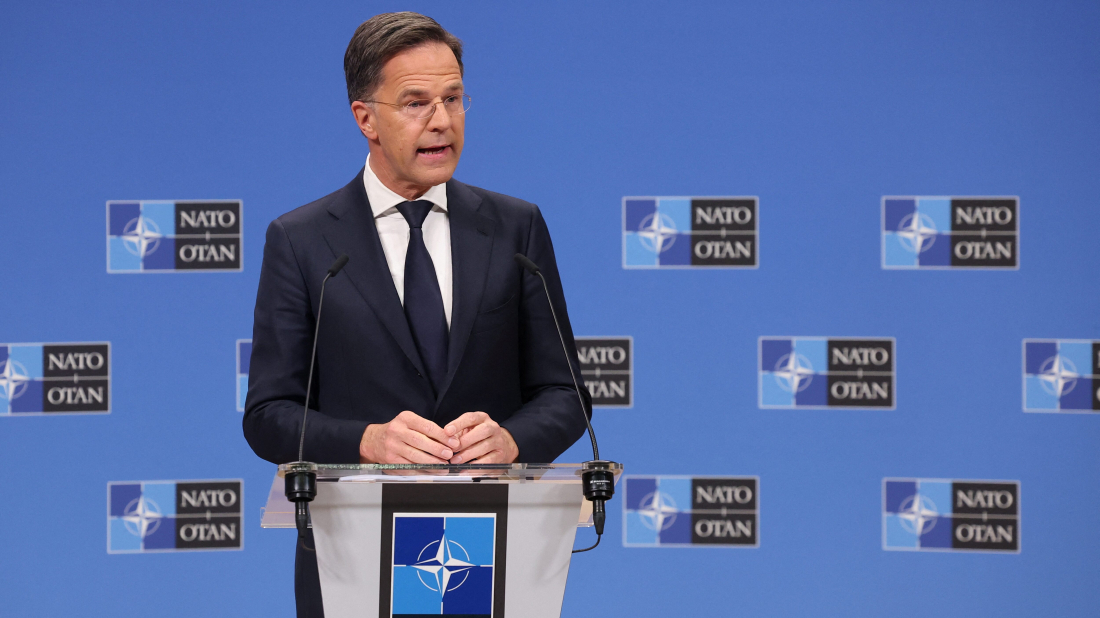
NATO Secretary General Mark Rutte stated on Friday that the sweeping new tariffs announced by US President Donald Trump do not breach the alliance’s treaties, including the provision encouraging economic collaboration among member nations.
His comments came during a meeting with NATO foreign ministers in Brussels, where concerns were raised about the potential impact of the tariffs on Article 2 of the NATO treaty.
The tariff dispute centers on the recent measures imposed by Trump, which have rattled global markets and sparked fears of a broader trade conflict. When questioned about whether these tariffs violated the treaty’s commitment to eliminate conflicts in international economic policies, Rutte replied, “I don’t think this is in breach of Article Two. No, I don’t think so. We have seen in the past many examples of differences of view, of fights over tariffs. This has happened before, without that being in violation of Article 2.”
Rutte also emphasized that the issue of trade disputes falls outside his core mandate. “My role is deeply focusing on the defense of NATO territory, and that is why I'm not commenting on other things than directly related to the defense of NATO,” he added.
In addition to addressing the tariff issue, Rutte underscored that NATO’s primary long-term concern remains the threat posed by Russia. “We realize that there is one long-term and enduring, unpleasantly enduring threat, and that is Russia, and that is what our focus has to be about,” he said.
During the same meeting, NATO allies heard a “clear message” from US Secretary of State Marco Rubio affirming the United States’ commitment to the alliance. Rubio’s remarks also called on Europe and Canada to take on more responsibility for shared security and to continue increasing defense spending.
The discussion highlights the complex interplay between economic policies and defense commitments within NATO, as member states navigate the challenges posed by divergent national interests while maintaining a united front against common security threats.

U.S. President Donald Trump said on Saturday that the United States has begun negotiations with European leaders over Greenland and that an agreement is already taking shape.
The United States accused Cuba of interfering with the work of its top diplomat in Havana on Sunday (1 February) after small groups of Cubans jeered at him during meetings with residents and church representatives.
Dmitry Medvedev, said European countries have failed to defeat Russia in Ukraine and have instead inflicted serious economic damage on themselves, as he criticised EU policy, praised Donald Trump as a leader who seeks peace, and said Russia would “soon” achieve military victory in the war.
Iran’s Supreme Leader Ayatollah Ali Khamenei has warned that any U.S. military attack on Iran would spark a wider regional conflict, Iranian semi-official Tasnim news agency reported on Sunday.
U.S. president Donald Trump said Iran is “seriously talking” with the United States and expressed hope that negotiations could lead to an outcome acceptable to Washington.
The Kremlin has confirmed that the next round of trilateral talks between Ukraine, Russia and the United States will be held in Abu Dhabi on 4–5 February, after the meeting was postponed last week to align the schedules of all delegations.
Hungary has vowed legal action against the European Union over a planned ban on Russian gas imports by 2027, after Brussels said national objections would not override EU law.
Russia’s Foreign Intelligence Service (SVR) has accused French President Emmanuel Macron of authorising intelligence operations aimed at eliminating “undesirable leaders” in Africa, claiming that Paris is pursuing a political comeback after losing ground in several former colonies.
Türkiye, Egypt, and Qatar are trying to organise a meeting in Ankara between White House Special Envoy Steve Witkoff and top Iranian officials, according to reports in the U.S. and Turkish media.
German authorities have arrested five people suspected of running a criminal network to circumvent European Union sanctions by exporting goods to at least 24 sanctioned Russian defence companies, the federal prosecutor’s office said on Monday.
You can download the AnewZ application from Play Store and the App Store.
What is your opinion on this topic?
Leave the first comment