Germany's Interior Minister Nancy Faeser claims success in tackling irregular immigration, highlighting a rise in deportations and a decrease in asylum claims. With coalition talks underway, the SPD and conservatives remain divided over immigration policy.
Germany's interior minister claimed victory for her outgoing government in its battle against irregular immigration, saying deportations were up and asylum claims down in an apparent centre-left pitch to be part of the next ruling coalition.
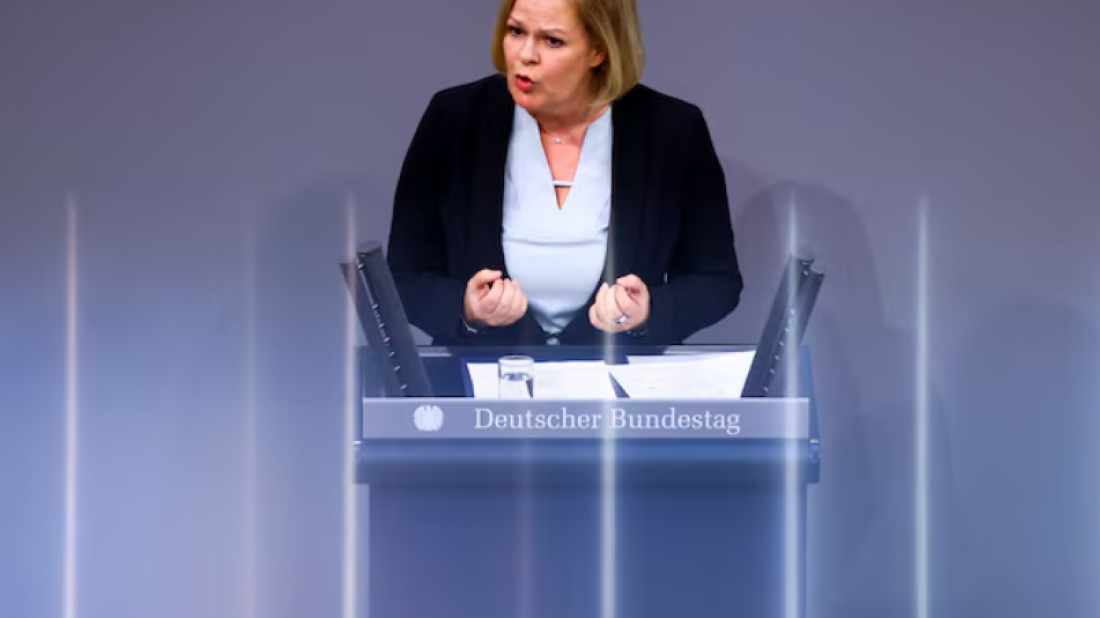
Nancy Faeser, a Social Democrat, remains as acting minister until her party and the election-winning conservatives agree on a new coalition deal, with how to handle immigration the sharpest dividing line between the would-be partners.
Conservative leader Friedrich Merz, seeking to win back voters his Christian Democrats (CDU) lost to the far right, pledged during the campaign to turn away at the borders people with the wrong documents. The SPD opposes this hard-line approach, saying it violates European Union law.
"Migration policy isn't something for jokers, but a management assignment you have to work on seriously," Faeser said in a statement asserting that outgoing Chancellor Olaf Scholz's government had run a successful migration policy.
While the number of asylum claims halved over the past two years, she said, the number of people illegally present in Germany who were then repatriated had risen 55% and the number of skilled workers who had immigrated legally had risen by 77%.
"The numbers speak for themselves," she said. "Today we are a country that invests more in integration and is more attractive to talented and qualified workers from the world over."
Talks between the two parties last week went into a second round after leaders acknowledged the drafts prepared so far fell far short of what was needed for a government programme. Merz has said he wants to form a government by Easter.
FAR RIGHT RISES IN POLLS
Merz, the likely next chancellor, won the February 23 election but with a poorer-than-expected 28.5% of the vote. That left the SPD as Merz's only possible partner if he sticks to his pledge not to cooperate with the runner-up far-right AfD party, or form an unstable three-way coalition as Scholz did.
Leaked drafts of coalition negotiating positions show the parties far apart on immigration policy. The conservatives demand more powers to expel and turn away migrants, while the SPD is focusing on integration of migrants and steps to recruit foreign skilled workers for labour-short German industries.
Concerns that commitments on migration and fiscal rigour could be watered down under the next government have preoccupied right-wing voters in particular - the AfD has gained three points in the polls since the election while the conservatives have lost three.
A series of deadly street attacks during the election campaign, blamed in some cases on foreigners illegally present in Germany, ensured the contest was dominated by a raw and angry debate over migration.
"We must carry out the migration debate without rancour, always in the awareness that we're talking about people here," said Faeser, who could stay on as interior minister or in another senior cabinet role if a conservative-SPD "grand coalition" comes to fruition.

















What is your opinion on this topic?
Leave the first comment